



19 states will increase their minimum wage for the new year
Nineteen states will raise their minimum wages to ring in the new year 2026, with most of them reaching a rate of $15 an hour or more.
Another 49 cities and counties across the country will also raise their minimum wages on Jan. 1, according to a break down by the National Employment Law Project.
Although the federal minimum wage remains just $7.25 an hour, most states now require employers to pay a higher rate. New Year’s Day is the most common time for states to implement scheduled increases to their minimum wages, thanks to cost-of-living adjustments written into state laws.
The highest state minimums will come to Washington state, at $17.13 per hour; New York, which will require $17 in the New York City metropolitan area; and New Jersey, which will require $18.92 for long-term care workers.
States will increase their minimum wages on January 1:
- Arizona: $14.70 to $15.15
- California: $16.50 to $16.90
- Colorado: $14.81 to $15.16
- Connecticut: $16.35 to $16.94
- Hawaii: between 14 and 16 dollars
- Maine: between $14.65 and $15.10
- Michigan: between $12.48 and $13.73
- Minnesota: between $11.13 and $11.41
- Missouri: $13.75 to $15
- Mountain: $10.55 to $10.85
- Nebraska: $13.50 to $15
- New Jersey: $15.49 to $15.92 (other rates apply to certain groups)
- New York: between $16.50 and $17 on the New York subway; $15.50 to $16 upstate
- Ohio: between $10.70 and $11
- Rhode Island: $15 to $16
- South Dakota: $11.50 to $11.85
- Vermont: $14.01 to $14.42
- Virginia: between $12.41 and $12.77
- Washington State: $16.66 to $17.13
Alaska and Florida are scheduled to raise their minimum wages later in 2026, to $14 and $15, respectively. Oregon will also raise its minimum wage next summer at a rate yet to be determined.
As the federal minimum wage has languished due to congressional gridlock, many states have taken it upon themselves to aggressively raise their own minimum wages, often through ballot initiatives that put the question directly to voters, rather than lawmakers.
That strategy has been successful in several red states, including Nebraska and Missouri, where Republican politicians have been reluctant to raise the minimum wage because of business lobbying. Minimum wage referendums tend to pass easily due to their popularity even among conservative voters.
In many states, cities and counties can also set their own rates. In 2025, the San Diego City Council approved an ordinance that will raise the minimum wage for hospitality workers to $25 per hour by 2030, while voters in Portland, Maine, approved raising the minimum wage for all workers to $19 by 2028.
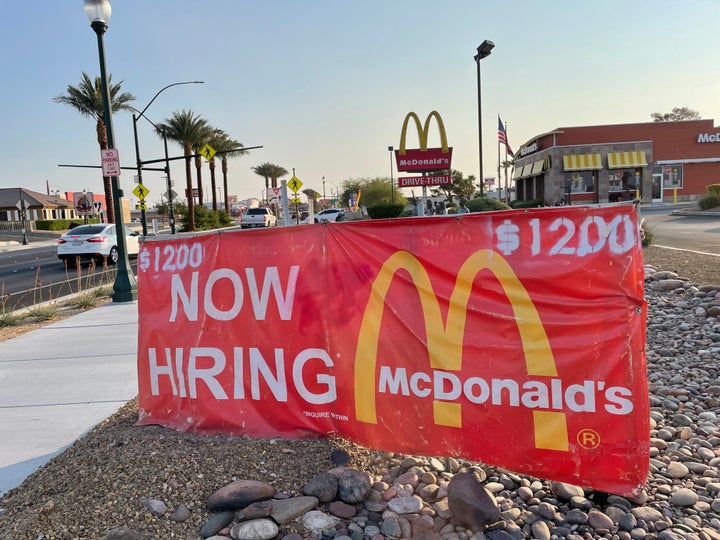
4kodiak via Getty Images
Many of the highest minimum wages in the country next year will be in California cities such as Mountain View ($19.70), Richmond ($19.18) and Belmont ($18.95).
Yannet Lathrop, senior researcher at the National Employment Law Project, notes in a analysis that many of the 2026 increases are a legacy of the Fight for $15, a union-backed campaign that began in the fast food sector more than a decade ago. Twenty states are on track to reach a $15 minimum wage, if they haven’t already.
“Policies that raise the minimum wage have been a lifeline for low-paid workers who have borne the brunt of a growing affordability crisis,” Lathrop argues.
But there hasn’t been any significant movement at the federal level for years, and the likelihood of an increase as long as Republicans control the White House and Congress is close to zero.
Earlier this year, Republican Sen. Josh Hawley of Missouri co-sponsored a bill with a Democrat to raise the federal floor to $15 an hour, a rare position for a Senate Republican. “Right now, the federal minimum wage, whether we index it for inflation or relative to inflation, is the lowest level since the 1940s,” Hawley told News themezone at the time.
Most Democrats have already passed the $15 marker and support an increase to $17, arguing that inflation has eroded workers’ purchasing power too much. In April, the Senate voted a amendment to a budget resolution proposing a $17 federal levy, but it failed 47 to 52. Hawley was the only Republican to vote in favor of it.