



“
/ AP
Add News themezone on Google
Reykjavík, Iceland — As rising global temperatures accelerate the melting of sea ice in the Arctic Ocean, it has unleashed a boom in ships taking routes that were previously frozen and impassable.
The increase in maritime traffic in the Arctic, which received increased attention during the presidency Trump pushed for the US to seize Greenlandhas come at a high environmental cost: the black carbon, or soot, spewed out by ships and causing ice to melt even faster. In meetings this week with international shipping regulators, several countries are advocating that ships in the Arctic use cleaner fuels that cause less pollution.
Glaciers, snow and ice covered by soot emitted by ships are less able to reflect the sun. Instead, heat from the sun is absorbed, helping to make the Arctic the fastest-warming place on Earth. In turn, melting Arctic sea ice can affect weather patterns around the world.
“This ends up in an endless cycle of increased warming,” said Sian Prior, senior adviser to the Clean Arctic Alliance, a coalition of nonprofits focused on the Arctic and shipping. “We need to regulate emissions and black carbon in particular. Both are completely unregulated in the Arctic.”
In December, France, Germany, the Solomon Islands and Denmark proposed that the International Maritime Organization require ships traveling in Arctic waters to use “polar fuels,” which are lighter and emit less carbon pollution than widely used marine fuels known as residual fuels. The proposal includes the steps companies would take to comply and the geographic area it would apply to: all ships traveling north of the 60th parallel. The proposal was expected to be presented to the IMO’s Pollution Prevention and Response Committee this week and possibly to another committee in April.
The ban from 2024 on the use of a type of waste known as heavy fuel oil in the Arctic has so far had only a modest impact, partly due to legal loopholes.
“Black carbon” aggravates other regional problems
The initiative to reduce black carbon, which studies show has a warming impact 1,600 times greater than that of carbon dioxide over a 20-year period, comes at a time of conflicting interests, both internationally and among countries that have Arctic coasts.
In recent months, Trump’s periodic comments about the need to “own” Greenland to bolster US security have raised many questions, from Greenland’s sovereignty to the future of the NATO alliance. Pollution and other environmental problems in the Arctic have taken a backseat.
Mr. Trump, who has called climate change a “conman”, has also rejected global policies aimed at combating him. Last year, the IMO was expected to adopt regulations that would have imposed carbon fees on shipping, which supporters say would have pushed companies to use cleaner fuels and electrify fleets where possible. Then Trump intervened, pushing hard for nations to vote no. The measure was postponed for a year and its prospects were uncertain at best. With this in mind, it is difficult to see the IMO moving forward quickly on the current proposal to limit black carbon in the Arctic.
Even within Arctic nations, which are hardest hit by black carbon and other shipping pollutants, there are internal tensions over such regulations. Iceland is a good example. While the country is a world leader in green technologies such as carbon capture and the use of thermal energy for heating, conservationists say the country has made less progress in regulating pollution in its seas. This is because the fishing industry, one of the most important in the country, has a great influence.
“The industry is happy with profits, unhappy with taxes and not committed to issues like climate or biodiversity,” said Arni Finnsson, chairman of the board of directors of the Icelandic Association for Nature Conservation.
Finnsson added that the costs of using cleaner fuels or electrifying fleets have also caused resistance.
“I think the government is waking up, but they still have to wait for the (fishing) industry to say yes,” he said.
The country has not commented on the pending proposal on polar fuels. In a statement, Iceland’s Ministry of Environment, Energy and Climate said the proposal was “positive with respect to its purpose and basic content” but that more studies were needed. The statement added that Iceland supports stricter measures to counter emissions from shipping and reduce black carbon.
More shipping traffic means more soot in the air
Soot pollution has increased in the Arctic as cargo ships, fishing vessels and even some cruise ships increasingly travel in the waters connecting the northernmost parts of Iceland, Greenland, Canada, Russia, Norway, Finland, Sweden and the United States.
Between 2013 and 2023, the number of ships entering waters north of the 60th parallel increased by 37%, according to the Arctic Council, an intergovernmental forum made up of the eight countries with territory in the Arctic. In that same period, the total distance traveled by ships in the Arctic increased by 111%.
Black carbon emissions have also increased. In 2019, ships north of the 60th parallel emitted 2,696 metric tons of black carbon, compared to 3,310 metric tons in 2024, according to a study by Energy and Environmental Research Associates. The study found that fishing boats were the largest source of black carbon.
It also found that banning heavy fuel oil in 2024 would only result in a small reduction in black carbon. Exemptions and exceptions allow some ships to continue using it until 2029.
Environmental groups and concerned countries see regulating boat fuel as the only way to realistically reduce black carbon. This is because it would probably be impossible to get nations to agree to limit trafficking. The lure of fishing, resource extraction and shorter shipping distances is too great. Ships can save days on some voyages between Asia and Europe by sailing through the Arctic.
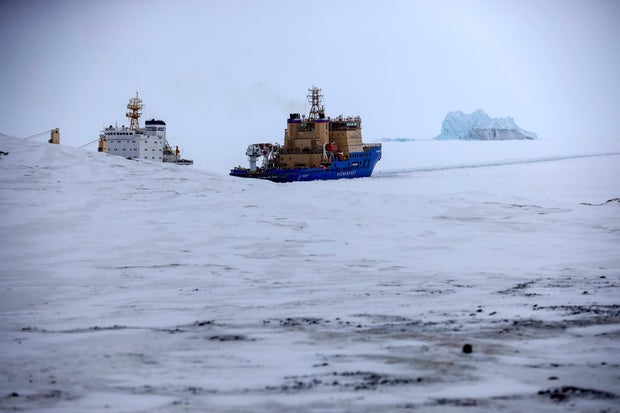
Still, the route known as the Northern Sea Route is only passable for a few months a year, and even then ships must be accompanied by icebreakers. Those dangers, combined with concerns about Arctic pollution, have led some companies to pledge to stay away, at least for now.
“The debate around the Arctic is intensifying, and commercial shipping is part of that debate,” Søren Toft, CEO of Mediterranean Shipping Company, the world’s largest container shipping company, wrote in a LinkedIn post last month. “Our position at MSC is clear. We do not and will not use the Northern Sea Route.”
In:
- Climate Change
- Arctic