



8 Babies born with 3 people DNA in the world’s first IVF trial destined to minimize the risk of hereditary disease
/ News/ News
3 parents babies

Eight healthy babies were born in the United Kingdom using a new IVFC technique that successfully reduced their risk of inheriting genetic diseases of their mothers, people behind a world trial said Wednesday.
The findings were acclaimed as a great breakthrough, which raises hope that women with mitations in their mitochondrial DNA one day could have children without approving weakening or mortal diseases to children. One in 5,000 births is affected by mitochondrial diseases, which cannot be treated and include symptoms such as deteriorated vision, diabetes and muscle wear.
In 2015, Great Britain became the first country to approve An in vitro fertilization technique that uses a small amount of healthy mitochondrial DNA of the egg of a donor, along with the mother’s egg and the sperm of the father.
Some have called the result of this “three parents’ process, although researchers have backed up this term because only approximately 0.1% of the newborn DNA comes from the donor.
The results of the long -awaited essay of the United Kingdom were published in several articles in the New England Journal of Medicine.
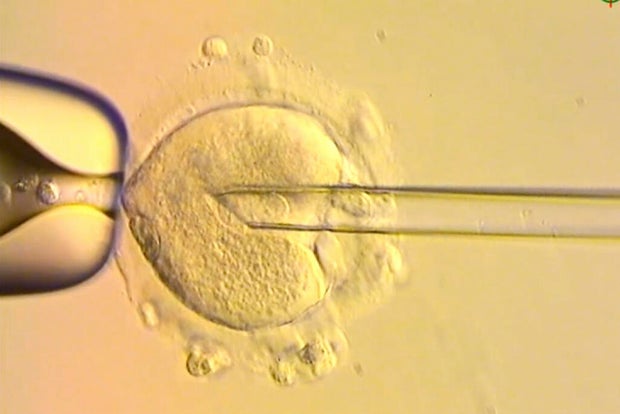
8 children with DNA of 3 people currently healthy
Of 22 women to undergo treatment at the Newcastle Fertility Center in the northeast of England, eight babies were born. The four boys and four girls now vary from less than 6 months to more than 2 years.
The amount of mutated mitochondrial DNA, which causes disease, was reduced by 95-100% in six of the babies, according to the investigation. For the other two newborns, the amount fell by 77-88%, which is still below the rank that causes disease.
This indicates that the technique was “effective to reduce the transmission” of diseases between mother and child, according to one of the studies.
The eight children are currently healthy, although one had an alteration of the rhythm of his heart that was treated successfully, the researchers said.
Your health will be followed in the coming years to see if problems arise.
The expert in reproductive genetics of the University of Oxford, Dagan Wells, said that among the eight children, three have shown some signs of what is known as “reversal”, which is still understood little.
It is “a phenomenon in which the therapy initially succeeds in producing an embryo with very few defective mitochondria, but when the child is born the proportion of abnormal mitochondria in their cells has increased significantly,” he explained.
However, Nils-Goran Larsson, an expert in Swedish reproduction who is not involved in the investigation, acclaimed him as an “advance.”
The new technique offers a “very important reproductive option” for families affected by devastating mitochondrial diseases, “he added.
While the judgment of the United Kingdom is the first to involve multiple mothers, the eight babies that are born are not the first to be born with three people’s DNA. That first It arrived in 2016after a woman was treated by American fertility specialists in Mexico, where there were no laws that regulate practice. A similar IVF method was used in that innovative case.
Ethical concerns about embryos and “designer babies”
Mitochondrial donation It is still controversial And it has not been approved in many countries, including the United States and France.
Religious leaders have opposed the procedure because it implies the destruction of human embryos. Other opponents have expressed fears that they could pave the way for “designer babies” of genetically designed engineering.
An ethical review by the Independent Nuffield Council on Bioetics of the United Kingdom was “instrumental” in the realization of the new investigation, the director of the Danielle Hamm Council said Wednesday.
Peter Thompson, head of the human fertilization and embryology authority of the United Kingdom, who approved the procedure, said only people with a “very high risk” of transmitting a mitochondrial disease would be eligible for treatment.
Ethical concerns have also been raised about the use of mitochondrial donation for infertility in Greece and Ukraine.
French mitochondrial disease specialist Julie Steffann told News that “it is a matter of the risk-benefit relationship: for a mitochondrial disease, the benefit is obvious.”
“In the context of infertility, it has not been demonstrated,” he added.
- DNA
- Five
- Rehearsal
- Genetic genealogy