



The photos show 2,000 -year -old artifacts of the sunk city in Egypt
/ News/ News
Egypt discovers the real Egyptian tomb
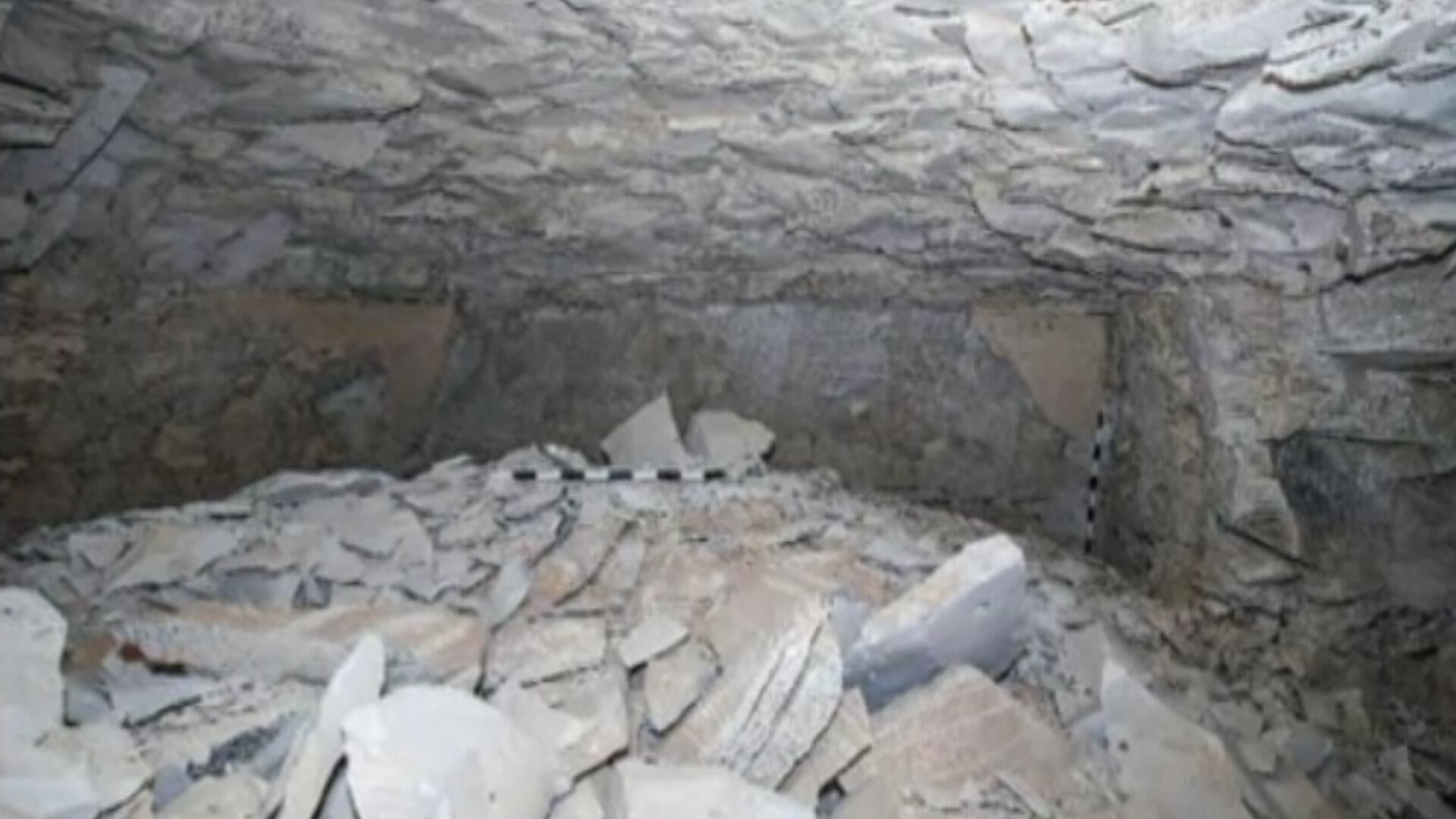
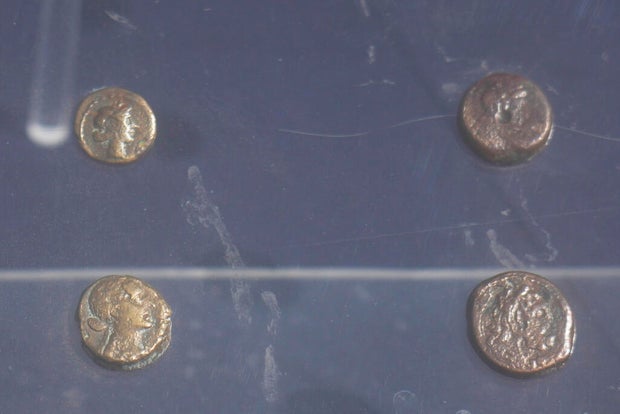
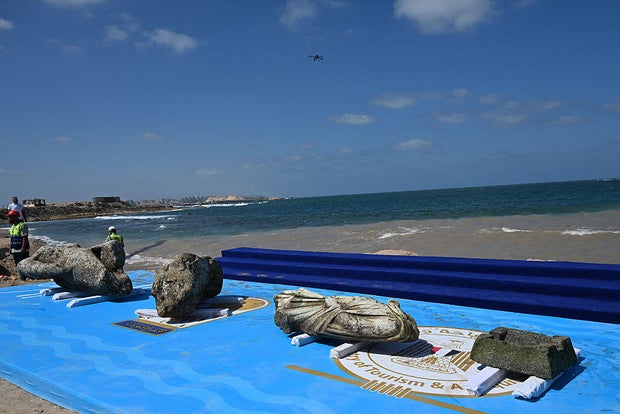
The ancient statues, the Roman coins and other artifacts of a sunk city were taken from the Mediterranean Sea off the coast of Egypt on Thursday.
The relics date back to more than 2,000 years. The Egyptian authorities said the site, located in the waters of the Bay of Abu Qir, near Alexandria, can be an extension of the ancient city of Canopus, a prominent center during the Ptolemaic dynasty, which ruled Egypt for almost 300 years, and the Roman Empire, which ruled for about 600 years.
Over time, a series of earthquakes and levels increasing the sea submerged the city and the nearby port city of Thonis-Heracleion, leaving behind a treasure of historical remains.
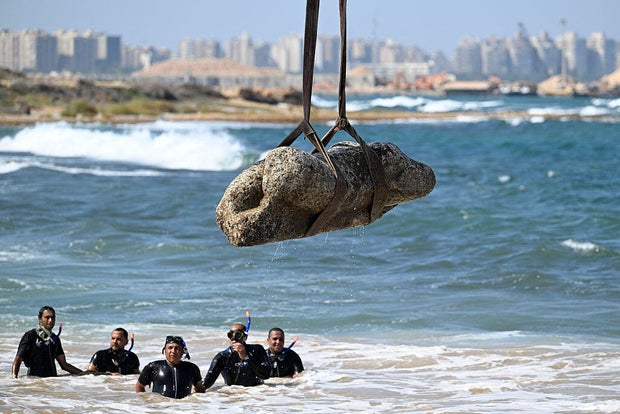
On Thursday, the cranes slowly raised statues of the depths, while the divers in neoprene costumes, which had helped recover them, cheered from the shore.
“There is much under water, but what we can mention is limited, it is only specific material according to strict criteria,” said Egyptian Minister of Tourism and Antiques, Sherif Fathi. “The rest will remain part of our sunk heritage.”
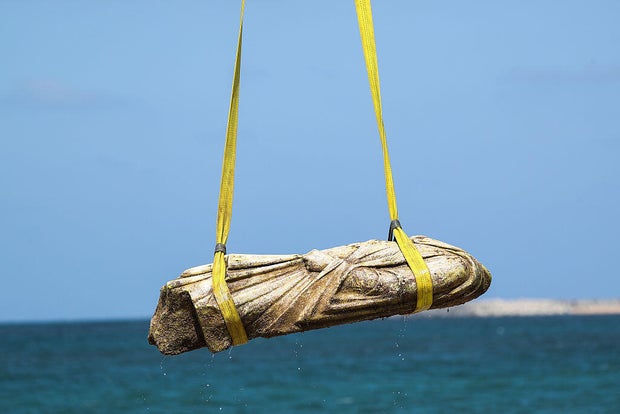
The underwater ruins revealed by the Ministry on Thursday include limestone buildings that may have served as places of worship, residential spaces and commercial or industrial structures.
Deposits and ponds carved in rock were also discovered for domestic water storage and fish cultivation.
Other notable findings were the statues of real and sphinx figures of the prelomana era, including a partially preserved sphinx with the Ramses II cartridge, one of the most famous and oldest old pharaons in the country.
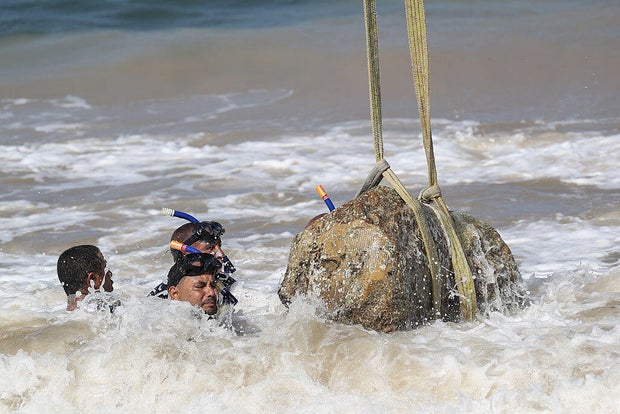
Many of the statues are missing body parts, including a beheaded Ptolemaic figure made of granite and the lower half of the similarity of a Roman nobleman carved in marble.
They found a merchant ship, stone anchors and a port crane dating from the Ptolema and Roman times on the site of a 125 -meter spring, which the ministry said it was used as a port for small boats until the Byzantine period.
Abu Qir Bay obtained historical importance in 1859 when the Egyptian prince Oma Touson, along with fishermen and divers, found remains of old structures, according to the Ministry of Tourism and Antiquities of Egypt.
In addition to the sunk cities, multiple shipwrecks have been found in the bay. The ships include the remains of the Napolean fleet of the Battle of the Nile of 1798, the ministry said. Napolean’s French fleet was defeated by a British fleet.
Today, Alejandría runs the risk of succumbing to the same waters that Cane and Thonis-Heracleion claimed.
The coastal city is especially vulnerable to climate change and the increase in sea level, sinking into more than three millimeters every year.
Even in the best cases of the United Nations, a third of Alexandria will be underwater or uninhabitable by 2050.
- Egypt
- Mediterranean Sea