



Scientists may have discovered the first gene therapy for an incurable brain disease
NEWNow you can listen to News articles!
Scientists may have discovered the first therapy for Huntington’s disease, a brain disorder that until now has had no effective treatments.
Researchers at the University of College London (UCL) announced positive results from a global clinical trial for a new gene therapy, AMT-130.
According to researchers, the therapy, developed by Dutch biotechnology company uniQure, is the first to be tested in people with Huntington’s disease.
‘HARMLESS’ VIRUS FOUND LURKING IN THE BRAINS OF PARKINSON’S PATIENTS, NEW STUDY SHOWS
Huntington’s disease is a rare inherited neurodegenerative disorder that progressively damages nerve cells (neurons) in the brain, as defined by the National Institutes of Neurological Disorders and Stroke.
The disease, which usually appears between the ages of 30 and 50, is caused by a mutation in the HTT gene, which causes cells to create a protein called Huntingtin that can cause damage to the brain.

Scientists may have discovered the first therapy for Huntington’s disease, a brain disorder that until now has had no effective treatments. (iStock)
Patients may experience a combination of movement, cognitive, and psychiatric symptoms. Involuntary jerking movements and stiffness are common, as are problems walking, talking, and swallowing.
Cognitive symptoms may include memory loss and difficulty concentrating and making decisions. Emotional and behavioral changes may also appear, according to multiple medical sources.
‘SILENT KILLER’ PARASITIC DISEASE SPREADS THROUGH MULTIPLE US STATES, EXPERTS WARN
According to the UCL, the disease usually causes disability and then death within 20 years of the onset of neurological symptoms.
AMT-130 is a one-time gene therapy that is injected into the brain, introducing new, functional DNA through a neurosurgical procedure. The drug causes a lower production of the harmful protein huntingtin.
“My patients in the trial remain stable over time in a way that I am not used to seeing in Huntington’s disease.”
In the three-year clinical trial at UCL, 29 Huntington’s patients received the experimental drug. Those who received a high dose of AMT-130 experienced 75% less disease progression compared to people who received standard care alone, a study news release reported.
Disease progression was measured using the Unified Huntington’s Disease Rating Scale, which assesses motor, cognitive, and functional abilities.
Another component of the study was the measurement of neurofilament light protein (NfL), which is found in the cerebrospinal fluid of Huntington’s patients as more neurons are damaged.
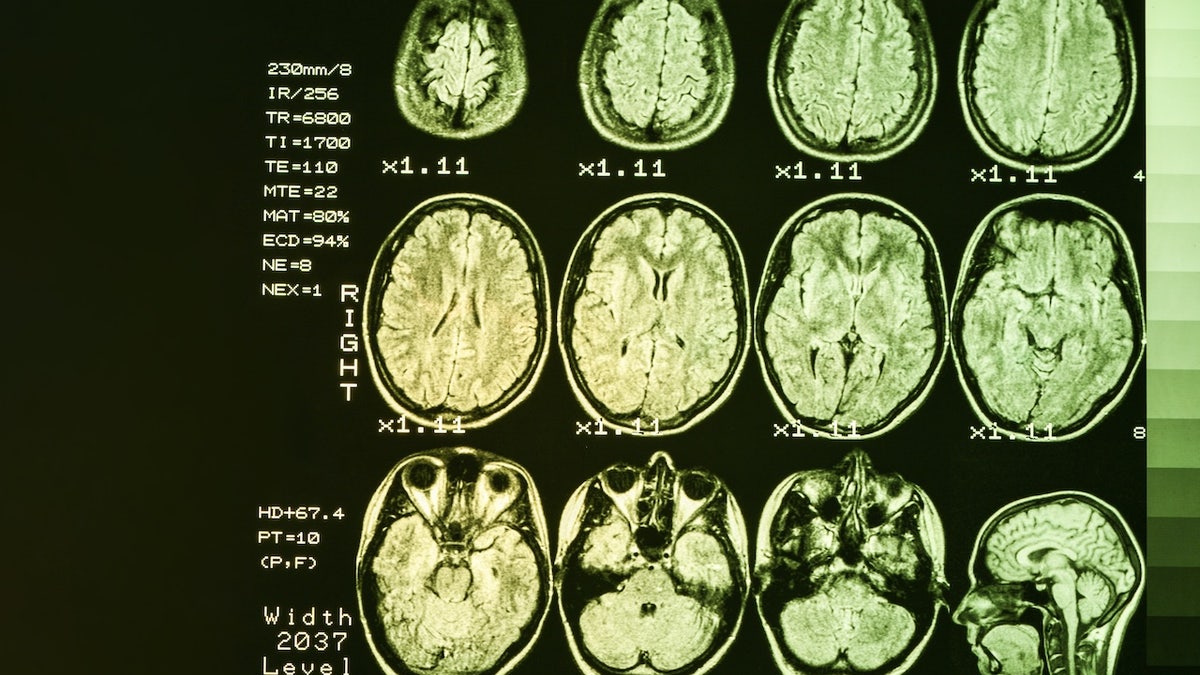
The disease, which usually appears between the ages of 30 and 50, is caused by a mutation in the HTT gene, which causes cells to create a protein called Huntingtin that can cause damage to the brain. (iStock)
Participants taking the experimental drug were found to have less protein at the end of the trial, although levels would normally have increased by 20% to 30% during that time period.
Overall, the drug was found to be “well tolerated” and had a “manageable safety profile,” according to the statement.
AIR POLLUTION MAY PLAY A BIGGER ROLE IN COGNITIVE DECLINE THAN ANYONE THOUGHT
“These groundbreaking data are the most compelling evidence in the field to date and underline the modifying effect of Huntington’s disease, where an urgent need remains,” Professor Sarah Tabrizi, senior scientific advisor at the UCL Huntington’s Disease Research Centre, said in the statement.
“For patients, AMT-130 has the potential to preserve daily function, keep them working longer, and significantly slow disease progression.”

Patients who received a high dose of AMT-130 experienced 75% less disease progression compared to people who received standard treatment for Huntington’s disease alone. (iStock)
Based on the results, Professor Ed Wild, principal investigator at the UCL Huntington’s Disease Center trials site at UCL and UCLH, said it is “likely” that AMT-130 will be the first approved treatment to curb Huntington’s disease, which he calls “a truly world-changing thing”.
“My patients in the trial remain stable over time in a way that I’m not used to seeing in Huntington’s disease, and one of them is my only medically retired Huntington’s disease patient who has been able to return to work.”
CLICK HERE TO GET THE News APP
Dr. Earnest Lee Murray, a certified neurologist of Jackson-Madison County General Hospital in Jackson, Tennessee, pointed out the reasons for long-standing difficulties in treating Huntington’s disease.

“The fact that we potentially have the possibility of a drug that alters the actual course of the disease rather than simply treating the symptoms is certainly promising,” said one neurologist. (iStock)
“It’s been a challenge to identify specific targets for therapies,” Murray, who was not involved in the new study, told News Digital. “In addition, there is always the challenge of crossing the blood-brain barrier.”
Most new therapies also use animal models in early clinical trials, where it is difficult to replicate the complexity of Huntington’s disease, he added.
CLICK HERE TO SUBSCRIBE TO OUR HEALTH NEWSLETTER
Current treatments for the disease focus only on the main symptoms, Lee noted: “mainly the uncontrollable movements that these patients experience, called chorea.”
“The fact that we potentially have the possibility of a drug that alters the actual course of the disease rather than simply treating the symptoms is certainly promising.”
Possible limitations and next steps
While this study is “a step in the right direction,” Lee said, there are some limitations.
“We need to work hard to make it available to everyone who needs it.”
“This is a very small cohort of patients and is in the early stages of potential development,” he said. “We have to wait to see if larger blinded studies confirm the potential effectiveness of the treatment and also monitor any possible side effects.”
Results from the trial will be presented next month at the HD Clinical Research Congress in Nashville, Tennessee.
For more health articles, visit www.Newsnews.com/health
The company plans to submit an application to the FDA for accelerated approval of the drug early next year, uniQure confirmed to News Digital.
“If that happens, we must work hard to make it available to everyone who needs it, while working just as diligently to add more effective treatments to the list,” Wild added.
Melissa Rudy is a senior health editor and member of the lifestyle team at News Digital. Story tips can be sent to melissa.rudy@News.com.