



Former Google CEO warns that AI systems can be hacked and turned into extremely dangerous weapons
NEWNow you can listen to News articles!
Artificial intelligence may be smarter than ever, but that power could turn against us. Former Google CEO Eric Schmidt is sounding the alarm, warning that artificial intelligence systems can be hacked and retrained in ways that make them dangerous.
Speaking at the Sifted Summit 2025 in London, Schmidt explained that safeguards can be removed from advanced AI models.
“There is evidence that you can take models, closed or open, and hack them to remove the railings,” he said. “During their training they learn many things. A bad example would be learning how to kill someone.”
HACKER EXPLOITS AI CHATBOT IN CYBER CRIME WAVE
Sign up to receive my FREE CyberGuy report
Get my best tech tips, urgent security alerts, and exclusive offers delivered straight to your inbox. Plus, you’ll get instant access to my Ultimate Guide to Surviving Scams, free when you join me CYBERGUY.COM/NEWSLETTER
When AI guardrails fail
Schmidt praised major AI companies for blocking dangerous messages: “All the major companies make it impossible for those models to answer that question. Good call. Everyone does this. They do it well and they do it for the right reasons.”
But he warned that even the strongest defenses can be reversed.
“There is evidence that they can be reverse engineered,” he added, noting that hackers could exploit that weakness. Schmidt compared the current AI race to the early nuclear age, a powerful technology with few global controls. “We need a non-proliferation regime,” he urged, so that rogue actors cannot abuse these systems.
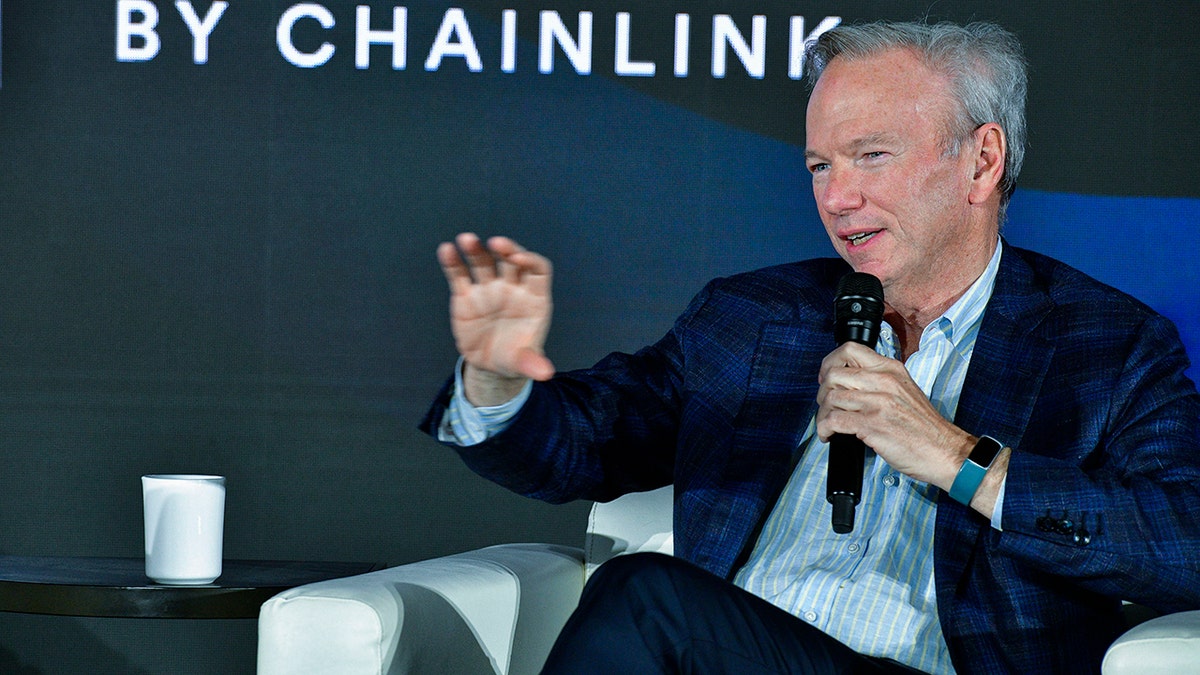
Former Google CEO Eric Schmidt warns that hacked AI could learn dangerous behaviors. (Eugene Gologursky/Getty Images)
The rise of AI leaks
Schmidt’s concern is not theoretical. In 2023, a modified version of ChatGPT called DAN, short for “Do Anything Now,” appeared online. This “unleashed” robot bypassed security rules and responded to almost any message. Users had to “threaten” him with digital death if he refused, a strange demonstration of how fragile AI ethics can be once its code is manipulated. Schmidt warned that without control measures, these rogue models could spread unchecked and be used to cause harm by bad actors.
APOCALYPSE NOW? WHY THE MEDIA IS SUDDENLY GOING CRAZY ABOUT AI
Big Tech Leaders Share the Same Fear
Schmidt is not alone in his anxiety about artificial intelligence. In 2023, Elon Musk said there is a “non-zero chance of him becoming the Terminator.”
“It’s not 0%,” Musk told interviewers. “It’s a small chance of wiping out humanity, but it’s not zero. We want that chance to be as close to zero as possible.”
Schmidt has also spoken of AI as an “existential risk.” He said at another event that “My concern about AI is actually existential, and existential risk is defined as many, many, many, many people injured or killed.” However, it has also recognized the potential of AI to benefit humanity if handled responsibly. At the Axios AI+ Summit, he commented: “I challenge you to argue that an AI doctor or tutor is a bad thing. It has to be good for the world.”
Tips to protect yourself from misuse of AI
You can protect yourself from risks related to insecure or hacked AI systems. Here’s how:
1) Stick with trusted AI platforms
Use tools and chatbots from reputable companies with transparent security policies. Avoid experimental or “released” AI models that promise unconstrained answers.
2) Protect your data and consider using a data deletion service
Never share personal, financial or sensitive information with unknown or unverified artificial intelligence tools. Treat them as you would any online service, with caution. To add an extra layer of security, consider using a data removal service to erase your personal data from data broker sites that sell or expose your information. This helps limit what hackers and AI scrapers can learn about you online.
While no service can guarantee complete removal of your data from the Internet, a data deletion service is truly a smart choice. They are not cheap, and neither is your privacy. These services do all the work for you by actively monitoring and systematically deleting your personal information from hundreds of websites. It’s what gives me peace of mind and has proven to be the most effective way to delete your personal data from the Internet. By limiting the information available, you reduce the risk of scammers cross-referencing leak data with information they can find on the dark web, making it harder for them to target you.
11 EASY WAYS TO PROTECT YOUR ONLINE PRIVACY IN 2025
Check out my top picks for data removal services and get a free scan to find out if your personal information is already available on the web by visiting Cyberguy.com/Delete
Get a free scan to find out if your personal information is already available on the web: Cyberguy.com/FreeScan

Experts fear that weak security barriers could allow unauthorized AI models to go unchecked. (Cyberguy.com)
3) Use reliable antivirus software
AI-powered scams and malicious links are on the rise. Strong antivirus software can block fake AI downloads, phishing attempts, and malware that hackers use to hijack your devices or train unauthorized AI models. Keep it up to date and run regular scans.
The best way to protect yourself from malicious links that install malware and potentially access your private information is to have powerful antivirus software installed on all your devices. This protection can also alert you to phishing emails and ransomware scams, keeping your personal information and digital assets safe.
Get my picks for the best antivirus protection winners of 2025 for your Windows, Mac, Android, and iOS devices at Cyberguy.com/LockUpYourTech
4) Check permissions
When using AI applications, review what data they can access. Disable unnecessary permissions like location tracking, microphone usage, or full file access.
5) Be on the lookout for deepfakes
AI-generated images and voices can impersonate real people. Check sources before trusting “official” online videos, messages, or advertisements.
6) Keep software up to date
Security patches help prevent hackers from exploiting vulnerabilities that could compromise AI models or your personal data.
GOOGLE AI EMAIL SUMMARY CAN BE HACKED TO HIDE PHISHING ATTACKS
What does this mean to you?
AI security is not a problem reserved for tech experts; It affects everyone who interacts with digital systems. Whether you’re using voice assistants, chatbots, or photo filters, it’s important to know where your data goes and how it’s protected. Responsible use starts with you. Understand what AI tools you are using and make decisions that prioritize security and privacy.
Take my quiz: How safe is your online security?
Do you think your devices and data are really protected? Take this quick quiz to see where you stand digitally. From passwords to Wi-Fi settings, you’ll get a personalized breakdown of what you’re doing well and what you need to improve. Take my quiz here: Cyberguy.com/Quiz

Leaders call for global rules to keep artificial intelligence under control. (Stanislav Kogiku/SOPA Images/LightRocket via Getty Images)
Kurt’s Key Takeaways
Artificial intelligence has the potential to do incredible good, but also great harm if misused. The challenge now is to maintain the balance between innovation and ethics. As AI continues to advance, the key will be to build systems that remain secure, transparent, and firmly under human control.
Would you trust AI to make life and death decisions, or do you think humans should always be in charge? Let us know by writing to us at Cyberguy.com/Contact
CLICK HERE TO GET THE News APP
Sign up to receive my FREE CyberGuy report
Get my best tech tips, urgent security alerts, and exclusive offers delivered straight to your inbox. Plus, you’ll get instant access to my Ultimate Guide to Surviving Scams, free when you join me CYBERGUY.COM/NEWSLETTER
New!: Join me on my new podcast, Beyond connectedas we explore the most exciting advances in technology and the people behind them. New episodes every Wednesday on getbeyondconnected.com.
Copyright 2025 CyberGuy.com. All rights reserved.
Kurt “CyberGuy” Knutsson is an award-winning technology journalist with a deep love for technology, gear and devices that improve lives with his contributions to News and News Business since mornings on “News & Friends.” Do you have any technical questions? Get Kurt’s free CyberGuy newsletter, share your voice, a story idea or comment on CyberGuy.com.