



The Colombian killed in the US attack was on a fishing trip, says his wife:
/News/News
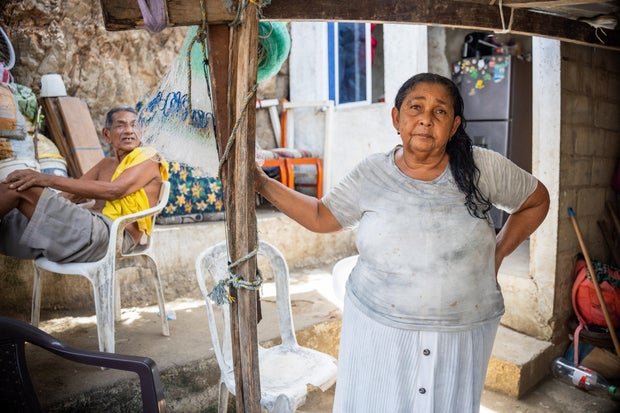
Alejandro Carranza’s loved ones say he left his home on Colombia’s Caribbean coast to fish in open waters. Days later, he was dead, one of at least 32 alleged drug traffickers murdered in US military attacks.
From Santa Marta, northern Colombia, Carranza’s family is challenging White House claims that he was carrying narcotics aboard a small boat attacked last month.
For his wife Katerine Hernández, the 40-year-old man was “a good man” dedicated to fishing.
“Why did they take his life like that?” he asked during an interview Monday with News.
He denied that he had any ties to drug trafficking.
“The fishermen have the right to live. Why weren’t they arrested?”
The Trump administration has said The United States is in a “non-international armed conflict” with drug cartels, arguing that the narcotics they smuggle kill tens of thousands of Americans each year, constituting an “armed attack.”
Since the United States began bombing ships in the Caribbean in September, critics have accused the Trump administration of carrying out extrajudicial killings.
The White House and Pentagon have presented little evidence to support their claims that the recipients were involved in trafficking.
Colombian President Gustavo Petro, a critic of the US military presence in the Caribbean, also claimed that Carranza was innocent.
Petro said his crew suffered a mechanical failure at sea.
“The Colombian boat was adrift with a distress signal, the engine on high,” Petro wrote on Saturday in X. “It had no ties to drug trafficking. Its daily activity was fishing.”
However, Colombian media have reported that Carranza had a criminal record for stealing weapons in collusion with gangs.
Prosecutors contacted by News refused to confirm or deny the information.
The United States government has released statements and images purporting to show attacks on at least seven vessels supposedly transporting drugs, leaving at least 32 dead.
“Days passed and he didn’t call”
Before his last trip, Carranza told his father that he was headed to a place “with good fish.”
Days passed without contact, until the family found out about the attack on television.
“Days went by and he didn’t call,” Hernández said.
The deadly attacks have sparked a diplomatic dispute between the United States and Colombia, historically close partners.
Petro condemned the attack as a violation of Colombian sovereignty and called it “murder.” In a post on X, Petro said the US operation was part of a “failed strategy” to “control Latin America… and get cheap oil from Venezuela.”
Mr. Trump later called petro an “illegal drugs leader” and threatened to cut off US aid to the South American country.
Last month, Washington announced that it had colombia decertified as an ally in the fight against drugs. Colombia responded by stopping arms purchases from the United States, its largest military partner.
Friends interviewed by News also insisted that Carranza was a fisherman.
“He went out to sea to fish for sawfish, tuna and snapper, which at this time of year are very far away,” said César Henríquez, who has known him since he was little.
“He always returned to Santa Marta, secured his boat and returned home. I never knew him to do anything wrong,” Henríquez told News.
A Colombian and an Ecuadorian are the only survivors so far of American attacks in the Caribbean. A U.S. Navy helicopter transported survivors of the attack from the semi-submersible to a Navy ship, a source familiar with the matter confirmed to News themezone on Friday.
The Colombian, repatriated in serious condition, will face trial as a “criminal” accused of drug trafficking, according to the government.
He Ecuadorian was released after authorities said he had no pending charges. A government official, who asked not to be identified because he was not authorized to speak on the matter, told The News that the Ecuadorian, identified as Andrés Fernando Tufiño, was in good health after medical evaluations.
The News contributed to this report.
In:
- Venezuela
- drug cartels
- Colombia
- Trump Administration
- Sign