



Gray hair could play a surprising role in defending against cancer, study suggests
NEWNow you can listen to News articles!
Why does hair turn gray? And how does this common characteristic of aging relate to a potentially fatal disease?
A new study may have pointed out how gray hair is linked to one of the deadliest forms of skin cancer.
Researchers at Tokyo Medical and Dental University, led by Dr. Emi K. Nishimura, discovered that pigment-producing stem cells in hair follicles respond to stress in dramatically different ways.
An innovative blood test could detect dozens of cancers before symptoms appear.
Depending on their environment, those cells can die, causing gray hair, or survive and multiply in ways that could trigger melanoma, according to a university news release.
The findings were published October 6 in the journal Nature Cell Biology.

A new study may have pointed out how gray hair is linked to one of the deadliest forms of skin cancer. (iStock)
The team studied the stem cells of melanocytes, the cells that give color to hair and skin, using mouse models and tissue samples. By exposing these cells to forms of stress that damage DNA, such as chemicals that mimic UV exposure, the scientists observed how the cells behaved within their natural environment.
ADVANCE IN SKIN DNA COULD ALLOW WOMEN IN THE 60S TO HAVE GENETICALLY RELATED CHILDREN
Some of the cells responded to the damage by stopping their normal self-renewal process and becoming mature pigment cells that soon died. This left the hair without its source of color, producing gray hair.
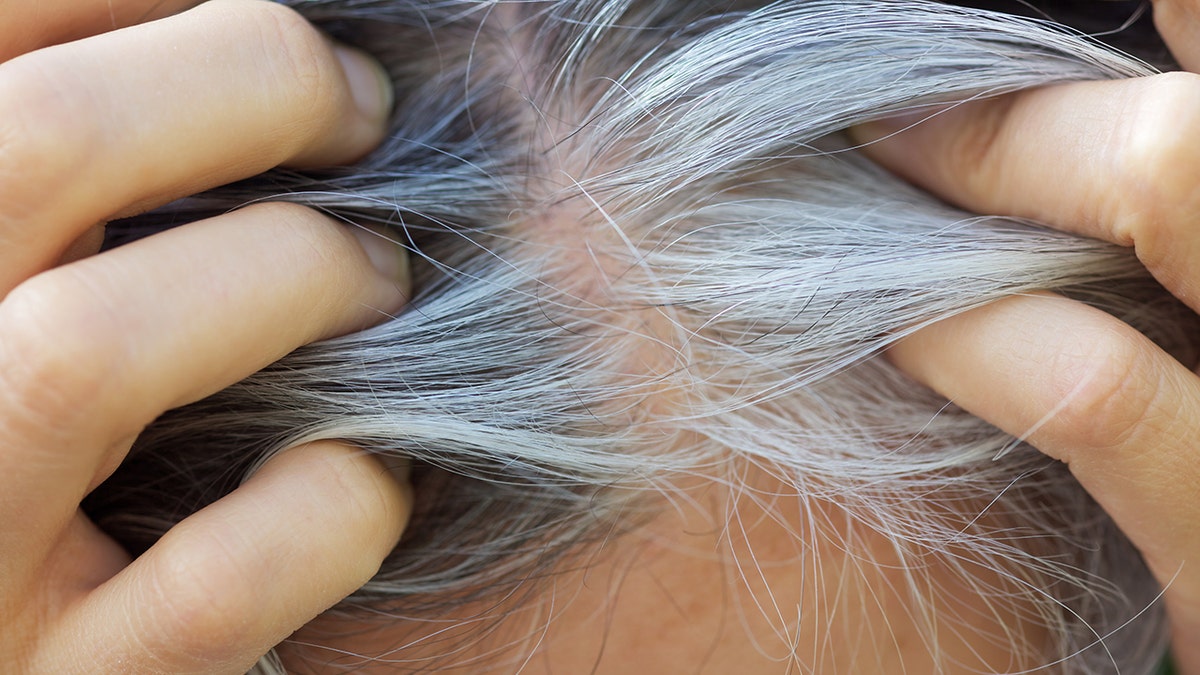
In mice, damaged pigment cells sometimes stopped renewing themselves and became short-lived mature cells, causing hair to gray. (iStock)
But when the researchers altered the surrounding tissue to encourage cell survival, the damaged stem cells began to divide again instead of shutting down. Those surviving cells accumulated more genetic damage and, in some cases, began to behave like cancer cells.
CLICK HERE TO DOWNLOAD THE News APP
Additional experiments showed that certain signals from the cells’ environment, including a molecule called KIT ligand, which promotes cell growth, helped determine which direction the cells headed, according to the release.
CLICK HERE TO SUBSCRIBE TO OUR HEALTH NEWSLETTER
In other words, the same type of cell could disappear harmlessly or become the seed of a melanoma, depending on the signals it receives from nearby tissue.

The study shows how the body’s response to stress can make the difference between gray hair and cancer. (iStock)
“It reframes hair graying and melanoma not as unrelated events, but as divergent outcomes of stem cell stress responses,” Nishimura said in the statement.
Nishimura’s team described the process as a biological trade-off between aging and cancer, but that doesn’t mean gray hair prevents cancer.
“It reframes hair graying and melanoma not as unrelated events, but as divergent outcomes of stem cell stress responses.”
Instead, it shows that when pigment cells stop dividing and die, it is the body’s way of getting rid of damaged cells, the researchers noted. If that process does not occur and damaged cells remain, they could develop into cancer.
TRY OUR LATEST LIFESTYLE QUIZ
The study was conducted in mice, but its implications could help scientists understand why some people develop melanoma without obvious warning signs and how natural aging mechanisms might actually protect against cancer.
CLICK HERE FOR MORE HEALTH STORIES
For now, researchers say the discovery shows how finely balanced the body’s cellular responses are and how small changes in that balance can mean the difference between a harmless sign of aging and a life-threatening disease.
Khloe Quill is a lifestyle production assistant at News Digital. She and the lifestyle team cover a range of topics including food and drink, travel and health.