



“
/News/AP
Hurricane Melissa made landfall over eastern Cuba near the city of Chivirico early Wednesday as an “extremely dangerous” Category 3 storm, the Miami-based National Hurricane Center said. after hitting jamaica as one of the strongest Atlantic hurricanes ever recorded.
Melissa weakened slightly while flying over Cuba, dropping to a Category 2 storm at 8 a.m. EDT, but continued to hit eastern parts of the island with “damaging winds, torrential rains, and dangerous storm surge,” the center said. Forecasters expected the hurricane to bring the same impacts to the Bahamas, where it was expected to hit later Wednesday.
Some 735,000 people were evacuated ahead of the storm, Cuban President Miguel Díaz-Canel Bermúdez said Tuesday night.
A hurricane warning was in effect for the provinces of Granma, Santiago de Cuba, Guantánamo, Holguín and Las Tunas, as well as for the southeast and center of the Bahamas.
Melissa had maximum sustained winds of 120 mph when it reached Cuba, but they had dropped to 105 mph when the NHC issued its advisory at 8 a.m. EDT. A hurricane is no longer considered “major” when it is Category 2 in the Saffir-Simpson hurricane wind scalewith wind speeds between 96 and 110 mph.
The storm was accelerating slightly and was moving north-northeast at 14 mph, according to the hurricane center. Its core was about 45 miles northwest of Guantanamo, Cuba, and 205 miles south of the central Bahamas.
In the Cuban city of Las Tunas, Manuel Pérez, a 73-year-old retiree, told The News by phone that it was still impossible to quantify the damage because the hurricane hit at night. “There was no one on the street.”
“The winds and gusts were very strong and the rain is still coming,” he said.
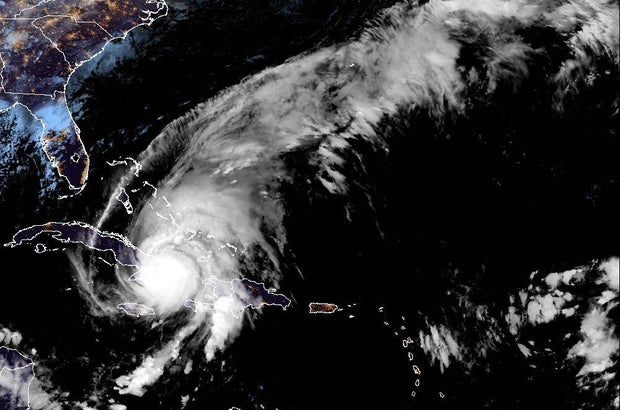
The hurricane center warned Cuban residents to remain sheltered and that preparations for the storm in the Bahamas “must be completed quickly.”
Melissa was predicted to It will weaken as it crosses Cuba during the morning, but will remain a powerful hurricane as it moves through the southeast or central Bahamas later on Wednesday. The storm is then expected to arrive Thursday night near or west of Bermuda, where a hurricane watch is in effect. The NHC said Melissa is likely to remain a strong hurricane at that time.
Continued heavy rain could cause life-threatening flooding with landslides, US forecasters said. The storm was expected to generate a storm surge of up to 12 feet in the region and drop up to 20 inches of rain in parts of eastern Cuba.
“Numerous landslides are likely to occur in these areas,” said NHC Director Michael Brennan.
The hurricane could worsen Cuba’s severe economic crisis, which has already caused prolonged blackouts, fuel shortages and food shortages.
“There will be a lot of work to do. We know there will be a lot of damage,” Díaz-Canel said in a televised speech in which he assured that “no one is left behind and no resources are spared to protect the lives of the population.”
At the same time, he urged the population not to underestimate the power of Melissa, “the strongest that has ever impacted the national territory.”
Provinces from Guantánamo – in the Far East – to Camagüey, almost in the center of long Cuba, had already suspended classes on Monday.
Jamaica deals with the damage left by Melissa
Melissa hit Jamaica on Tuesday with maximum sustained winds of 185 mph.
Jamaican officials reported complications in assessing total damage, while the National Hurricane Center said the local government had lifted the tropical storm warning there.
“There is a complete communications blackout on that side,” Richard Thompson, acting director general of Jamaica’s Office of Disaster Preparedness and Emergency Management, told Nationwide News Network.
Extensive damage was already reported in parts of Clarendon in southern Jamaica and in the southwestern parish of St. Elizabeth, which was “under water,” said Desmond McKenzie, vice-president of the Jamaica Disaster Risk Management Council.
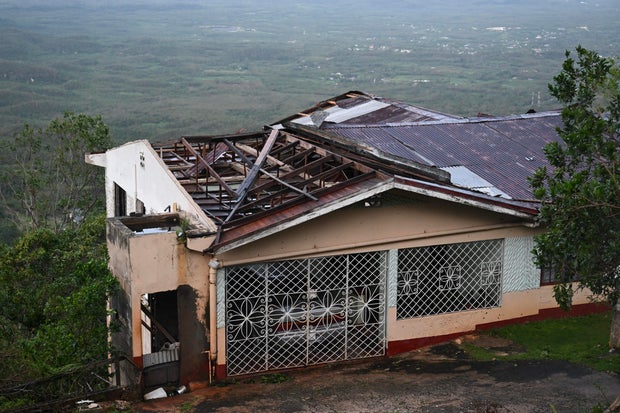
The storm also damaged four hospitals and left one without power, forcing authorities to evacuate 75 patients, McKenzie said.
More than half a million customers were without power as of Tuesday night when officials reported that most of the island experienced downed trees, power lines and extensive flooding.
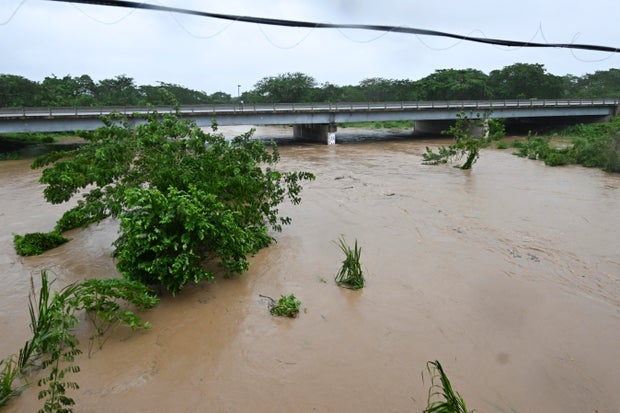
The government said it hopes to reopen all Jamaica airports on Thursday to ensure the rapid distribution of emergency relief supplies.
The US government said it was deploying a disaster response team and search and rescue personnel to the region. And the State Department said non-emergency personnel and family members of U.S. government employees were authorized to leave Jamaica due to the impact of the storm.
The storm has already been blamed for seven deaths in the Caribbean, including three in Jamaica, three in Haiti and one in the Dominican Republic, where another person remains missing.
In:
- Hurricane Melissa