



Trump sets lowest refugee limit in US history, allocating 7,500 places, mostly for Afrikaners
/News themezone
The Trump administration announced Thursday that it would set the lowest refugee admission limit in U.S. history, allocating just 7,500 spots for this fiscal year, mostly for Afrikaners who it claims face racial discrimination in South Africa for being white.
The previous lower refugee limit was set by the first Trump administration in 2020, when it allocated 15,000 spots for fiscal year 2021.
Thursday’s announcement is the latest effort by Trump and his top advisers to sharply scale back the decades-old U.S. Refugee Admissions Program, a humanitarian policy for vulnerable people fleeing war and violence around the world that once had strong bipartisan support.
Trump suspended the U.S. refugee program hours after taking office for the second time earlier this year, citing tensions in U.S. communities that host refugees and concerns about the vetting process. Weeks later, his administration made an exemption for Afrikaners, calling them victims of racial oppression.
In an order published in the federal government’s regulatory journal, Trump said the 7,500 refugee slots for fiscal year 2026 “would be allocated primarily among Afrikaners” and “other victims of illegal or unfair discrimination in their respective countries of origin.” Fiscal year 2026 began on October 1 and ends at the end of September 2026.
The South African government has vehemently denied that Afrikaners and other white South Africans are being persecuted. Before the 1990s, white South Africans imposed a brutal system of apartheid on the country’s black majority.
Afrikaners are an ethnic group in South Africa made up of descendants of European settlers and settlers, mostly from the Netherlands, who first arrived there in the 17th century. The Trump administration welcome The first group of Afrikaners were granted refugee status in May.
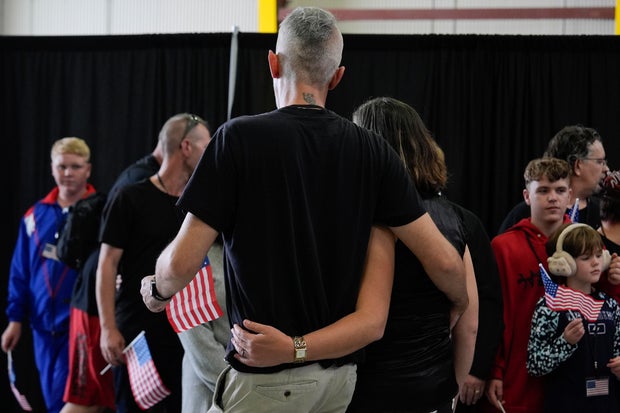
The prioritization of Afrikaners — while refugees from places like Afghanistan, Myanmar and Sudan, plagued by ethnic violence and armed conflict, are blocked from entering the United States — has led to accusations of preferential treatment among refugee advocates.
Krish O’Mara Vignarajah, president of Global Refuge, one of several national groups that have traditionally worked with the U.S. government to resettle refugees, said Trump’s decision “lowers our moral standing.”
“In times of crisis in countries ranging from Afghanistan to Venezuela to Sudan and beyond, concentrating the vast majority of admissions in one group undermines the purpose of the program as well as its credibility,” he added.
Officially created in 1980, the United States refugee program was designed to offer a safe harbor to people abroad fleeing persecution because of their race, religion, political opinions or membership in a social group.
Before the second Trump administration took office, United Nations officials referred refugees to the United States and they spent months or years in third countries to undergo interviews, as well as medical and security checks, before they were granted entry to the United States. The process is different from the asylum system, which can be accessed by foreigners already on U.S. soil, including those who enter the United States illegally.
In recent decades, most of those admitted to the United States as refugees come from countries in Africa and Asia plagued by war, ethnic conflict or repression of minority groups, State Department figures show.
After refugee admissions plummeted to a record low of 11,000 in fiscal year 2021 (mostly due to Trump-era cuts and the impact of the COVID-19 pandemic), the Biden administration dramatically expanded the program.
In fiscal year 2024, the Biden administration took in more than 100,000 refugees, the highest level since the 1990s, according to government data. Officials stopped releasing data on refugee admissions after Trump returned to the White House.