



Tanzania’s political opposition says 700 people died amid unrest over election that excluded leader
/News/News
Around 700 people have died in three days of election protests in Tanzania, the main opposition party said on Friday, with protesters still on the streets amid an internet blackout.
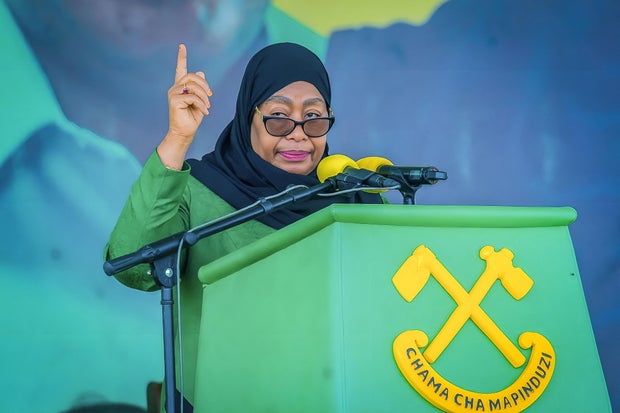
President Samia Suluhu Hassan had sought to consolidate her position and silence her party’s critics with a resounding victory in Wednesday’s election, in which her main rivals were jailed or banned from running.
But the vote descended into chaos as crowds took to the streets of Dar es Salaam and other cities, tearing down their signs and attacking police and polling stations, leading to an internet shutdown and a curfew.
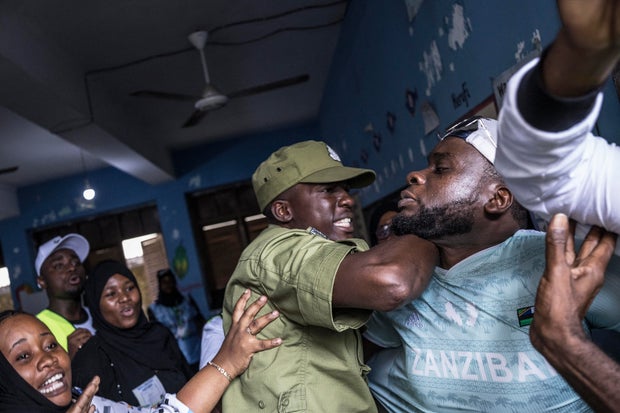
With foreign journalists largely banned from covering the election and a communications blackout entering its third day, reporting from the ground has been scarce.
The main opposition party, Chadema, said clashes between protesters and security forces continued at the shopping center on Friday.
“At the moment, the death toll in Dar (es Salaam) is around 350 and in Mwanza more than 200. Added to the figures from other places in the country, the total number is around 700,” Chadema spokesman John Kitoka told the French news agency News.
“The death toll could be much higher,” he warned, saying murders could occur during the nighttime curfew.
A security source told News that there were reports of more than 500 deaths: “Perhaps between 700 and 800 in the entire country.”
“We are talking about hundreds of deaths,” a diplomatic source told News.
The United Nations said “credible reports” indicated 10 deaths, in the first information published by an international body.
“We are alarmed by the deaths and injuries that have occurred in the current election-related protests in Tanzania. Reports we have received indicate that at least 10 people have died,” UN human rights office spokesman Seif Magango said, according to the Reuters news agency.
Amnesty International said it had information about the deaths of at least 100 people.
Many hospitals and clinics were too afraid to speak directly to the News.
Hassan had not yet commented on the unrest and local news sites had not been updated since Wednesday.
The only official statement came from army chief Jacob Mkunda on Thursday night, who called the protesters “criminals”.
In Zanzibar, a resort island with its own semi-autonomous government, a spokesman for Hassan’s Revolution Party (Chama Cha Mapinduzi, or CCM) said internet access would be restored when the situation calms down.
“The government knows why it has shut down the Internet. There are people who have tried to create tension in Dar es Salaam and have destroyed many things,” party spokesman Hamis Mbeto told reporters.
‘They have robbed the people’
In Zanzibar, the CCM had already been declared the winner of Thursday’s local vote. The opposition party, ACT-Wazalendo, rejected the result, however, saying: “They have stolen the voice of the people of Zanzibar… The only solution to bring justice is through new elections.”
A senior party official told News that ballot boxes were full, people were allowed to vote several times without showing identity documents and election observers were expelled from counting rooms.
At a meeting place for opposition supporters in Zanzibar, there was dismay and fear.
“There has never been a credible election since 1995,” said a 70-year-old man, referring to the first multi-party vote in Tanzania.
None of those interviewed gave their name.
“We are afraid to talk because they might come to our houses and pick us up,” said another.
Analysts say Hassan wanted a commanding victory in this week’s election to consolidate his position, and authorities banned the main opposition party, Chadema, and put its leader on trial for treason.
In the run-up to the vote, human rights groups condemned a “wave of terror” in the East African nation, including a series of high-profile kidnappings that have escalated in recent days.
Much of the public anger has been directed at Hassan’s son, Abdul Halim Hafidh Ameir, who has been accused by the opposition of overseeing the crackdown on the opposition and protesters.
ACT-Wazalendo was allowed to participate in local elections in Zanzibar, but its candidate was banned from competing against Hassan on the mainland.
In:
- Democracy
- Tanzania
- Death
- Africa
- Protest
- Choice