



Experimental serum shows promise in reversing baldness in 20 days
NEWNow you can listen to News articles!
A cure for baldness could be on the horizon.
Researchers at Taiwan University say they have discovered a serum that could make hair grow back in just 20 days.
The study, published in the journal Cell Metabolism, showed that fat cells under the skin can restart hair growth.
NEW STEM CELL THERAPY SHOWS ‘PROMISING’ RESULTS FOR THE TREATMENT OF HAIR LOSS IN PRECLINICAL TRIAL
The researchers used mouse skin samples to monitor changes in the fatty tissue beneath the skin, as well as in hair follicles and cells that help hair grow, after they caused small lesions to trigger certain reactions, according to a news release.
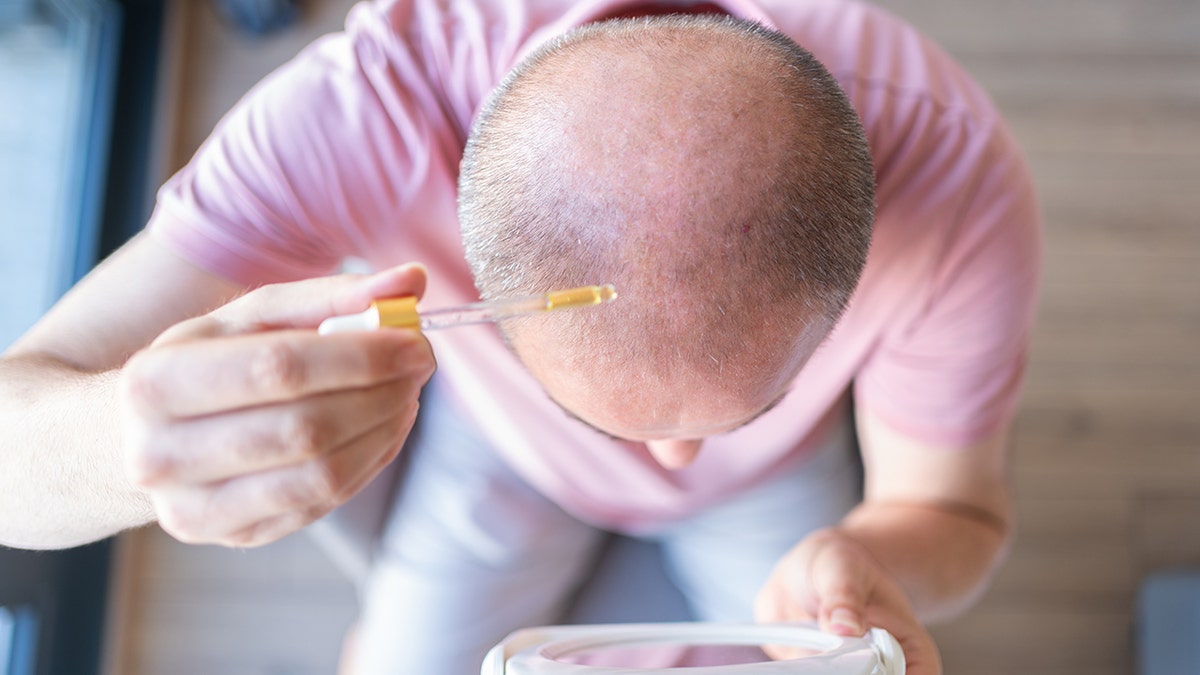
Researchers found that applying a topical fatty acid treatment to the skin promoted hair growth after skin injury. (iStock)
After a skin injury, fat cells began to break down stored fat in a process called lipolysis. Fatty acids were then released into the skin, which acted as a signal for hair stem cell growth.
When scientists stopped fat cells from breaking down fat, they stopped hair from growing.
MEN WHO GO BALD TURN TO THE ‘NEW BOTOX’ TO TREAT HAIR LOSS
Fatty acids were rubbed on the skin of the mice to determine if they would cause hair growth in these areas. The experiment was successful and triggered hair growth.
The same pattern was recognized in multiple experiments, although the research is still early and has not yet been tested in humans, the researchers noted.
The researchers concluded that this therapy has “considerable potential to treat hair loss conditions in the future.” (iStock)
In one experiment, scientists observed hair regrow in mice within 20 days of applying topical treatments once a day.
CLICK HERE TO DOWNLOAD THE News APP
These results were only identified after a skin injury. The researchers noted that controlled inflammation of the skin, caused by chemical irritation or “deeper dermal injuries,” had previously been shown to promote hair growth and is “used clinically in the treatment of hair loss.”
“However, the mechanisms by which latent [stem cells] and its niche cells detect and respond to these lesions to initiate hair regeneration are still unclear,” the scientists noted in the study.
CLICK HERE TO SUBSCRIBE TO OUR HEALTH NEWSLETTER
Experiments showed that putting monounsaturated fatty acids on the skin could help hair grow, the researchers noted. Because these fats occur naturally in the body and are already known to be safe, they could become a viable option for treating hair loss in the future, they added.

One dermatologist noted that more research is needed on this method as a possible treatment option for androgenetic alopecia. (iStock)
In an interview with News Digital, Dr. Brendan Camp, a board-certified dermatologist based in New York, said he considers these findings “remarkable” amid the “intense interest” in research on hair loss treatments.
“But they are very preliminary, and because the experiments were not performed on human scalp skin, the results may not be applicable to people,” he said.
TRY OUR LATEST LIFESTYLE QUIZ
“This study is small and more research is needed on this method as a possible treatment option for androgenetic alopecia (pattern hair loss, the most common type in both men and women).”
Until this potential method is approved for clinical use in humans, Camp encourages those experiencing hair loss to focus on currently available and “well-studied” treatments, as well as schedule an appointment with a board-certified dermatologist for evaluation.
CLICK HERE FOR MORE HEALTH STORIES
News Digital reached out to the study’s researchers for comment.
Angelica Stabile is a lifestyle reporter for News Digital.