



Death toll from Hurricane Melissa in Jamaica rises to 32 as officials rush to rebuild for tourism season
/News/AP
Jamaica’s government said Monday that at least 32 deaths have been attributed to Hurricane Melissaand Information Minister Dana Morris Dixon said there were possibly eight more unconfirmed deaths.
With the tourist season just a month away, officials are rushing to rebuild from the catastrophic category 5 storm that destroyed the western region of the island. Before the hurricane hit on October 28, the government expected Jamaica’s tourism industry to grow 7% this winter season and was preparing to welcome some 4.3 million visitors.
Now, officials are rushing to repair hotels and clear debris on the island’s western half in hopes of drumming up tourist dollars at a time when they are needed most.
Melissa was the most powerful hurricane to hit the island since records began 174 years ago. The National Hurricane Center said the storm initially made landfall near New Hope, on the southwest coast of Jamaica.

Before the storm, Jamaica’s government said it had done everything it could to prepare. “There is no infrastructure in the region that can withstand a category 5,” said Prime Minister Andrew Holness.
“We are still doing our assessments, but most of the damage was in the northwest and southwest,” said Christopher Jarrett, director of the Jamaica Hotel and Tourism Association.
He noted that the popular Negril area of Westmoreland was spared major damage.
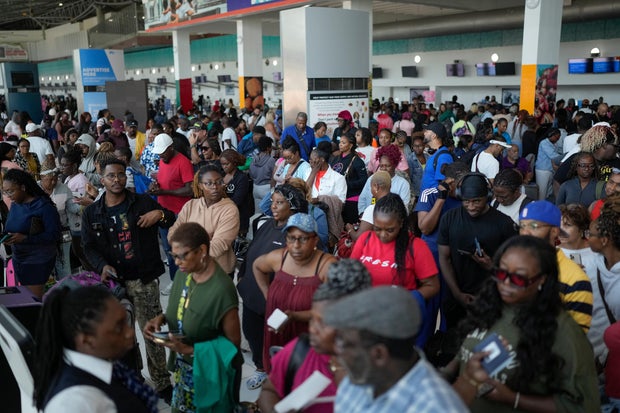
All of Jamaica’s international airports have reopened and are welcoming commercial flights. But almost a week later one of the most powerful Atlantic hurricanes ever recorded hit the western tip of Jamaica, tourism officials were still trying to get a true picture of the damage to the sector, a pillar of the island’s economy.
Jarrett said the lobby group representing private hotels and attractions on the island was still unable to contact many of its members, especially in the western parish of Hanover, because communications and electricity services were out.
“Every individual member that was affected is doing everything they can to get back up and running,” he said.
In recent days, Tourism Minister Edmund Bartlett said he expected Jamaica’s tourism sector to return to normal by December 15, the start of the island’s peak tourism season.
“It’s doable for some and not doable for others,” Jarrett said of the timeline, noting that larger hotel chains could recover faster.
Jarrett, who operates the family-owned Altamont Court Hotel, which has properties in Kingston and Montego Bay, said only one property in Montego Bay suffered roof damage and repairs were being made.
Despite the disruption to the important tourism sector, Jarrett said he does not expect the economic consequences to be significant. He said many hotels in the capital of Kingston and the northern coastal city of Ocho Rios were gaining business thanks to the influx of aid workers and volunteers after the hurricane.
“Right now we are giving discounts, between 25% and 50%, and some [hotels] We also offer complimentary stays,” Jarrett said.
Tourism is Jamaica’s main source of foreign exchange earnings, collectively contributing 30 percent of gross domestic product, directly and indirectly. It employs around 175,000 people and is a major economic driver for other sectors of the Jamaican economy, such as construction, banking and finance, public services and agriculture.
The disruption to the tourism sector is also affecting many providers of goods and services.
“With some of the hotels closed and most of the tourists absent, many of us were left without work. This storm not only destroyed buildings; it destroyed jobs and income for many of us and our families,” said Patricia Mighten, who works in the western parish of Hanover as a hotel housekeeper.
Desrine Smith, a crafts seller plying her trade in the resort town of Falmouth, in the north-western parish of Trelawny, echoed those sentiments.
“Going days without tourists coming to buy anything means there are no sales or money. We survive on daily profits and now everything is uncertain,” he said. “The hurricane has had a strong impact on our pockets.”
Crews are still trying to access 25 isolated areas in western Jamaica as helicopters continue to drop food at them. Nearly half of all energy customers remain without power.
In:
- Jamaica
- Hurricane Melissa