



Does the Supreme Court finally realize this?
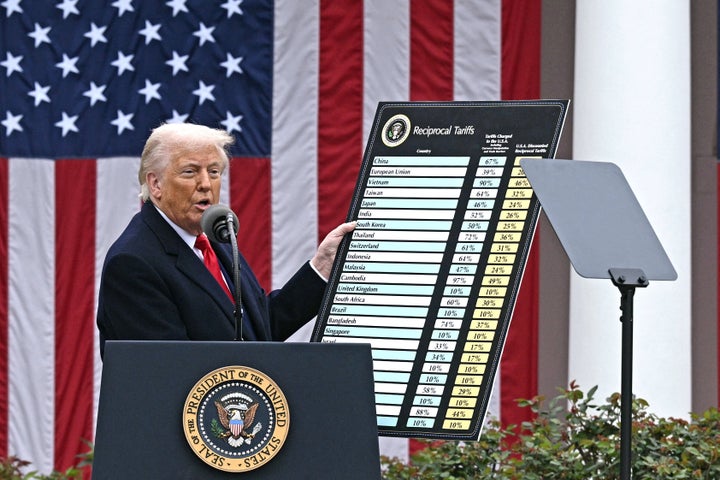
A day after a Democratic Party victory in off-cycle elections across the country, President Donald Trump’s bad week got even worse as the Supreme Court heard arguments in a challenge to his broad use of emergency powers to impose tariffs on nearly every country in the world. The president did not do well at all.
During oral arguments Wednesday, the justices expressed extreme skepticism toward Attorney General D. John Sauer’s argument that the court could not question whether Congress delegated its tariff power to the president in the International Emergency Economic Powers Act because it touched on his inherent powers in foreign affairs.
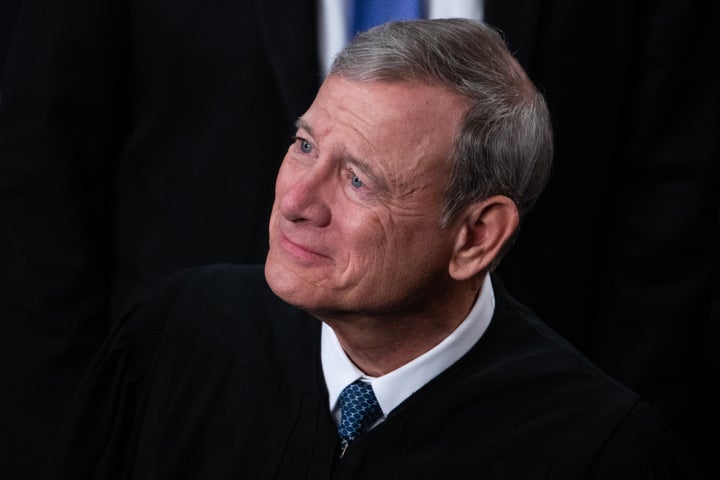
This skepticism came not only from liberals (who more or less argued that the administration’s arguments were nonsense) but also from conservatives such as Chief Justice John Roberts and Trump-appointed justices Neil Gorsuch and Amy Coney Barrett.
“The vehicle [of tariffs] “It’s the taxation of Americans, and that has always been the core power of Congress,” Roberts said. Allowing the president’s power in foreign affairs to “neutralize” that would destroy the separation of powers between the branches, he added.
It seems more than likely that the court will take away one of Trump’s favorite toys, a move he claims will “destroy” the country.
Such a decision would mark the clearest case of the court breaking with Trump since he regained the White House in the 2024 election. In case after case, the court’s conservatives have found ways to accommodate Trump’s extreme policies, often turning to procedural arguments that keep those policies in place without having to explicitly rule on them.
This possible break, in one of Trump’s two signature policies, would be an important brake on the second Trump administration and its unilateral vision of power. So why now and why in this case?
Tom Williams via Getty Images
There are two possible explanations. First, conservatives are clearly cautious about allowing the president too much leeway to interfere with the economy. This already came up in Slaughter v. Trump, where the administration claims that Congress cannot protect independent agency officials by allowing the president to fire them only for cause. The court’s conservatives have all but declared that they will overturn the nearly century-old precedent in Humphrey’s Executor v. US that allowed protections of causes. But they made sure to allow one key exception: Federal Reserve governors could maintain those protections.
This argument makes little logical sense, since the Federal Reserve is an independent agency attached to the executive, like any other, even if it prepares its own budget. But Trump has been fighting to fire Federal Reserve Chairman Jerome Powell and tried to fire Democratic-appointed board member Lisa Cook over false allegations of mortgage fraud. The court’s conservatives clearly see political control of the Federal Reserve as a threat to economic stability, so they are willing to craft an exception even if it makes no legal sense.
The tariff case is a little clearer from a legal perspective, but it’s also another factor showing that conservatives are more wary of the president tinkering with the economy on an ideological basis or on a whim, such as getting angry over an ad published by a Canadian province.
This fear of presidential meddling in the economy fits with the second reason the court could finally rein in Trump. Conservatives may want to preserve the major issues doctrine, which they have used to override presidential policymaking in Democratic administrations, in preparation for when a Democrat returns to the White House.
The leading questions doctrine was developed by conservative justices during the Biden administration to assert that Congress cannot delegate policy decisions to the executive branch on major issues of economic or political importance without explicit language authorizing those specific policies. The court first used the term “major issues doctrine” when it preemptively struck down the Biden administration’s proposed emissions standards for power plants in the 2022 case of West Virginia v. EPA. He did the same the following year in Biden v. Nebraska to apply doctrine by rescinding Biden’s student loan forgiveness plan.
The way the court used this doctrine during Joe Biden’s presidency faced harsh criticism for being incredibly vague: How do they determine what is an important issue? – and apparently used only to neutralize Democratic policies. Justice Elena Kagan called it a “texting avoidance card” in the West Virginia case.
“Some years ago, I commented that ‘[w]We’re all textualists now,'” Kagan wrote. “It seems I was wrong. The current Court is textualist only when it suits it. When that method thwarts broader goals, special canons like the ‘doctrine of leading questions’ magically appear as textless cards.”
BRENDAN SMIALOWSKI via Getty Images
On Wednesday, both Roberts and Gorsuch appeared to disagree with the administration’s assertion that the leading questions doctrine did not apply to Trump’s use of the IEEPA to impose tariffs.
“The justification is being used to impose tariffs on any product, on any country, for any amount and for any period of time,” Roberts said. “It appears that… that is an important authority and the basis of the claim appears to be misplaced.”
Similarly, Gorsuch had serious problems with the administration’s arguments that the president’s inherent authority over foreign affairs would override the major issues doctrine and wrest power from Congress.
“What would prohibit Congress from simply abdicating all responsibility for regulating foreign trade (really, for declaring war) to the president?”
Additionally, a Democratic president could declare a climate emergency to impose tariffs on gasoline-powered cars, Gorsuch said.
By using the important questions doctrine to shoot down Trump’s favorite tariff tool, conservatives could be trying to demonstrate that the important questions doctrine is not just a one-way legal mechanism. Considering that the court has become increasingly unpopular and lost considerable legitimacy since its far-right turn following Barrett’s appointment in 2020, that doesn’t seem far-fetched.
HeReactionIt’s here!
Your supportFuelsOur Mission
Your supportFuelsOur Mission
Cut the chaos
Americans just sent Trump a clear message, and Democrats are calling it “a five-alarm fire” for the president. Our reporters are here to keep you informed and make sense of the chaos in Washington. Join News themezone and be a part of what happens next.
We remain committed to bringing you the unwavering, fact-based journalism everyone deserves.
Thank you again for your support along the way. We are truly grateful for readers like you! Your early support helped get us here and strengthened our newsroom, keeping us strong in uncertain times. As we continue, we need your help more than ever. We hope you will join us once again.
We remain committed to bringing you the unwavering, fact-based journalism everyone deserves.
Thank you again for your support along the way. We are truly grateful for readers like you! Your early support helped get us here and strengthened our newsroom, keeping us strong in uncertain times. As we continue, we need your help more than ever. We hope you will join us once again.
News themezone Support
Are you already a member? Sign in to hide these messages.
It remains to be seen what this says about other Trump policies that are yet to be decided. The court may fear its own loss of legitimacy and presidential influence on the economy, but that does not mean it will stop Trump’s efforts to invade American cities, deport immigrants, trample the First Amendment or gut federal agencies.