



Trump administration seeks to stop SNAP food aid payments after court order
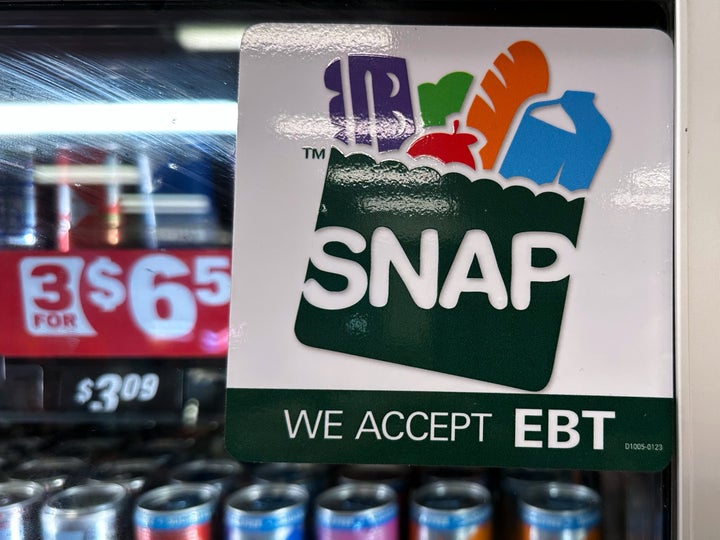
BOSTON (AP) — President Donald Trump’s administration on Friday asked a federal appeals court to block a judge’s order to distribute November’s full monthly SNAP food benefits amid the U.S. government shutdown, even as at least some states said they were moving quickly to get the money to people.
The judge gave the Trump administration until Friday to make payments through the Supplemental Nutrition Assistance Program. But the administration asked the appeals court to stay any court order requiring it to spend more money than was available in a contingency fund and instead allow it to continue with partial SNAP payments planned for the month.
The court filing came even as Wisconsin said Friday that some SNAP recipients in the state already received their full November payments overnight Thursday.
“We have received confirmation that payments have been made, including members who have reported that they can now view their balances,” said Britt Cudaback, a spokeswoman for Democratic Gov. Tony Evers.
Uncertainty persists for many SNAP recipients
The court faced prolonged weeks of uncertainty for the food program that serves about 1 in 8 Americans, mostly with lower incomes.
An individual can receive a maximum monthly food benefit of almost $300 and a family of four up to almost $1,000, although many receive less than that under a formula that takes their income into account. For many SNAP participants, it is still unclear exactly how much they will receive this month and when they will receive it.
via News
Jasmen Youngbey of Newark, New Jersey, stood in line Friday at a food pantry in the state’s largest city. As a single mother attending college, Youngbey said she relies on SNAP to help feed her 7-month-old and 4-year-old children. But he said his account balance was $0.
“Not everyone has cash to pull out and say, ‘Okay, I’m going to go get this,’ especially with the cost of food right now. It’s possible now,” he said.
Tihinna Franklin, a school bus guard who was waiting in the same line outside the United Community Corporation food pantry, said her SNAP account balance was 9 cents and she had three items left in the freezer. She typically relies on the roughly $290 a month in SNAP benefits to help feed her grandchildren.
“If I don’t get it, I won’t eat,” he said. “I get paid money that goes toward bills, rent, electricity and personal items. That’s not fair to us as mothers and caregivers.”
Legal battle over SNAP takes another turn
Due to the federal government shutdown, the Trump administration had originally said SNAP benefits would not be available in November. However, two judges ruled last week that the administration couldn’t skip November benefits entirely because of the shutdown. One of those judges was U.S. District Judge John J. McConnell Jr., who ordered the full payments Thursday.
In both cases, the judges ordered the government to use an emergency reserve fund containing more than $4.6 billion to pay for November’s SNAP, but gave it room to use other money to make the full payments, which cost between $8.5 billion and $9 billion each month.
On Monday, the administration said it would not use additional money, saying it was up to Congress to allocate the funds for the program and that the rest of the money was needed to shore up other childhood hunger programs.
Thursday’s federal court order rejected the Trump administration’s decision to cover only 65% of the maximum monthly benefit, a decision that could have left some recipients receiving nothing this month.
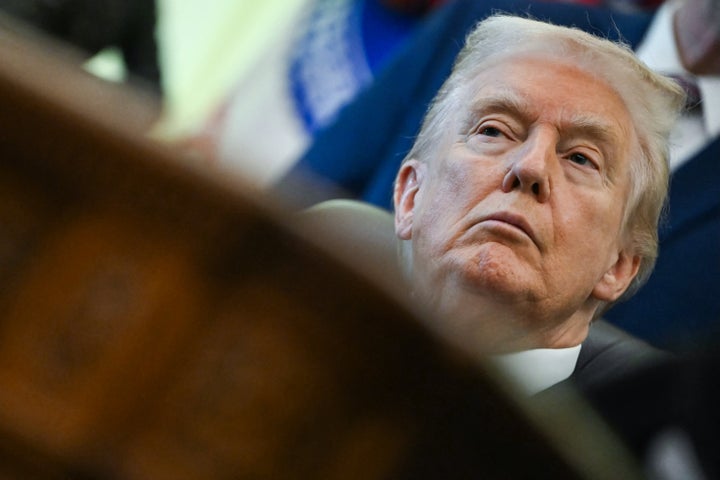
In its court filing Friday, the Trump administration argued that Thursday’s directive to fund all SNAP benefits runs counter to the U.S. Constitution.
“This unprecedented court order makes a mockery of the separation of powers. Courts have neither the power to appropriate nor the power to spend,” the US Department of Justice wrote in its request to the court.
In response, lawyers for the cities and nonprofits challenging the Trump administration said the government has plenty of money available and the court “should not allow them to further delay getting life-saving food assistance to the individuals and families who need it now.”
ANDREW CABALLERO-REYNOLDS via Getty Images
States are taking different approaches to food aid
Some states said they were willing to distribute SNAP money as quickly as possible.
The Michigan Department of Health and Human Services said it ordered a service provider of its electronic SNAP benefit cards to issue full SNAP benefits shortly after receiving the federal funds.
Benefits are provided to people on different days of the month. Those who normally receive benefits on the third, fifth or seventh day of the month should receive their full SNAP allotment within 48 hours of funds becoming available, the Michigan agency said, and others should receive their full benefits on their regularly scheduled dates.
Meanwhile, the North Carolina Department of Health and Human Services said partial SNAP benefits were distributed on Friday, based on the Trump administration’s earlier decision. Officials in Illinois and North Dakota also said they were distributing partial November payments, starting Friday for some recipients.
In Missouri, where officials had been working on partial distribution, the latest judicial pushes raised new questions. A spokesperson for the state Department of Social Services said Friday that it is waiting for more guidance on how to proceed from the U.S. Department of Agriculture, which administers SNAP.
Amid federal uncertainty, Delaware Democratic Gov. Matt Meyer said the state used its own funds Friday to provide the first of a weekly relief payment to SNAP recipients.
On Thursday, Nebraska Republican Gov. Jim Pillen downplayed the impact of suspending SNAP benefits on families in his state, saying, “No one is going to go hungry.” The billionaire said food pantries, churches and other charitable services would fill the void.
HeTidehas become
Your supportFuelsOur Mission
Your supportFuelsOur Mission
Cut the chaos
Americans just sent Trump a clear message, and Democrats are calling it “a five-alarm fire” for the president. Our reporters are here to keep you informed and make sense of the chaos in Washington. Join News themezone and be a part of what happens next.
We remain committed to bringing you the unwavering, fact-based journalism everyone deserves.
Thank you again for your support along the way. We are truly grateful for readers like you! Your early support helped get us here and strengthened our newsroom, keeping us strong in uncertain times. As we continue, we need your help more than ever. We hope you will join us once again.
We remain committed to bringing you the unwavering, fact-based journalism everyone deserves.
Thank you again for your support along the way. We are truly grateful for readers like you! Your early support helped get us here and strengthened our newsroom, keeping us strong in uncertain times. As we continue, we need your help more than ever. We hope you will join us once again.
News themezone Support
Are you already a member? Sign in to hide these messages.
___
Lieb reported from Jefferson City, Missouri, and Bauer from Madison, Wisconsin. News journalists Margery Beck in Omaha, Nebraska; Mike Catalini in Newark, New Jersey; Jack Dura in Bismarck, North Dakota; Mingson Lau in Claymont, Delaware; John O’Connor, in Springfield, Illinois; and Gary D. Robertson in Raleigh, North Carolina, contributed to this report.