



Treating gum disease could reduce risk of heart attacks and strokes, study suggests
NEWNow you can listen to News articles!
A deep cleaning at the dentist can benefit more than just your oral health.
In a two-year study of people with periodontitis or severe gum disease, researchers at University College London (UCL) found that those who received intensive treatment (a deep cleaning of the entire mouth with regular follow-ups) had slower thickening and blockage of a major artery in the neck and better blood vessel function than those who only had routine cleanings.
The randomized controlled trial followed 135 adults at UCL Eastman Dental Institute who had periodontitis, which can be caused by poor oral hygiene, genetics, smoking or uncontrolled diabetes, according to research published this month in the European Heart Journal.
COMMON VIRUSES LINKED TO ‘DRAMATIC’ POINT IN HEART ATTACK AND STROKE RISK
At 12 and 24 months, participants who received intensive deep cleanings showed less gum inflammation and fewer bacteria entering the bloodstream, and their arteries were healthier than those who received standard scaling and polishing care, which only removes plaque and tartar buildup.

A new study found that deep dental cleanings could benefit heart health. (iStock)
Dr. Marco Orlandi, a co-author of the trial, said in a statement that participants who received the intensive treatment for gum disease had a 0.02 millimeter reduction in the thickening of their carotid arteries after two years.
“This is a significant result, since even a reduction of 0.01 millimeters corresponds to a 10 percent decrease in the risk of cardiovascular disease, suggesting that participants reduced their risk by about 10 percent each year,” Orlandi said.
Doctors monitor the thickness of the carotid artery wall as an early warning sign of clogged arteries that can lead to heart attacks and strokes. This study did not count actual cardiac events, but the changes in the arteries, along with less gum inflammation, suggest that better oral health could help combat cardiovascular disease.
A FRUIT-BASED INGREDIENT CAN HELP FIGHT GUM DISEASE NATURALLY, SCIENTISTS DISCOVER
All participants were otherwise healthy and did not take medications regularly, which helped the researchers isolate the effects of gum disease treatment.
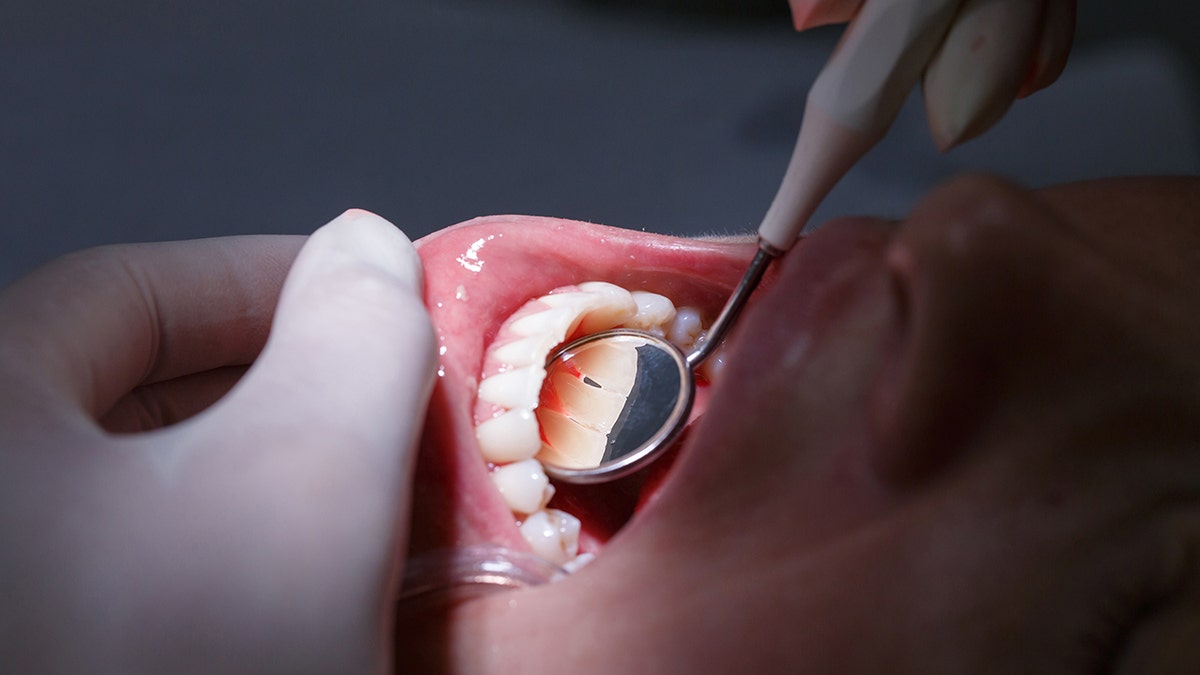
The researchers found that participants who received deep gum cleanings showed slower thickening of the carotid artery. (iStock)
“This is some of the strongest evidence to date that oral and cardiovascular health are interconnected,” Professor John Deanfield, lead author of the study and director of cardiovascular prevention at UCL, said in a statement. “Tackling periodontitis could become a powerful tool in preventing serious heart and brain events, such as heart attacks and strokes.”
Professor Francesco D’Aiuto, another of the study’s co-authors, added that medical and dental professionals should work more closely to recognize and address the cardiovascular implications of gum disease.
TRY OUR LATEST LIFESTYLE QUIZ
Periodontitis affects approximately 40% of adults worldwide and can cause bleeding, swelling and tenderness of the gums, and tooth loss if left untreated.
“Your gums are part of your vascular system,” Dr. Catrise Austin, a New York City cosmetic dentist and host of the “Let’s Talk Smiles” podcast, told News Digital. “If they’re swollen and bleeding, your arteries feel it.”

Experts recommend daily brushing, flossing, and routine cleanings to reduce inflammation that can affect more than just your mouth. (iStock)
Austin, who was not involved in the study, said the findings are further evidence that doctors and cardiologists should start paying more attention to the health of their patients’ gums.
CLICK HERE TO SUBSCRIBE TO OUR LIFESTYLE NEWSLETTER
“Asking a simple question like, ‘Do your gums bleed when you brush your teeth?’ could help identify early signs of systemic inflammation long before more serious health problems arise,” he said.
For patients, he recommends brushing your teeth twice a day, flossing daily, getting regular professional cleanings, quitting smoking, and managing conditions like diabetes. “These measures not only protect your smile, but also reduce inflammation that contributes to cardiovascular disease,” Austin said.
The study, supported by the National Institute for Health and Care Research (NIHR) and the NIHR UCLH Biomedical Research Center in collaboration with University College London Hospitals NHS Foundation Trust, adds to a growing body of research linking gum health with overall wellbeing.
CLICK HERE FOR MORE LIFESTYLE STORIES
Earlier this year, a large analysis of more than 500,000 people in the UK Biobank found that those with signs of gum disease, such as bleeding or sore gums, were more likely to have multiple chronic conditions, from diabetes to heart disease and depression.

The study measured the thickness of the carotid artery, an early sign of heart disease. (iStock)
Much of the previous evidence was correlated, showing that people with gum disease tend to have a higher cardiovascular risk, but it did not show that treating gum disease reduces heart attacks or strokes.
CLICK HERE TO GET THE News APP
News Digital has reached out to the study’s authors for comment.
Deirdre Bardolf is a lifestyle writer at News Digital.