



Super Typhoon Fung-wong hits the Philippines after displacing a million people
/ AP
Super Typhoon Fung-wong made landfall Sunday on the northeast coast of the Philippines, where the massive storm had already killed at least two people and forced more than a million people to evacuate from areas prone to flooding and landslides, officials said.
The typhoon hit the town of Dinalungan in Aurora province on Sunday night after bringing heavy rain and winds to the Philippines’ northeastern provinces all day from the coast, with sustained winds of up to 115 mph and gusts of up to 143 mph.
Fung-wong, the biggest typhoon to threaten the Philippines in years, could cover two-thirds of the archipelago with its 1,118-mile-wide band of rain and wind, forecasters said. It approached from the Pacific as the Philippines was still grappling with the devastation caused by Typhoon Kalmaegi, which left at least 224 dead in central provinces on Tuesday before hitting Vietnam, where at least five died.
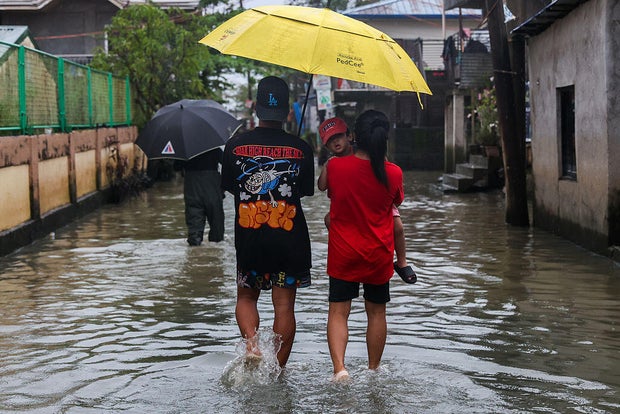
A villager drowned in flash floods in eastern Catanduanes province and another died in Catbalogan town in eastern Samar province when she was hit by debris, authorities said.
Philippine President Ferdinand Marcos Jr. has declared a state of emergency due to the extensive devastation caused by Kalmaegi and the expected calamity of Fung-wong, also called Uwan in the Philippines.
Tropical cyclones with sustained winds of 185 kph (115 mph) or greater are classified in the Philippines as super typhoons, a designation adopted years ago to underscore the urgency associated with more extreme weather shocks.
‘Zero visibility’
“The rain and wind were so strong that visibility was almost zero,” Roberto Monterola, a Catanduanes disaster mitigation official, told The News by phone.
Despite calls for residents to evacuate on Saturday, some still stayed.
“Our personnel rescued 14 people who were trapped on the roof of a flooded house in a slum neighborhood,” Monterola said. “A father also called in a panic, saying that the roof of his house was about to be torn off by the wind. We saved him and four family members.”
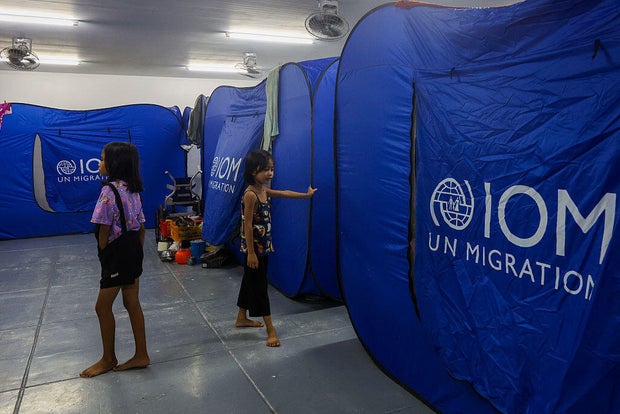
More than a million people were evacuated from high-risk villages in northeastern provinces, including Bicol, a coastal region vulnerable to Pacific cyclones and mudflows from Mayon, one of the country’s most active volcanoes.
Defense Secretary Gilberto Teodoro Jr. warned of Fung-wong’s potentially catastrophic impact in televised remarks Saturday. He said the storm could affect a vast expanse of the country, including Cebu, the central province hardest hit by the previous typhoon, and metropolitan Manila, the densely populated capital region.
More than 30 million people could be exposed to the dangers posed by Fung-wong, the Civil Defense Office said.
Teodoro asked people to follow government orders and seek shelter away from towns and cities prone to flash floods, landslides and coastal tides. “We need to do this because when it is already raining or the typhoon has come and flooding has started, it is difficult to rescue people,” Teodoro said.
Power outage in eastern towns
The Philippines has not asked for international help following the devastation caused by Kalmaegi, but Teodoro said the United States, the country’s former treaty ally, and Japan were willing to provide assistance.
As Fung-wong approached with its broad band of strong winds and rain, several eastern towns and cities were left without power, said Bernardo Rafaelito Alejandro, deputy administrator of the Civil Defense Office.
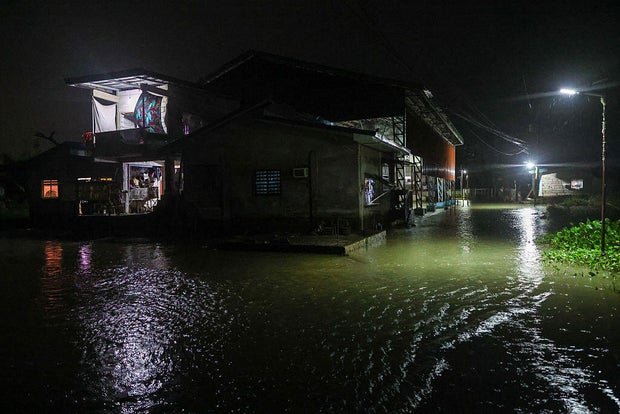
Authorities in northern provinces that could be affected or swept away by Fung-wong preemptively closed schools and most government offices on Monday and Tuesday. At least 325 domestic and 61 international flights were canceled over the weekend and into Monday, and more than 6,600 travelers and cargo workers were stranded in seaports, where the coast guard prohibited ships from venturing into rough seas.
Authorities warned of a “high risk of damaging and life-threatening storm surges” of more than 3 meters (nearly 10 feet) along the coasts of more than 20 provinces and regions, including metropolitan Manila.
The Philippines is hit by about 20 typhoons and storms each year. The country is also prone to earthquakes and has more than a dozen active volcanoes, making it one of the most disaster-prone countries in the world.
In:
- Typhoon
- Philippines