



Palestinians dying in
/News/AP
At least 94 Palestinians died in Israeli custody between October 7, 2023 and August 2025, according to a report by an Israel-based human rights group led by medical professionals, representing a dramatic increase in prisoner deaths during the war in Gaza.
The report by Physicians for Human Rights – Israel (PHRI) says its figures may represent only a portion of the total actual deaths of Palestinians under civil or military detention.
The PHRI says its investigation revealed “deeply disturbing patterns of physical violence and medical neglect,” which it says were the two main factors behind the deaths of the majority of Palestinians in Israeli custody.
“The alarming rate at which people are dying in Israeli custody reveals a system that has lost all moral and professional restraint,” said Naji Abbas, director of PHRI.
PHRI documented the deaths by interviewing former detainees and prison medical staff, examining reports prepared by doctors who observed autopsies at the behest of families of dead prisoners, and confirming dozens of deaths through freedom of information requests for Israeli government data.
The Israeli prison service said in response to the PHRI report that all its facilities operate in accordance with Israeli laws and with appropriate supervision.
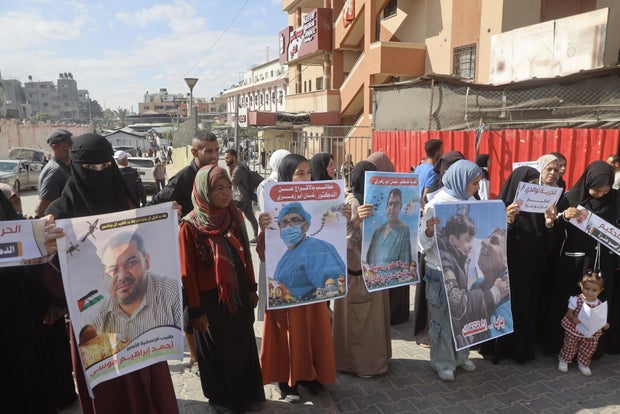
The PHRI says it analyzed post-mortem examinations that showed some Palestinian detainees died after suffering bruises “consistent with beatings”, multiple rib fractures, bleeding and lacerations of intra-abdominal organs.
Among the examples it cites of alleged medical negligence, the PHRI points to one case of documented severe malnutrition and several cases of serious infections that it said were not treated.
The report’s authors used official Israeli data obtained through freedom of information requests, as well as individual inquiries, to compile their report. It says that of the 94 Palestinians who have died in Israeli detention centers since October 2023, 68 were from the Gaza Strip. The remaining 26 were from the Israeli-occupied West Bank and some also had Israeli citizenship.
PHRI says the actual death toll during this period is “likely significantly higher,” and notes that Israel has refused to provide information on hundreds of Palestinians detained during the war.
Fewer than 30 Palestinians died in Israeli custody in the 10 years before the war, PHRI says. But since the war sparked by Hamas’ terrorist attack on Israel on October 7, 2023, the organization says Israel’s prison population has more than doubled to 11,000 as people, mainly from Gaza and the West Bank, have been detained.
The number of prisoners who died grew at an even faster rate during that period, PHRI data show.
In response to the report, the Israel Prison Service told News themezone that it operates “in accordance with the law and under the supervision of official oversight bodies.”
The service said it was not aware of specific incidents presented in the report and that the claims “do not reflect the conduct or procedures of the Israel Prison Service.”
The IPS also maintains that inmates have adequate access to medical care, hygiene and adequate living conditions.
Last year, the far-right nationalist government’s minister in charge of Israel’s prison system, National Security Minister Itamar Ben-Gvir, boasted that he had downgraded prison conditions to the legal minimum and promised that they would no longer be “summer camps.”
Under pressure from human rights groups, conditions in Israeli detention centers have improved slightly in recent months, the PHRI says.
Personal testimonies from prison staff
A former nurse at the Sde Teiman military prison in southern Israel, who PHRI said had spoken on condition of anonymity, told the organization that chains were used to chain the arms and legs of many prisoners, in some cases causing injuries so severe that Palestinians’ limbs had to be amputated.
During the several weeks in early 2024 when he said he worked at the facility, which has held many Gaza detainees and has been the focus of high-profile abuse allegations, he said he did not see anyone die, but that staff had mentioned prisoner deaths. PHRI said it left the job in response to the alleged abusive treatment of prisoners.
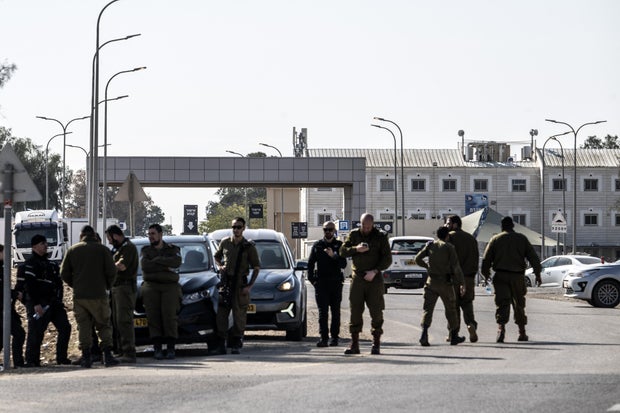
The Israeli military said extended handcuffs are implemented only in exceptional cases, when there are “important security considerations.” Even then, the medical condition of detainees is taken into account, he said. Only a few Gaza detainees are currently being treated this way, he added.
A former Sde Teiman guard told PHRI that at some point her commanders (who she claims participated in the beatings) asked their colleagues to reduce the number of deaths. Cameras were eventually installed, which helped mitigate the alleged abuse, the PHRI says.
The PHRI report says 29 prisoners have died at Sde Teiman since the war began. Earlier this year, an Israeli soldier was convicted of abusing Palestinian detainees in Sde Teiman and sentenced in a high-profile case to seven months in prison, which the military said was proof of responsibility.
But lawyers for the prisoners say Israel rarely conducts serious investigations into the alleged violence, which they say fuels the problem.
In a sign of the public mood on the issue, the Israeli government Top military lawyer recently forced to resign after admitting that he had approved the leak of surveillance video at the center of an investigation into allegations of serious abuse against a Palestinian detainee in Sde Teiman.
He said his intention with the leak was to defend his office’s decision to prosecute the guards for alleged abuses. Instead, it drew fierce criticism from hardline Israelis, including some members of the government, who sympathized with the guards. Sde Teiman and another detention center were overrun by angry protesters who clashed with prison guards and attempted to break into both facilities.
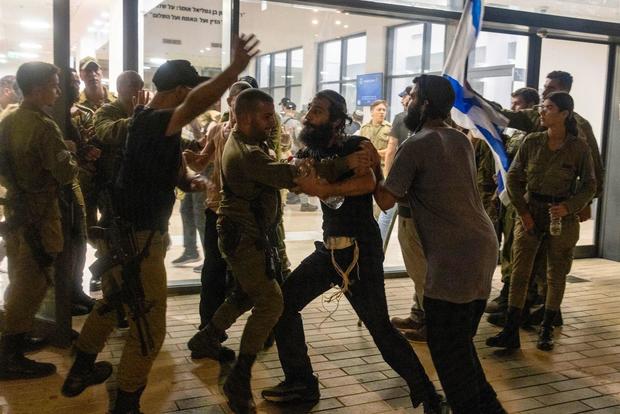
Several military officers were charged in the case, which is still pending before a military court.
It is difficult to determine with certainty the cause of death for most prisoners. Sometimes, at the urging of prisoners’ families, Israel granted doctors permission to attend autopsies and provide reports to families about what they saw.
Alleged medical negligence
Eight reports cited by PHRI and seen by The News showed a pattern of physical abuse and medical neglect.
In one of them, a 45-year-old man who died in the Kishon detention center, Mohammad Husein Ali, showed multiple signs of physical assault, which probably caused a brain hemorrhage, according to the report. The possible use of excessive restrictions was also noted.
His family said he was in good health before he was detained at his home in the West Bank. He died a week after being imprisoned.
Malnutrition was a contributing factor in at least one detainee’s death, according to PHRI, and a 17-year-old died of starvation.
In September, Israel’s Supreme Court ordered that more and better food be served to Palestinian inmates. Human rights groups say the situation has improved slightly.
The military said detainees receive three meals a day, approved by a dietitian. He said each detainee is examined by a doctor upon arrival and, for those who need it, monitored with regular check-ups.
In:
- War
- Prison
- Israel
- Loop
- Palestinians
- Middle East
- Benjamin Netanyahu