



Why starving cancer could be key to slowing the disease’s growth, doctors say
NEWNow you can listen to News articles!
What we eat plays an important role in our health and well-being, especially in the development of chronic diseases.
On a recent episode of Dr. Mark Hyman’s podcast, “The Dr. Hyman Show,” the physician and co-founder of Function Health talked about how eating habits can change the course of the disease.
Podcast guest Dr. Jason Fung, a Canadian physician, author and researcher, joined Hyman to discuss how fasting can help reverse diseases like cancer.
TWO POPULAR TYPES OF EXERCISE COULD REDUCE CANCER GROWTH, STUDY FINDS
‘Repair mode’
“The idea of fasting is to try to put the body into this kind of regenerative maintenance mode,” he said. “Because what we’ve recognized is… you can go into growth mode, or you can go into a kind of cellular maintenance repair mode.”

What we eat plays an important role in health and well-being, especially in the development of chronic diseases. (iStock)
This depends on the availability of nutrients, the doctor said. When nutrients are available, cells want to grow. Without nutrients, the body enters a state of “maintenance repair.”
Fung compared fasting to a car engine. Revving the engine and accelerating will cause faster wear, but sometimes it is necessary to make a “pit stop” and take the car to the shop for maintenance.
GLP-1 WEIGHT LOSS MEDICATIONS LINKED TO BETTER CANCER SURVIVAL IN CERTAIN PATIENTS
“That’s also the goal of the human body,” he said. “You can choose growth, or longevity, or cellular maintenance, but you have to have a little bit of both. There’s a balance there. It’s not all growth.”
Fasting and cancer treatment
According to Fung, eating pushes cells into growth mode, which could be dangerous when fighting diseases like cancer, where cells grow too much.
“You’re basically fueling that growth,” he said. “And that’s going to be very, very bad for you.”
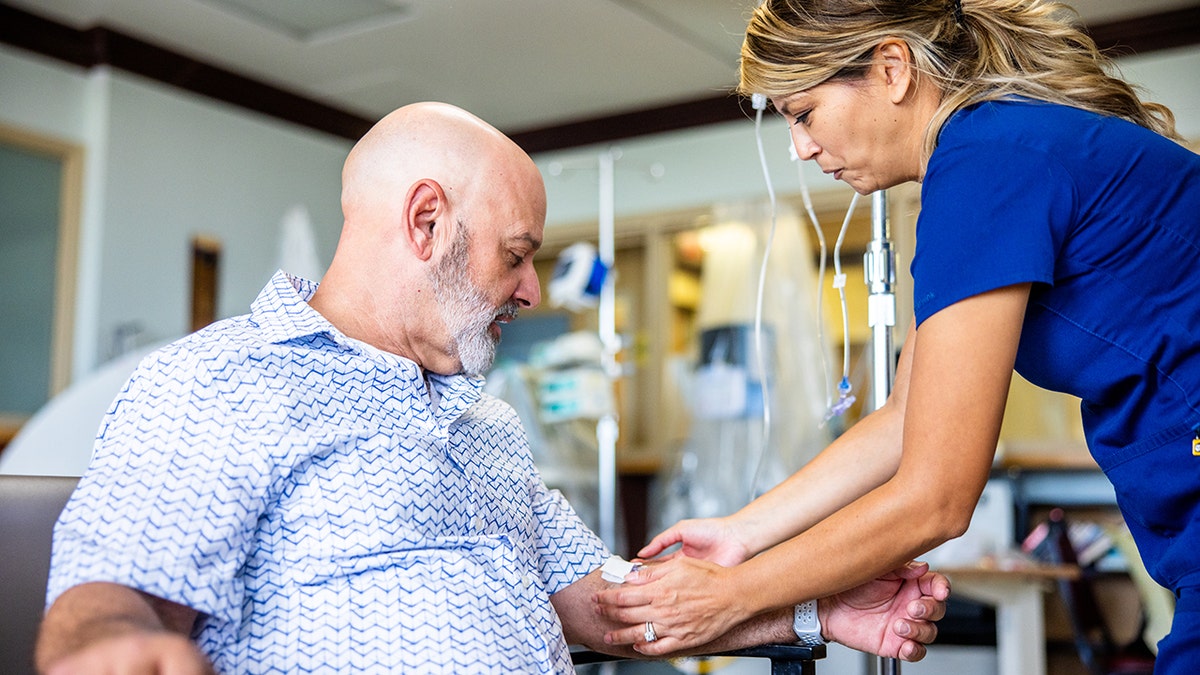
Research has shown that fasting just before, during, and after chemotherapy can cause fewer side effects. (iStock)
According to the doctor, fasting can allow cells to go into “care mode,” allowing the body to better undergo chemotherapy and radiotherapy.
Research has found that fasting just before, during and after chemotherapy can cause fewer side effects as cells slow down and “stop trying to grow,” Fung said.
“You can take care of your body and at the same time put cancer at a disadvantage.”
Chemotherapy aims to kill the fastest growing cells, tending to attack hair follicles and the lining of the gastrointestinal tract, causing hair loss and nausea.
CLICK HERE TO DOWNLOAD THE News APP
“So if you can put those cells into a kind of dormant repair mode, [they’re] “They’re not going to suffer as much damage from the chemotherapy,” he said. “And on the other hand, cancer cells, which can’t stop their growth, are always trying to grow, they can’t grow. Therefore, they will be totally damaged by chemotherapy while their body is relatively protected.”
Nutrition, metabolism and cancer.
In an interview with News Digital, Dr. Frank Dumont, an internal medicine physician and executive medical director of Virta Health in Colorado, commented on the concept of starving cancer.
CLICK HERE TO SUBSCRIBE TO OUR HEALTH NEWSLETTER
As a doctor specializing in using nutrition to improve metabolism, Dumont stressed that metabolic health goals can be achieved without having to resort to fasting.
According to the doctor, there is a “tremendous overlap” between the metabolic benefits of fasting or time-restricted eating and adjustments to dietary macronutrients, such as decreasing carbohydrate intake when appropriate.

Restricted eating and fasting have the same health benefits, according to a doctor. (iStock)
“You see the same types of benefits,” he said. “When you do that, glucose levels start to go down, insulin levels go down, and inflammation goes down.”
“You can adjust what you eat or you can do things like restrict how much or when you eat. How you do it depends on what makes the most sense.” [for] your situation and what you can tolerate.”
TRY OUR LATEST LIFESTYLE QUIZ
Dumont shared that when insulin increases, causing insulin resistance, this leads to metabolic dysfunction and can stimulate the growth of some cancer cells.
Other cancers also do not use energy and rely on glucose as their “sole form of fuel” instead of fats, fatty acids and ketones, according to Dumont.
CLICK HERE FOR MORE HEALTH STORIES
“The bottom line is that our body is much more flexible,” he said. “If you can start to get nutrition to match metabolism, that often means reducing glucose intake and, in a sense, starving the cancer.”
At the same time, he said, it’s important to find a way to fuel the body with other types of foods.
“You can take care of your body and at the same time put cancer at a disadvantage.”
Angelica Stabile is a lifestyle reporter for News Digital.