



Supreme Court seeks to eliminate 50-year rule
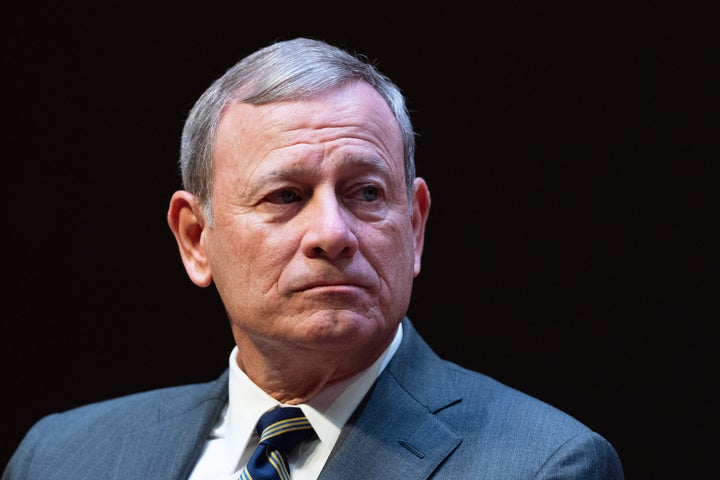
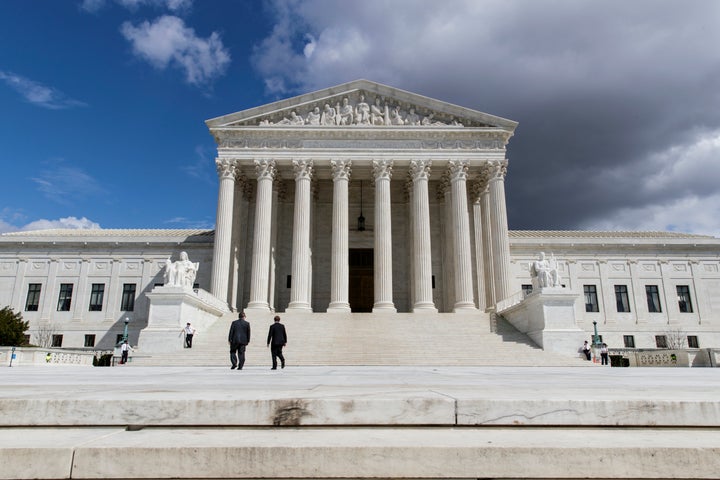
The Supreme Court has steadily relaxed campaign finance rules in a series of decisions since Chief Justice John Roberts was confirmed in 2005. They will seek to go further Tuesday, when the court hears arguments in a case challenging 50-year-old limits on coordinated spending between parties and candidates.
In the case of NRSC v. Federal Election Commission, a Republican campaign committee is questioning the limits placed on the amount of money political parties can spend in direct coordination with candidates. Those limits, which were established in the Federal Election Campaign Act of 1971, were intended to complement other rules on how much individuals can contribute to individual campaigns, preventing deep-pocketed contributors from using party donations as a workaround to those limits. Current limits on how much a party can spend coordinating with a specific candidate vary, from $63,600 for most House races to $3.9 million for Senate races in California and even more for presidential candidates.
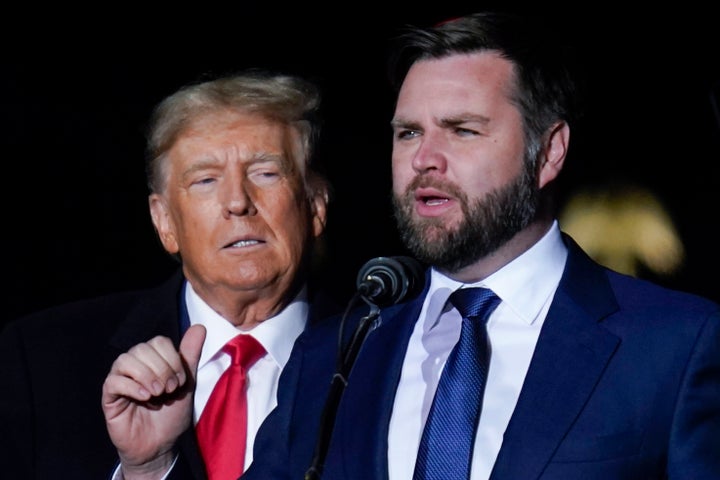
The case arises from Vice President JD Vance’s 2022 Senate campaign in Ohio. During the primaries, Vance’s fundraising lagged behind his Republican opponents and he relied on outside spending from billionaire Peter Thiel to push him over the top. He continued to struggle to raise money in the general election against Democratic Rep. Tim Ryan. (Vance ultimately won.) And so the National Republican Senatorial Committee, the main political committee for Republican Senate candidates, and Vance sued to allow the party to spend unlimited sums on direct coordination with its candidate, arguing that coordination limits infringed on fundamental First Amendment rights to political speech.
NRSC attorneys argue that the limits in question block constitutionally protected political speech and do not prevent corruption or its emergence. Since “no one seriously claims that parties are trying to bribe their candidates,” the limits have been defended and maintained in the past as a prevention of “quid pro quo shirking,” the NRSC report states. But this justification was thrown out in the court’s 2014 decision in McCutcheon v. FEC, so the party coordination limits should be annulled, the brief argues.
In fact, preventing circumvention of contribution limits is at the heart of coordinated spending limits. If a political party can raise almost a million dollars from a single donor who wants to spend it on a particular candidate, the party can effectively contribute that million dollars (or more) to the candidate’s campaign by funding, for example, their ads as a coordinated expenditure. Since candidates are limited to raising $3,500 per election from a single donor, this would be an important way to get around those limits, which are at the heart of campaign finance regulation.
Michael Conroy via News
Every lower court that heard the case rejected the NRSC’s arguments, following the 2001 Supreme Court precedent in FEC v. Colorado Republican Federal Campaign Committee that upheld the limits. There, in a 5-4 decision written by then-Justice David Souter, the court ruled that “a party’s coordinated expenditures, unlike truly independent expenditures, may be restricted to minimize circumvention of contribution limits.” But the Supreme Court took up the case and could now overturn the campaign finance law once again.
The court has held limits on candidate contributions constitutional since 1976, so it would make sense for them to prevent their circumvention, particularly as it has become easier for parties to raise the kind of large contributions that candidate limits are intended to protect against. But that hasn’t stopped the court in the past.
Since the court last heard a case challenging the parties’ coordinated spending limits, its makeup has changed dramatically, as has its campaign finance jurisprudence. In the years since 2001, the court’s conservative bloc has grown from five to six, with no true moderates among them. And with the retirement of Sandra Day O’Connor in 2006, the court lost its last member with experience running for office or working on a political campaign.
He has also issued decision after decision dismantling federal and state campaign finance laws. The most notable of these is the case Citizens United v. FEC of 2010, a decision that allowed corporations, unions, and nonprofit organizations to spend unlimited amounts on independent campaign expenses. But there’s more, including the McCutcheon decision that invalidated aggregate contribution limits that put a limit on the amount of money a single donor could contribute in total in an election cycle.
These campaign finance decisions have been largely based on a repeated misunderstanding of how candidates and parties use money in elections. In each case, the court’s decisions loosening campaign finance restrictions have had enormous unintended consequences (at least according to the court’s writings), such as an increase in undisclosed campaign money and illegal foreign donations and the circumvention of limits on party contributions.
There’s no reason to think that won’t happen here.
“This case must be viewed in the context of the court’s two decades of substituting its own judgment for that of voters and Congress on campaign finance,” said Daniel Weiner, a campaign finance law expert at the Brennan Center for Justice, a left-leaning nonprofit.
In Citizens United, then-Justice Anthony Kennedy, who wrote the majority opinion, explained his decision by stating that “independent expenditures, including those by corporations, do not give rise to corruption or the appearance of corruption.” That has proven wildly inaccurate, such as the corruption convictions of North Carolina insurance executive Greg Lindberg and former Ohio House Speaker Larry Householder (R), and the 2015 impeachment of then-Sen. Robert Menéndez (D-N.J.) all involved corrupt contributions made through outside groups making independent expenditures. (Menendez was later convicted of accepting bribes and acting as a foreign agent in a separate case in 2024.)
Manuel Balce Ceneta via News
Kennedy also promised that, thanks to the Internet and disclosure laws, corporations or others who spend unlimited sums on independent expenditures could be held accountable to the public. But Citizens United allowed for a radical decline in campaign spending transparency as “dark money” nonprofits, which do not disclose their donors, became major political spenders. These groups now make up a growing percentage of super PAC donors. Although super PACs are required to disclose their donors, that does not translate into requiring donor disclosure to those donors, making the true origin of much of their election funding completely opaque.
Similarly, the notion that independent expenditures are truly independent of candidates or parties has proven to be completely inaccurate. The outside groups that spend the most are those that are directly connected to party leaders or have close associates of the candidates they support. Candidates provide information, such as collateral and instructions on what messages to use in advertising to outside groups, on their websites, or surreptitiously on social media. And in 2024, the FEC ruled that supposedly independent groups can coordinate directly with parties and candidates in get-out-the-vote operations. Billionaire Elon Musk did exactly this with the Trump campaign and earned a great spot in the White House for his efforts.
In the McCutcheon case, the court’s decision was based largely on naive expectations about how political parties would act once the aggregate limits were removed. Aggregate contribution limits limited the total amount a donor could donate in any election, across all political parties and candidates. The intent was, like coordinated spending limits, to prevent corruption and workarounds to candidate limits.
A key argument in the case was that, in the absence of aggregate limits, political parties could create a joint fundraising committee that would link all 50 state parties to the national party and allow them to easily transfer money donated in one state to support a candidate elsewhere. During oral arguments, Alito called these “far-fetched hypotheses.”
Then-Justice Antonin Scalia wrote for the majority: “The Government provides no reason to believe that many state parties would willingly participate in a scheme to funnel money to out-of-state candidates.”
But that’s exactly what happened. Beginning with Hillary Clinton’s 2016 presidential campaign, each presidential campaign has created a joint fundraising super committee that then redirects contributions made to non-swing state parties to state parties in swing states or back to the national party.
While party coordination limits seem to present fewer opportunities for the court to cause serious unintended consequences with another uninformed decision, there are a couple of things to keep in mind.
First, coordinated spending is almost exclusively in the form of advertising: the candidate designs an ad and plans when and where to run it, and the party foots the bill. But this could have unintended consequences for television stations, which are required to offer candidates the lowest unit price for campaign ads in the run-up to the election. Neither parties nor external groups receive this benefit.
J. Scott Applewhite via News
If parties are suddenly able to subsidize candidate ads, television stations could be put under financial strain as they would lose money they previously received from higher charges for party advertising. This is an argument made by lawyers for the Democratic National Committee, who have entered the case to defend the limits.
“Stations across the country will face significant increases tives in advertisements seeking to qualify for the lower unit rates, which will place substantial financial pressure on them,” the report said. Democratic National Committee Report states.
This is likely to lead broadcasters to challenge rules that interpret coordinated spending as coming from the candidate and therefore receiving the lowest unit rate, according to Marc Elias, senior counsel for the Democratic National Committee.
“This will have commercial impacts outside of the campaign finance world,” Elías said.
And then there are the unintended consequences that can arise in the world of campaign finance.
By eliminating aggregate limits, the McCutcheon decision opened the door for parties to raise massive contributions from individual donors through super-joint fundraising committees. In 2024, the maximum contribution to Vice President Kamala Harris’ joint fundraising committee was $929,600 for a single donor. Most of that money ended up in the hands of the Democratic National Committee or its state parties, which then skirted contribution limits by directing that money to undecided state committees.
If the court ends coordinated spending limits, it will lead to massive circumvention of candidate limits, just as the McCutcheon decision did with party limits. And, just as McCutcheon’s unintended consequences now flow into the NRSC case, so too would circumvention of candidate limits lead to their final elimination.
There may be reasonable political reasons to support removing or increasing coordinated spending limits, as the Brennan Center’s Weiner has argued. in a world where single billionaires like Musk can spend unlimited money units To coordinate directly with candidates through super PACs, it would be better for political parties, which are rooted in democracy and mass governance, to be on equal, if not supreme, footing.
But that should be done by Congress, Weiner argues, not the Supreme Court, which has proven time and again that it doesn’t understand how political campaigns work.
“The bottom line is who should decide,” Weiner said. “I think it should be Congress that decides. We consider it a fundamental principle. This is not something that is within the constitutional jurisdiction or, frankly, the expertise of the Supreme Court to make this call.”