



Innovative GLP-1 Implant Promises Significant Weight Loss Benefits for Pets
NEWNow you can listen to News articles!
The world’s first GLP-1 weight loss treatment is being administered to pets on an experimental basis.
The first cat successfully received a dose in the MEOW-1 study of OKV-119, an investigational “ultra-long-acting” GLP-1 implant that, according to a press release, is being developed for weight management in cats.
OKAVA Pharmaceuticals, the drug’s San Francisco-based maker, said the landmark clinical study of the “first-in-class” device could have “profound” implications for diabetes, kidney disease, healthy aging and pet longevity.
CLICK HERE TO SUBSCRIBE TO OUR HEALTH NEWSLETTER
The implant allows for continuous delivery of a GLP-1 receptor agonist, improving cardiometabolic health and potentially “improving quality of life” while extending it, according to the release.
Once available, the single implant can be administered during a routine visit to a cat’s veterinarian, with guaranteed delivery of the medication for up to six months.

The OKV-119 implant guarantees the administration of the drug for six months. (iStock)
The MEOW-1 trial marks the first of its kind for clinical investigation of weight loss in dogs and cats, following the advancement of the use of GLP-1 in humans for the treatment of obesity and diabetes.
OKAVA CEO Michael Klotsman, Ph.D., wrote in a statement that caloric restriction, or fasting, is “one of the best-established interventions to extend the lifespan and improve the metabolic health of cats.”
CLICK HERE FOR MORE HEALTH STORIES
“But it’s also one of the most difficult to maintain,” he said. “OKV-119 is designed to mimic many of the physiological effects of fasting (improved insulin sensitivity, reduced fat mass, and more efficient energy metabolism) without requiring significant changes to eating routines or disruption of the human-animal bond that often centers around food.”

Future research will consider weight management in dogs, the researchers said. (iStock)
The MEOW-1 study aims to evaluate the safety, tolerability and effectiveness of the weight loss medication in overweight or obese cats. According to the researchers, the results will guide future clinical development, as well as a similar study in dogs.
CLICK HERE TO DOWNLOAD THE News APP
Dr. W. Chris Hummel, a veterinarian at Lovet Pet Health Care in Phoenix, Arizona, who was not involved in the study, confirmed that several GLP-1 drugs are being investigated in domestic animals.
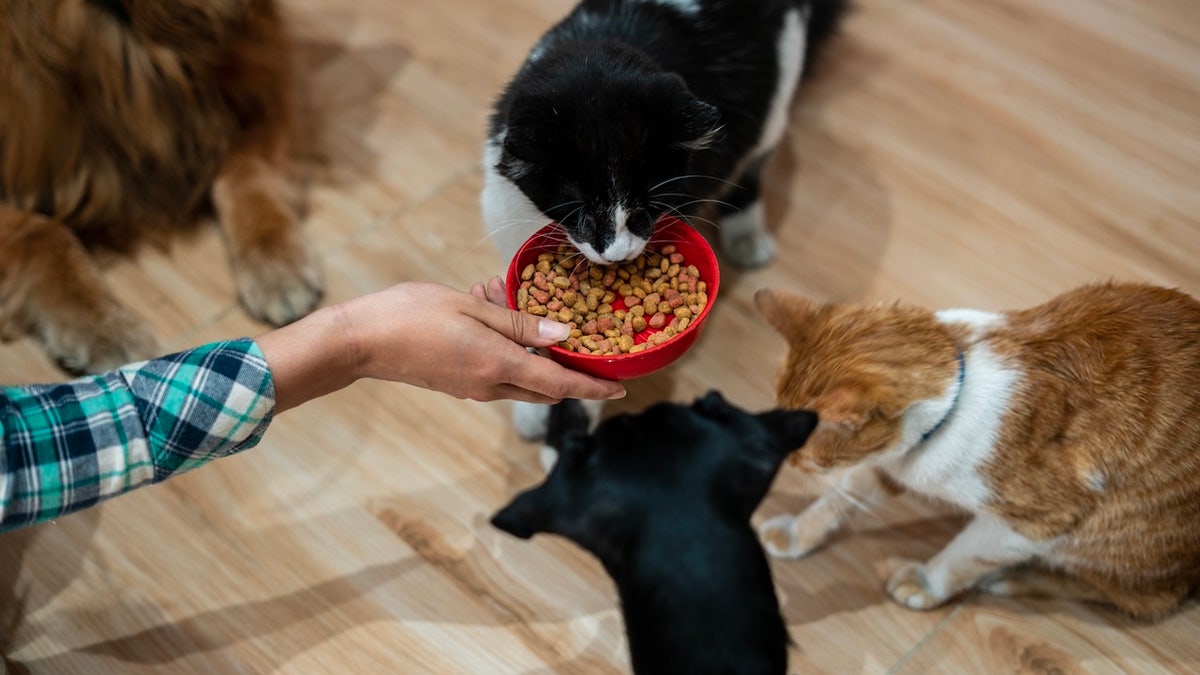
The researchers stated that a GLP-1 treatment for cats does not require changes in diet that could alter the bond between humans and animals. (iStock)
“Preliminary evidence suggests that GLP-1 and GLP-like medications may be effective alternative therapies for diabetes mellitus, also known as sugar diabetes,” he told News Digital. “Diabetes mellitus is one of the fastest growing diseases in dogs and cats, largely on the heels of the pet obesity epidemic.”
TRY OUR LATEST LIFESTYLE QUIZ
“The drugs are administered by injection, so long-acting combinations are currently being investigated to determine their effectiveness and duration,” Hummel added. “The data is still early, but promising.”
Angelica Stabile is a lifestyle reporter for News Digital.