



Stung by higher prices, many Trump voters say: Don
December 13: When Ron Dailey goes out to eat, he is surprised by the prices on the menu. “Breakfast is $20 no matter how you split it,” said Dailey, 63, who voted for President Donald Trump in November 2024.
Dailey, a Denver-area resident who works for a human resources outsourcing solutions company, believes “the back-and-forth of tariffs” has sown uncertainty in the market, raising some costs.
But he has seen other prices fall: He recently paid just $1.74 a gallon for gasoline. Overall, he rates Trump an 8 out of 10 on his handling of the cost of living.
“There’s nothing the president has a magic wand over,” said Dailey, who believes the president’s tariffs and deregulatory agenda will eventually reduce most everyday costs.
Affordability is at the center of voters’ minds as both parties prepare for next year’s midterm congressional elections, and Republicans are particularly concerned that continued high prices could hurt their chances of retaining control of Congress.
via News
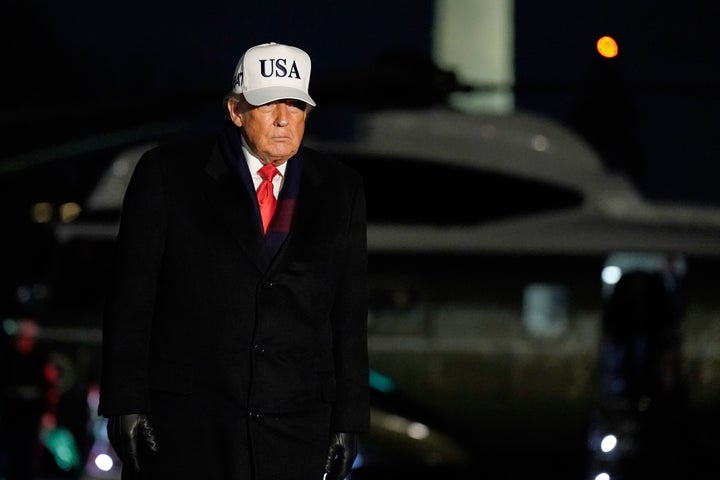
After campaigning last year on promises to control inflation, Trump in recent weeks has alternated between dismissing affordability problems as a hoax, blaming President Joe Biden for them and promising that his economic policies will benefit Americans next year.
In interviews, a group of 20 Trump voters from across the country whom Reuters has spoken to monthly since February revealed how high costs are impacting their lives and who they blame. Reuters asked voters to rate the Trump administration’s approach to affordability on a scale of 1 to 10. Six of 20 voters gave it a score of 5 or less, and only one rated it above 8.
But most voters strongly supported the president, predicting that his policies would improve their long-term purchasing power or saying he had little control over everyday costs. Most of them blamed larger structural problems in the American economy (oligopolies, corporate greed, excessive money supply) for the rising cost of living.
CRITICAL ANXIETY
Their opinions roughly match the results of recent surveys. Nearly three-quarters of Trump voters who responded to a Reuters-Ipsos poll in early December said they approved of the president’s handling of the cost of living, compared to 30% of all respondents. The figure for Trump voters was a 10 percentage point jump from a smaller survey in November.
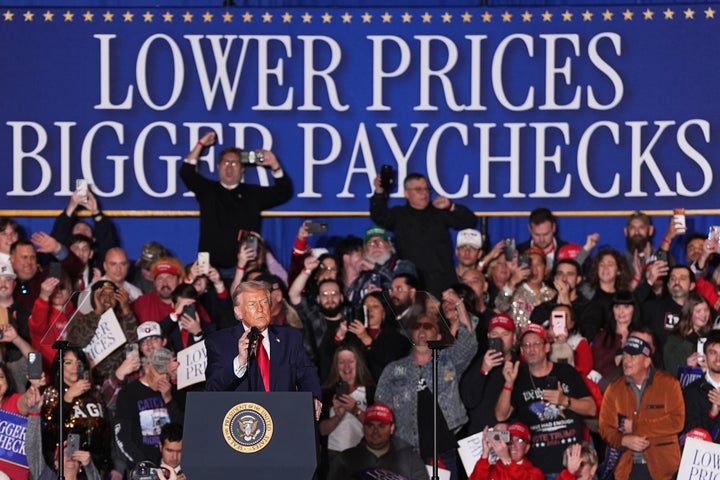
Still, Republicans fear they will be vulnerable on the economy before next year’s elections, and independents are more skeptical of the president’s economic policies. Trump hit the road this week to tout his cost-cutting efforts to the public, starting with a rally in Pennsylvania on Tuesday.
via News
“I have no higher priority than making America affordable again,” Trump said at the rally, where he took credit for lowering gas and energy costs and the price of eggs. He blamed Biden for the high prices of other products, even though Trump has been in office for almost a year.
Government data shows that job growth has slowed during Trump’s second term, unemployment has risen to its highest level in four years and consumer prices remain high. Overall, economic growth has recovered somewhat after contracting during the first months of the year.
Eight of the voters interviewed by Reuters reported rising prices at their local restaurants and grocery stores, especially for meat and coffee, although a handful reported that food prices had fallen, and 11 said they had seen drops in the cost of gasoline in their area.
Several complained that Trump had done too little to address those issues and that his signature tariffs had been applied inexpertly, needlessly raising prices for Americans.
Loretta Torres, 38, a mother of three near Houston, gave Trump an 8, but said holiday shopping had been more difficult this year because tariffs had doubled or tripled some prices. “I definitely expect those tariffs to go down and improve over time,” he said.
Gerald Dunn, 67, a martial arts instructor in Hudson Valley, New York, who rated Trump a 6 on affordability, agreed. “Don’t impose tariffs for no reason. That hurts the economy because uncertainty creates anxiety,” Dunn said.
Other voters, however, said they had not noticed any price increases due to the tariffs. Terry Alberta, 64, a pilot from Michigan, noted that American shoppers on Black Friday spent a record amount of money online.
“People say they’re hurting, but apparently they’re not hurting” enough to stop that spending, Alberta said. “Hitting the administration and saying, ‘Oh, these tariffs are horrible,’ and everything, it’s like, so why do we keep buying things?”
LIMITS TO CORPORATE GREED
Regardless of how they rated Trump, most voters blamed private businesses and macroeconomic factors for raising the cost of basic goods and services.
While the 20 voters are not a statistically representative portrait of all Trump voters, their ages, educational backgrounds, races/ethnicities, locations, and voting histories roughly correspond to those of Trump’s overall electorate. They were selected from 429 Ipsos respondents from February 2025 who said they voted for Trump in November and were willing to speak with a journalist.
Don Jernigan, 75, a retiree from Virginia Beach, rated Trump a 4 on affordability for not doing enough to rein in oligopolies.
In industries like meatpacking, “there are such large corporations covering such large portions of our product supply chain,” Jernigan said. “The little ones are totally regulated outside the system and I haven’t seen anything happen to change that.”
In Georgia, David Ferguson, 54, said he hoped Trump would use executive orders to push legislation limiting profits in fields such as health insurance, blaming a “feeding frenzy” by dominant companies for the high costs.
Lou Nunez, an 83-year-old retired Army veteran in Des Moines, Iowa, also pointed to the fact that premium payments for Obamacare health plans will double if U.S. lawmakers do not extend pandemic-era subsidies by the end of the year.
Bloomberg via Getty Images
“That’s something that certainly the president, if he wanted, could probably get Congress to approve those subsidies, but I think he’s pretty much against it,” said Nunez, who rated Trump a 2 on affordability.
“I don’t think it has done much (to improve the) prices of anything,” Núñez added.
‘DRILL, BABY, DRILL’
A common refrain, especially among voters who gave Trump high marks overall, was that the president lacks the power to immediately cut costs.
Kate Mottl, 62, of suburban Chicago, and Rich Somora, 62, of Charlotte, North Carolina, who rated the president 8 and 6 respectively, repeated one of Trump’s campaign slogans, “drill, baby, drill,” suggesting that opening more U.S. territory to oil and gas drilling would help lower the cost of living.
Both also stressed that Trump had limited ability to directly reduce prices. Mottl said he would like to see food and utility prices fall, but was “very optimistic” about Trump’s economic leadership. “There are so many things he can do in almost a year that he has been in office,” he said.
“A lot of this is policy change, and a lot of that has to go through Congress,” Somora said.
Will Brown, 20, a student from Madison, Wisconsin, attributed the current inflation to the Biden administration’s federal spending initiatives that injected cash into the U.S. money supply.
Although Brown said meat prices were “atrocious” and housing costs were out of reach for many Americans, he gave the president a 7 for affordability.
Fixing inflation and the high cost of living is “easy to say, but hard to do,” Brown said.
(Reporting by Julia Harte in New York; editing by Paul Thomasch and Claudia Parsons)