



Aging-related joint disorder increasingly affects people under 40, study finds
NEWNow you can listen to News articles!
Gout cases are increasing among younger people, according to a global study.
The condition, which is a type of inflammatory arthritis, rose steadily in people ages 15 to 39 between 1990 and 2021, researchers in China announced.
Although rates vary widely between countries, the total number of young people with this condition is expected to continue increasing until 2035.
WEIGHT LOSS DRUGS COULD ADD YEARS TO THE LIVES OF AMERICANS, RESEARCHERS PROJECT
The study, published in the journal Joint Bone Spine, investigated 2021 Global Burden of Disease (GBD) data, covering 204 countries over a 30-year period.
The data measured the prevalence, incidence, and years lived with disability of gout, tracking global trends over time. The results showed an overall increase in all three outcomes.

Gout is expected to continue increasing among young people until 2035. (iStock)
Prevalence and years of disability increased by 66% and incidence increased by 62%. In 2021, people ages 15 to 39 accounted for nearly 14 percent of new gout cases globally, the study found.
Men ages 35 to 39 and people from high-income regions had the highest burden, but high-income North America topped the list for highest rates.
‘THIN FAT’ WARNING ISSUED AS STUDY FINDS OBESITY HIDDEN BEHIND NORMAL BMI
Men were also found to have lived longer with gout due to high BMI, while women tended to have the condition associated with kidney dysfunction, the study noted.
The total number of cases is expected to increase globally due to population growth, but the study projected that rates per population would decrease.
The researchers noted that data quality, especially in low-income settings, could have posed a limitation to the overall GBD data.
What is gout?
According to the Mayo Clinic, gout is a common form of arthritis that involves sudden, severe attacks of pain, swelling, redness, and tenderness in the joints. It occurs most frequently in the big toe.
CLICK HERE FOR MORE HEALTH STORIES
The condition occurs when urate crystals build up in the joint. These form when there are high levels of uric acid in the blood, which the body produces when it breaks down a natural substance called purines.
A gout flare can occur at any time, often during the night, causing the affected joint to feel hot, swollen, tender, and tender to the touch.
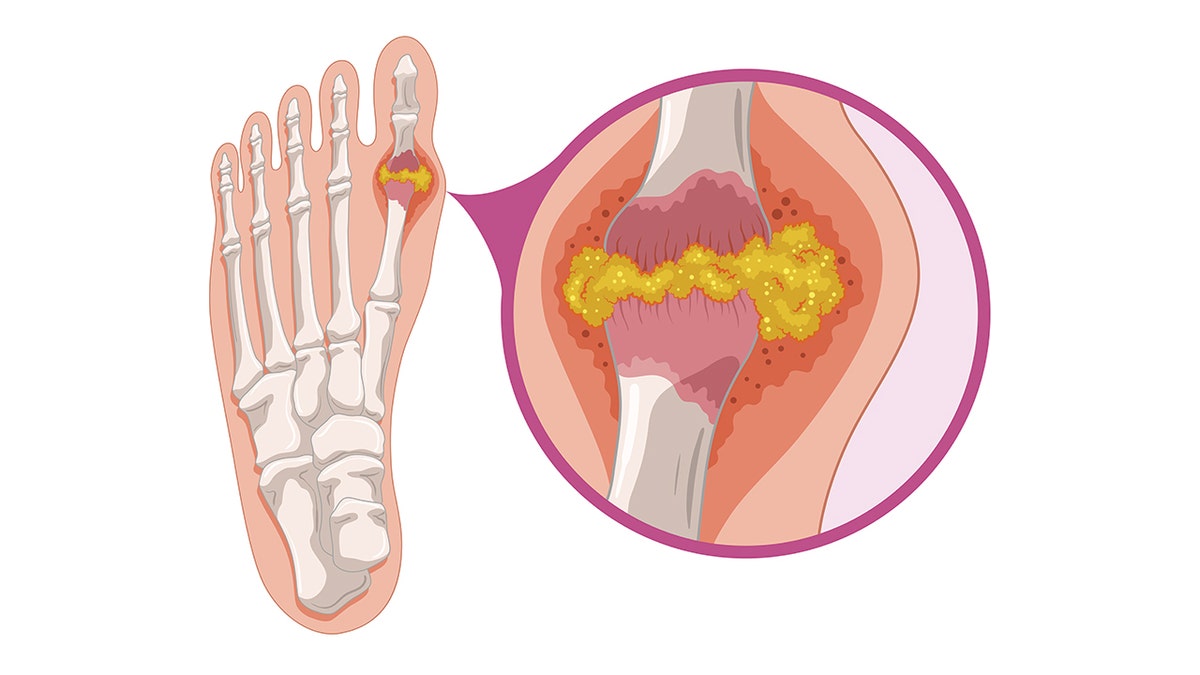
Urate crystals, described as sharp and needle-like, build up in the joint and cause severe pain and swelling. (iStock)
Purines can also be found in certain foods, such as red meat or organ meats such as liver and some seafood, such as anchovies, sardines, mussels, scallops, trout and tuna, according to the Mayo Clinic. Alcoholic beverages, especially beer, and beverages sweetened with fruit sugar can also cause higher uric acid levels.
CLICK HERE TO SUBSCRIBE TO OUR HEALTH NEWSLETTER
Uric acid normally dissolves in the blood and passes through the kidneys into the urine, but when the body produces too much or too little uric acid, it can cause a buildup of urate crystals. The Mayo Clinic describes them as sharp and needle-like, causing pain, inflammation, and swelling in the joint or surrounding tissue.
Risk factors for gout include a diet high in purine-rich foods and being overweight, which causes the body to produce more uric acid and the kidneys have trouble removing it.

Experts urge patients to seek medical attention in case of gout attacks. (iStock)
Certain conditions, such as untreated high blood pressure, diabetes, obesity, metabolic syndrome, and heart and kidney disease, can increase the risk of gout, as can certain medications.
A family history of gout may also increase your risk. Men are more likely to develop the condition, as women tend to have lower levels of uric acid, although symptoms usually appear after menopause.
CLICK HERE TO DOWNLOAD THE News APP
Untreated gout can worsen pain and damage joints, experts warn. It can also cause more serious conditions, such as recurrent gout, advanced gout, and kidney stones.
TRY OUR LATEST LIFESTYLE QUIZ
The Mayo Clinic advises patients to seek immediate medical attention if they have a fever or if a joint becomes warm and swollen, which is a sign of infection. Certain anti-inflammatory medications can help treat flare-ups and complications of gout.
News Digital reached out to investigators for comment.
Angelica Stabile is a lifestyle reporter for News Digital.