



Rome introduces a tourist tax for some visitors to the Trevi Fountain
/News/AP
Add News themezone on Google
Tourists visiting the Trevi Fountain will now pay more than just the legendary over-the-shoulder coin toss to get an Instagram selfie in front of one of the world’s most famous waterworks.
Starting February 1, the city of Rome will impose a fee of 2 euros, or $2.35, on tourists who come to the fountain during peak viewing hours. The view for those who admire the late Baroque masterpiece from the square above remains free.
The tourist tax announced on Friday is part of the Eternal City’s efforts to manage tourist flows in a particularly congested part of the city, improve the experience and offset maintenance costs to preserve all of Rome’s cultural heritage. Officials estimate it could bring the city an additional $7.6 million a year.
The fee, which has been discussed and debated for more than a year, follows a similar ticketing system at Rome’s Pantheon monument.
In such cases, city residents have been exempted from paying the fees. The same is happening in Trevi, while the tourist tax and the new fee of 5 euros or almost 6 dollars per tourist ticket for some museums in the city are being implemented along with a plan to expand the number of museums that are free for registered Roman residents.
“We believe that culture is a fundamental right of citizenship,” Rome Mayor Roberto Gualtieri said at a news conference. “It seems right and positive to us that the citizens of Rome can enjoy our museums for free.”
At the same time, he said, the Trevi tourist tax is a minimum amount that should not discourage visitors, but rather allow for a more organized visit. The city decided to impose it after seeing positive results from a year-long experiment to stagger and limit the number of visitors who can reach the front edge of the fountain using imposing lines and an entrance and exit path.
So far this year, about 9 million people have lined up for that up-close visit, and some days as many as 70,000 pass by, Gualtieri said. That system now becomes permanent from 9 am to 9 pm, with the fee paid by non-residents. Visitors can pay in advance online, while waiting in line, or by purchasing tickets at tourist locations around the city.
When night falls, access is free.
Pope Urban VIII initially commissioned the fountain in 1640. In 1730, Pope Clement XII revived the project and the current fountain corresponds to the original designs of Roman architect Nicola Salvi.
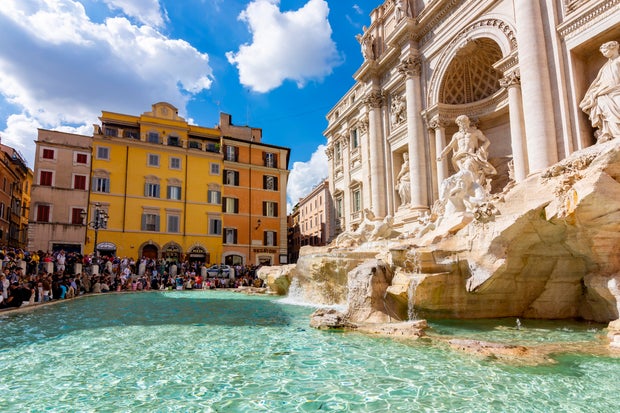
The towering fountain depicts the god Titan, flanked by waterfalls that cascade from travertine rocks into a shallow turquoise pool, where Marcello Mastroianni and Anita Ekberg famously took a late-night dip in “La Dolce Vita.”
Although bathing is prohibited today, legend has it that visitors who throw a coin over their shoulder and make a wish will return to Rome.
European officials have tried to curb overtourism amid residents protests who say that the large numbers of visitors make it difficult to live in cities. Last year, Venice became the first city to impose a tax on tourists taking day trips. A series of viral incidents, including a woman who scaled the Trevi Fountain to fill your water bottle and a British man who he carved his initials and those of his girlfriends at the Colosseum, also drew attention to the issue.
“These tourists are also vandals, because they do not respect our cultural heritage, which belongs not only to Italy, but to the entire world,” said Daniela Santanchè, Italy’s Minister of Tourism. At the moment. “We have introduced a bill with a very simple concept: If you break it, you pay for it.”
In:
- Rome
Anti-tourism protests spread across Europe
Why anti-tourism protests are spreading across Europe
(02:56)