



Dairy consumption linked to lower risk of dementia in surprising new study
RFK Jr. promotes whole milk as healthier than alternatives
News medical contributor Dr. Nicole Saphier joins ‘News & Friends Weekend’ reacting to HHS Secretary Robert F. Kennedy Jr.’s promotion of high-fat, high-protein foods and warning that replacing fat with sugar has fueled America’s obesity crisis.
NEWNow you can listen to News articles!
A large Swedish study suggests that some high-fat dairy products are linked to a lower risk of dementia.
Researchers in Sweden used data from the Malmö Diet and Cancer cohort, which included 27,670 adults aged 45 to 73 years in Malmö, Sweden.
The team then conducted interviews, collected food diaries, and asked patients for questionnaires to estimate how much of each dairy product people ate per day. They also separated dairy into high-fat and low-fat types. High-fat cheese was defined as more than 20% fat and high-fat cream as more than 30% fat.
Participants joined the study between 1991 and 1996 and were followed for an average of 25 years afterwards.
LISTENING TO MUSIC AFTER AGE 70 CAN REDUCE THE RISK OF DEMENTIA BY NEARLY 40%, NEW STUDY SUGGESTS
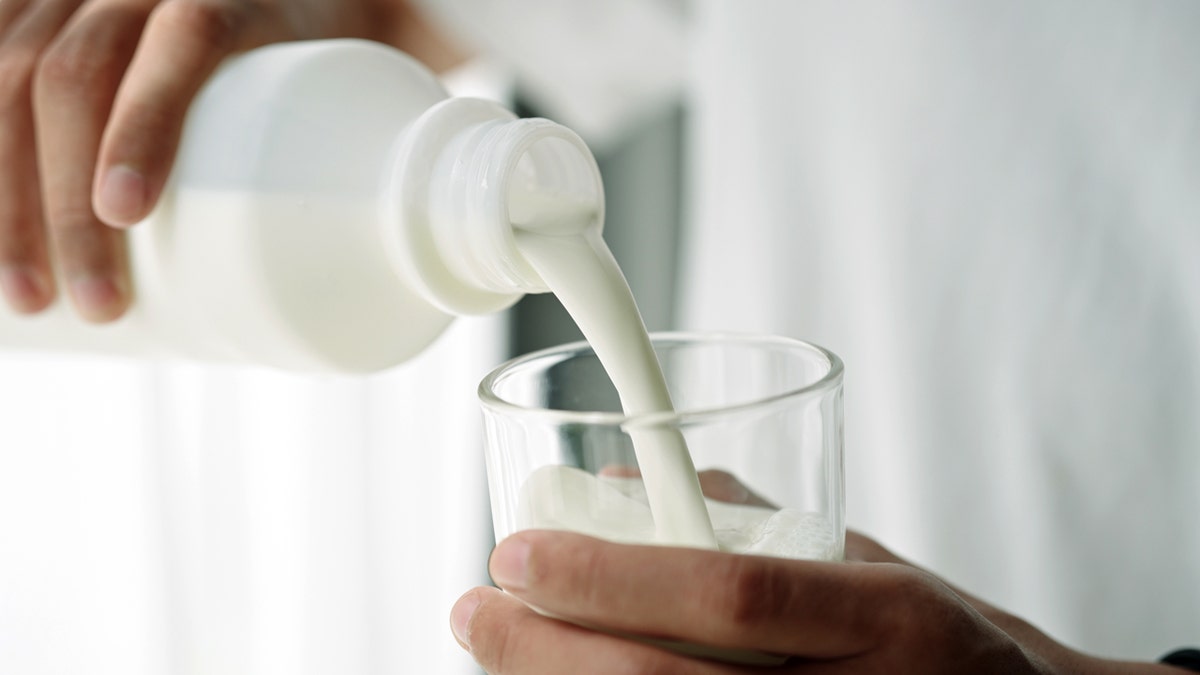
People who consumed at least 20 grams per day of high-fat cream had about a 16% lower risk of all-cause dementia than non-consumers. (iStock)
The main outcome they looked at was all-cause dementia, while Alzheimer’s disease (AD) and vascular dementia (VaD) were studied separately. During the follow-up period, 3,208 people developed dementia. Within these groups, those who consumed high-fat cheese were significantly less likely to develop dementia.
“We were a little surprised to see a lower risk of dementia among people who ate more high-fat cheese,” Emily Sonestedt, an associate professor of nutritional epidemiology at Lund University in Sweden, told News Digital.
At the same time, he says it’s not entirely unexpected to see a link to vascular dementia.

Most other dairy products, including low-fat cheese, low-fat cream, milk and fermented milk, did not show a consistent association with overall dementia risk. (iStock)
“Many cases of dementia involve damage to small blood vessels in the brain. Our own previous work and several international studies, including those from the US, have shown neutral or slightly protective associations between cheese and cardiovascular disease.”
The study adjusted for factors such as age, sex, education, smoking, physical activity, alcohol consumption, body mass index, hypertension, overall diet quality and other dairy products.
NUTRIENT DEFICIENCY LINKED TO HEART DISEASE RISK FOR MILLIONS, NEW STUDY WARNS
People who ate at least 50 grams per day of high-fat cheese had a lower risk of all-cause dementia compared to those who ate less than 15 grams per day. They also had a lower risk of vascular dementia.

High butter consumption was associated with an increased risk of Alzheimer’s disease, while high-fat cheese was associated with a lower risk of Alzheimer’s only among people without the APOE ε4 genetic risk variant. (iStock)
High-fat cream showed a similar pattern: People who consumed at least 20 grams per day had a 16% lower risk of all-cause dementia compared to non-consumers.
A bite of dark chocolate could sharpen your memory in an hour, study suggests
Other dairy products showed no clear links to overall dementia risk. Low-fat cheese, low-fat cream, milk, fermented milk, and butter generally showed no association with all-cause dementia.
One exception was that high butter consumption (at least 40 grams per day) was associated with an increased risk of Alzheimer’s disease. The study also found that high-fat cheese was linked to a lower risk of AD only among people who did not carry the APOE ε4 risk variant, a genetic variant linked to Alzheimer’s.
CLICK HERE TO DOWNLOAD THE News APP
This was an observational study, so it cannot show cause and effect, and unmeasured factors may still play a role.
“The study was conducted in Sweden, where people mainly eat hard and fermented cheeses, so the results may not directly apply to countries with very different types of cheese and dietary patterns,” Sonestedt said.

Because the study was observational and diet was measured only once, the results should be interpreted with caution and cannot be used to conclude that high-fat dairy prevents dementia. (iStock)
Diet was measured only once, so changes over time were not fully captured. Cream intake was measured less accurately than cheese intake.
CLICK HERE FOR MORE HEALTH STORIES
“Although we adjusted for many lifestyle and health factors, it is still difficult to say that cheese itself is protective. It is more likely that it is part of a broader dietary pattern and lifestyle that can support long-term brain health,” the researchers noted.
Dementia diagnoses after 2014 were not validated in detail and baseline cognitive status was not available.
CLICK HERE TO SUBSCRIBE TO OUR HEALTH NEWSLETTER
Some cases of dementia may have been missed and the results come from a Swedish population, which may limit generalizability.
The findings were published in Neurology, the medical journal of the American Academy of Neurology.
TRY OUR LATEST LIFESTYLE QUIZ
Khloe Quill is a lifestyle production assistant at News Digital. She and the lifestyle team cover a range of topics including food and drink, travel and health.