



Frequent heartburn may be a warning sign of a more dangerous condition, doctor says
NEWNow you can listen to News articles!
For most people, heartburn is an occasional annoyance and a source of temporary discomfort. But for some, chronic heartburn can lead to more dangerous conditions, potentially even precancerous.
According to medical experts, about 10% of people with chronic gastroesophageal reflux disease (GERD) will develop Barrett’s esophagus, a condition in which the lining of the lower part of the esophagus is replaced with abnormal cells that are more prone to cancer.
Some studies have shown that among people with Barrett’s esophagus, 3% to 13% will develop cancer, but most will not.
POPULAR SLEEPING POSITIONS COULD HURT YOUR NERVES, ACCORDING TO EXPERTS
When acid reflux becomes dangerous
“Your stomach is designed to withstand acid. Your esophagus is not,” Dr. Daryl Gioffre, a Florida-based gut health specialist and certified nutritionist, told News Digital.

About 10% of people with chronic acid reflux will develop Barrett’s esophagus, a condition in which the lining of the lower esophagus is replaced with abnormal cells that are more prone to cancer. (iStock)
“With reflux, the danger is not the burn in the chest or throat; the real danger is the constant reflux of acid traveling in the wrong direction.”
In most people, the lower esophageal sphincter, which Gioffre refers to as the “acid gate,” keeps acid in the stomach, which is lined with thick mucus and specialized cells designed to protect it.
“With reflux, the danger is not the burn in the chest or throat; the real danger is the constant reflux of acid traveling in the wrong direction.”
“But when the gate weakens, it relaxes or remains slightly open, and the acid goes back up the wrong way,” he said. This “gate” can be weakened by magnesium deficiency, high stress, alcohol, lack of sleep, dehydration, and late-night snacking, all of which can disrupt healthy digestion.
When acid reaches the esophagus, it irritates tissue that was never designed to resist it, according to the doctor.
“Every time the acid comes back the wrong way, it damages the coating like a slow chemical burn,” said Gioffre, who is also the author of “Get Off Your Acid” and “Get Off Your Sugar.” Over time, that irritation erodes the lining, causes inflammation, and can change cells.
NOT ALL FIBER IS EQUAL: DOCTORS SHARE WHICH TYPES REALLY PROMOTE LONGEVITY
“These new cells are no longer normal esophageal cells; they begin to become cells that look more like the lining of the stomach, because those cells can tolerate acid,” the doctor said. “That change is called metaplasia or Barrett’s esophagus.”
Once cells begin to change, the risk of new mutations increases. If this process continues, Gioffre warned, it can progress to dysplasia, which is the stage before esophageal cancer.

Some studies have shown that among people with Barrett’s esophagus, between 3% and 13% will develop cancer. (iStock)
“So the real danger is not the heartburn you feel,” he summarized. “It’s the repeated exposure to acid that forces the esophagus to adapt in ways it was never designed to. Fixing the reflux at the root stops this entire cascade before those cellular changes begin.”
Men at higher risk
Men are generally at higher risk because they burn magnesium faster, tend to accumulate more visceral fat pushing up in the stomach, eat heavier meals, and snack late at night, Gioffre warned. All of these activities weaken the acid gate and block healthy digestion.
THE BREAD THAT KEEPS YOU MOVING IN THE BATHROOM AND DOCTORS SAY IT REALLY WORKS
“Eating within three hours of going to bed almost guarantees that your stomach doesn’t empty, and that’s one of the biggest drivers of nighttime reflux,” she said. “On top of that, men often ignore symptoms or mask them with PPIs and antacids instead of addressing the root cause.”
All of these factors contribute to a “perfect storm” for chronic inflammation and long-term damage, according to Gioffre.
Warning signs
There are certain warning signs that indicate when acid reflux has gone beyond an occasional discomfort and has progressed to being constant and chronic.
“If that burn becomes more frequent or more intense, or starts to appear even when you haven’t eaten, your body is waving a giant warning flag,” Gioffre said.
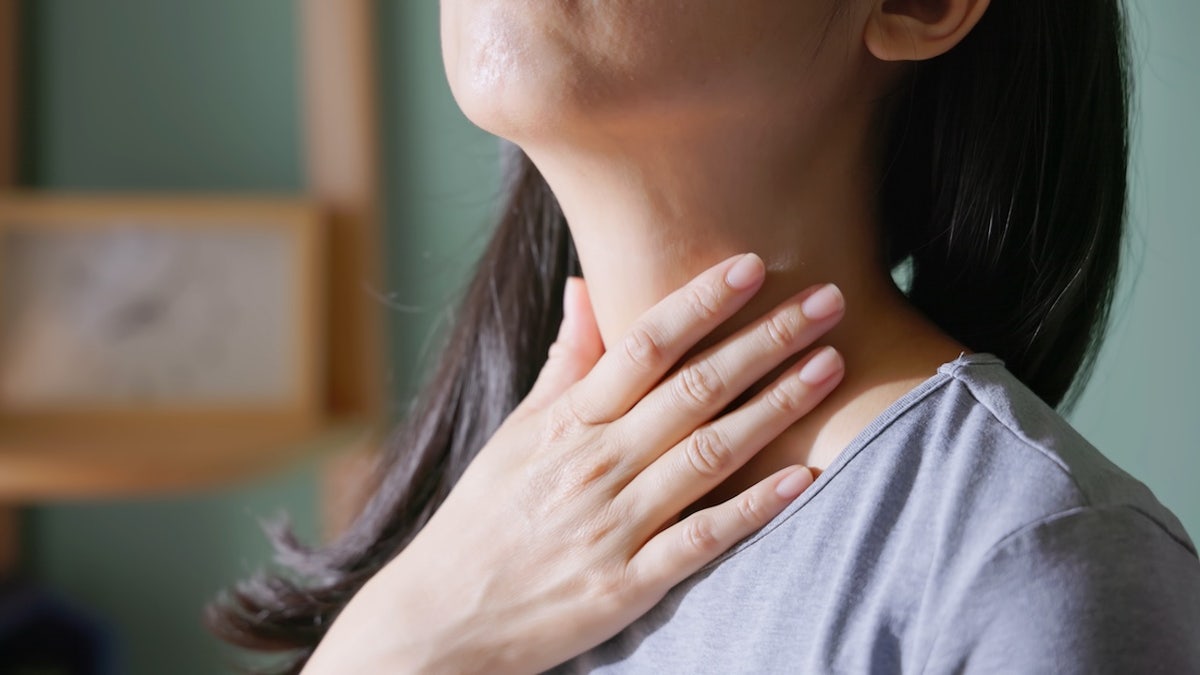
Difficulty swallowing, feeling like food is “stuck,” chronic hoarseness, constant coughing, clearing of the throat, or the feeling of a lump in the throat are indicators that acid is moving to areas it should never reach. (iStock)
Difficulty swallowing, feeling like food is “stuck,” chronic hoarseness, constant coughing, clearing your throat, or feeling like there’s a lump in your throat are indicators that acid is moving upward to areas it should never reach, according to your doctor.
EXPERT WARNS OF A ‘SILENT EPIDEMIC’ THAT PUT MEN’S HEALTH AT SERIOUS RISK
“Ulcers in the throat, or even in the mouth, are another sign that the acid is causing real damage,” he warned.
“Another major warning sign is when reflux goes from something you notice occasionally to something you feel every day or night, or when PPIs and antacids stop helping,” Gioffre said. “That usually means the lining is irritated and eroded, and may already be changing at a cellular level.”

Nocturnal reflux is the most dangerous because acid remains in the esophagus for hours, causing deep inflammation and long-term cellular changes, the doctor said. (iStock)
Unexplained weight loss, bloody vomiting and black stools are serious symptoms that require immediate attention, the doctor added.
“The bottom line: When reflux becomes constant, chronic, and begins to affect swallowing, voice, or the tissues of the mouth or throat, it is no longer just a nuisance,” Gioffre told News Digital. “That’s the point at which the esophagus may be progressing toward a precancerous state, and men, especially, can’t afford to wait.”
CLICK HERE FOR MORE HEALTH STORIES
3 key ways to prevent reflux
Gioffre shared the essential next steps to prevent acid reflux and improve digestive health.
No. 1: Follow the 3-hour rule
“Stop eating three hours before bedtime,” the doctor recommends. “When you eat late, the stomach does not empty, the pressure increases and the acid gate relaxes, ensuring that acid rises into the esophagus while you sleep.”
CLICK HERE TO SUBSCRIBE TO OUR HEALTH NEWSLETTER
Nocturnal reflux is the most dangerous because the acid remains in the esophagus for hours, causing deep inflammation and long-term cellular changes, he warned. “This one rule alone can dramatically reduce acid reflux and cancer risk.”
No. 2: Strengthen the acid gate
When stomach acid is low, the lower esophageal sphincter loses its tone, allowing acid to travel upward instead of staying in the stomach, Gioffre said.
CLICK HERE TO DOWNLOAD THE News APP
“The quickest way to close that door is to increase mineral reserves, especially magnesium,” he said.
The best way to do this is to consume magnesium-rich foods like avocado, spinach, pumpkin seeds, chia seeds, quinoa, and almonds, and consider adding a clean magnesium supplement.
No. 3: Eliminate or neutralize daily triggers
The quickest way to protect the esophagus, according to Gioffre, is to eliminate or neutralize foods and habits that weaken the acid gate and push acid in the wrong direction.
For people who cannot completely eliminate these triggers, certain habits can help neutralize their impact by reducing the force and pressure of the acid before it reaches the esophagus.

The doctor recommends reducing alcohol and caffeine consumption, which relax the acid gate and increase the risk of acid reflux. (iStock)
“Drinking most of your water earlier in the day helps, because hitting the water at night stretches your stomach and relaxes the acid gate, making it much easier for acid to flow in the wrong direction once you go to bed,” he said.
He also recommends cutting back on alcohol and caffeine, as both relax the acid gate instantly.
TRY OUR LATEST LIFESTYLE QUIZ
According to the doctor, other major triggers that fuel the reflux cycle include chocolate, spicy foods, garlic, onion, sugar, ultra-processed foods, and heavy meals at night.
“These foods and habits weaken the lower esophageal sphincter, increase inflammation and increase pressure,” he said. “This is exactly how a little heartburn turns into chronic reflux and slowly causes the kind of damage that puts the esophagus at risk for cancer.”
Melissa Rudy is a senior health editor and member of the lifestyle team at News Digital. Story tips can be sent to melissa.rudy@News.com.