



Former US Senator Ben Nighthorse Campbell of Colorado dies at 92
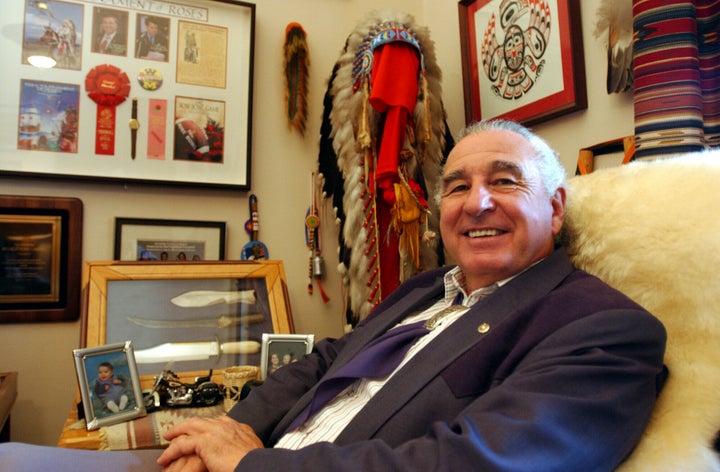
DENVER (AP) — Ben Nighthorse Campbell, a former senator and U.S. representative from Colorado known for his passionate advocacy on Native American issues, died Tuesday. He was 92 years old.
Campbell died of natural causes surrounded by his family, his daughter, Shanan Campbell, confirmed to The News.
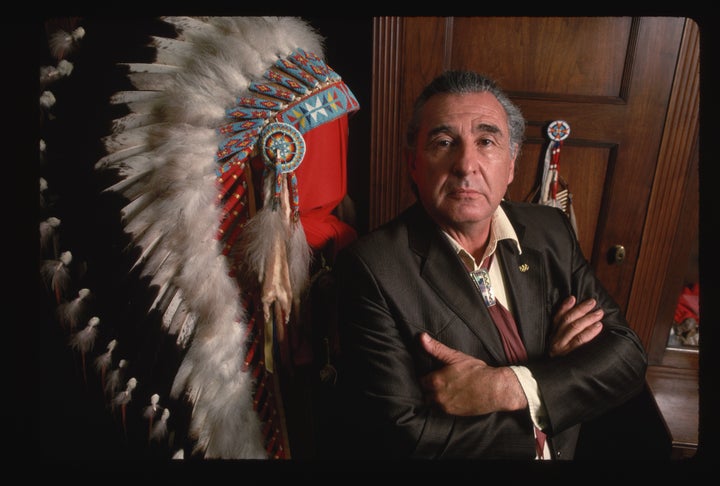
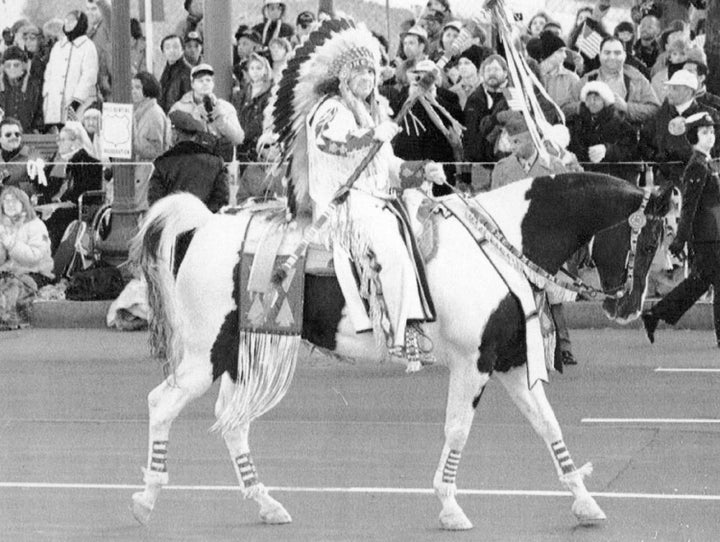
Campbell, a Democrat who surprised his party by joining the Republican Party, stood out in Congress both for his unconventional dress (cowboy boots, bolo ties, and ponytails) and for his advocacy of children’s rights, organized labor, and fiscal conservatism.
Campbell, a member of the Northern Cheyenne tribe, said his ancestors were among the more than 150 Native Americans, mostly women, children and the elderly, killed by U.S. soldiers while camping under a flag of truce on Nov. 29, 1864.
He served three terms in the House, starting in 1987. He then served two terms in the Senate, from 1993 to 2005.
Among his accomplishments was helping to sponsor legislation to convert the Great Sand Dunes National Monument in southern Colorado into a national park.
“He was a master jeweler with a reputation far beyond the borders of Colorado,” said Colorado Senator John Hickenlooper in X. “I will not forget his acts of kindness. He will be deeply missed.”
Douglas Graham via Getty Images
Campbell was seen as a maverick
The motorcycle-riding lawmaker and rancher was considered a maverick even before he abruptly switched to the Republican Party in March 1995, angry at Democrats for killing a balanced budget amendment in the Senate. His change outraged Democratic leaders and was considered a coup for the Republican Party.
“The extremes hit me,” he said shortly after. “I’m always willing to listen… but I don’t think you can be all things to all people, no matter what party you’re in.”
Campbell, considered a shoo-in for a third Senate term, surprised his supporters when he dropped out of the race in 2004 after a health scare.
“I thought it was a heart attack, but it wasn’t,” Campbell said. “But when I was lying on that table in the hospital looking at all those doctors’ faces, I decided, ‘Do I really need to do this six more years after being away from home for so long?’ Frankly, I have two children who I didn’t get to see grow up.”
He retired to focus on the Native American jewelry that helped him become wealthy and was displayed at the Smithsonian Institution’s National Museum of the American Indian. He also worked on a line of outdoor equipment with a California-based company, Kiva Designs, and became a senior political adviser to the powerful law firm Holland & Knight in Washington.
Campbell founded Ben Nighthorse Consultants, which focused on federal policy, including Native American issues and natural resources. The former senator also drove the Capitol Christmas tree across the country to Washington, D.C., on several occasions.
“He was truly one of a kind and I am thinking of his family after their loss,” Colorado Rep. Diana DeGette said on X.
Peter Turnley via Getty Images
An accidental politician
In 1982, she planned to deliver her jewelry to California, but bad weather grounded her plane. He was killing time in the southern Colorado city of Durango when he went to a county Democratic meeting and ended up giving a speech for a friend who was running for sheriff.
Democrats were looking for someone to challenge a Republican legislative candidate and sounded out Campbell during the meeting. “I was hooked like a fish,” he said.
His opponent, Don Whalen, was a popular former college president who “looked like he came out of the Brooks Brothers catalog,” Campbell recalled. “I don’t think anyone gave me any kind of chance… I just think I spent a lot of energy proving them wrong.”
Campbell hit the streets, tearing city maps from the Yellow Pages and walking door to door to talk to people. He recalled leaving a note at a house in Cortez where no one was there when he heard a car roaring in the driveway, gravel flying and brakes screeching.
The driver jumped out of the vehicle, with a key in his hand, and yelled that Campbell couldn’t keep his furniture. “Aren’t you the recovery company?” the man asked.
“And I said, ‘No man, I’m just running for office.’ We got talking and I think the guy voted for me.”
Campbell won and never lost an election thereafter, moving from the Colorado House of Representatives to the U.S. House of Representatives and then to the Senate.
Born on April 13, 1933 in Auburn, California, Campbell served in the Korean Air Force from 1951 to 1953 and received a bachelor’s degree from San Jose State University in 1957. He attended Meiji University in Tokyo from 1960 to 1964, captained the United States judo team at the 1964 Olympics, and won a gold medal at the Pan American Games.
Campbell once called then-Interior Secretary Bruce Babbitt a “forked-tongued snake” for opposing a water project near the southern Colorado town of Ignacio, which Campbell promoted as a way to honor the water rights of the Southern Ute and Mountain Ute tribes.
He clashed with environmentalists on everything from mining law and grazing reforms to setting aside land for national monuments.
Despite all this – or perhaps because of it – voters loved him. In 1998, Campbell won re-election to the Senate by defeating Democrat Dottie Lamm, wife of former Governor Dick Lamm, despite her switch to the Republican Party. He was the only Native American in the Senate at the time.
Susan Biddle via Getty Images
Campbell insisted that his principles did not change, only his party.
He said he was criticized as a Democrat for voting with Republicans and then ridiculed by some newspapers for his stances after the switch.
“It didn’t change me. I didn’t change my voting record. For example, I had a great voting record as a Democrat on labor issues. I still have that as a Republican. And on minority and women’s issues,” he said.
Campbell said his values (liberal on social issues, conservative on fiscal issues) were shaped by his life. Children’s causes were very important to him because he and his sister spent time in an orphanage when his father was in prison and his mother had tuberculosis.
Unions won his support because joining the Teamsters and learning to drive a truck got him out of the tomato fields of California. His time as a deputy sheriff of Sacramento County in California in the late 1960s and early ’70s made him an advocate for law enforcement.
His decision to retire from politics, Campbell said, had nothing to do with allegations that Ginnie Kontnik, his former chief of staff, solicited bribes from another staffer and that his office lobbied for a contract for a technology company with ties to the former senator.
He referred both matters to the Senate Ethics Committee. In 2007, Kontnik pleaded guilty to a federal charge of failing to report income of $2,000.
“I think there was some disappointment” with those charges, Campbell said. “But a lot of things happen in Washington that disappoint you. You just have to get over them because every day there is a new crisis to face.”
___ This story has been corrected to remove a reference to a massacre that occurred at Great Sand Dunes National Monument. The massacre referenced took place at the Sand Creek Massacre National Historic Site.