



Fake AI Chat Results Are Spreading Dangerous Mac Malware
NEWNow you can listen to News articles!
Cybercriminals have always gone after what people trust the most. First, it was email. Then search for results. Now it’s AI chat responses. Researchers warn of a new campaign in which fake AI conversations appear in Google search results and silently push Mac users to install dangerous malware. What makes this especially risky is that everything seems useful, legitimate and step by step, until your system is compromised.
The malware being spread is Atomic macOS Stealer, often called AMOS, and the attacks abuse conversations generated by tools that people increasingly rely on for daily help. Researchers have confirmed that both ChatGPT and Grok were misused as part of this campaign.
Sign up to receive my FREE CyberGuy report
Get my best tech tips, urgent security alerts, and exclusive offers delivered straight to your inbox. Plus, you’ll get instant access to my Ultimate Guide to Surviving Scams, free when you join me CYBERGUY.COM information sheet.
THIRD-PARTY BREACH EXPOSES CHATGPT ACCOUNT DETAILS

A copied terminal command is all it takes for malware like AMOS to silently install itself on a Mac. (Kurt “CyberGuy” Knutsson)
How Fake AI Chat Results Drive Malware
Researchers traced an infection to a simple Google search: “clean up disk space on macOS.” Instead of accessing a normal help article, the user was shown what looked like the result of an AI conversation integrated directly into the search. That conversation offered clear, confident instructions and ended by telling the user to run a command in the macOS Terminal. That command installed AMOS.
When researchers followed the same trail, they found multiple poisoned AI conversations appearing for similar searches. That consistency strongly suggests that this was a deliberate operation aimed at Mac users looking for help with routine maintenance.
If this sounds familiar, it should. A previous campaign used sponsored search results and SEO-tainted links pointing to fake macOS software hosted on GitHub. In that case, attackers posed as legitimate applications and guided users through terminal commands that installed the same AMOS infostealer.
According to the researchers, once the terminal command is executed, the infection chain begins immediately. The base64 string in the command is decoded into a URL hosting a malicious bash script. That script is designed to collect credentials, escalate privileges, and establish persistence, all without triggering a visible security warning.
The danger here is how clean the process seems. There’s no installation window, no obvious permission prompt, or any option for you to review what’s about to run. Because everything happens via the command line, normal download protections are bypassed and the attacker can execute whatever they want.
MICROSOFT TYPOSQUATTING SCAM SWAPS LETTERS TO STEAL LOGIN
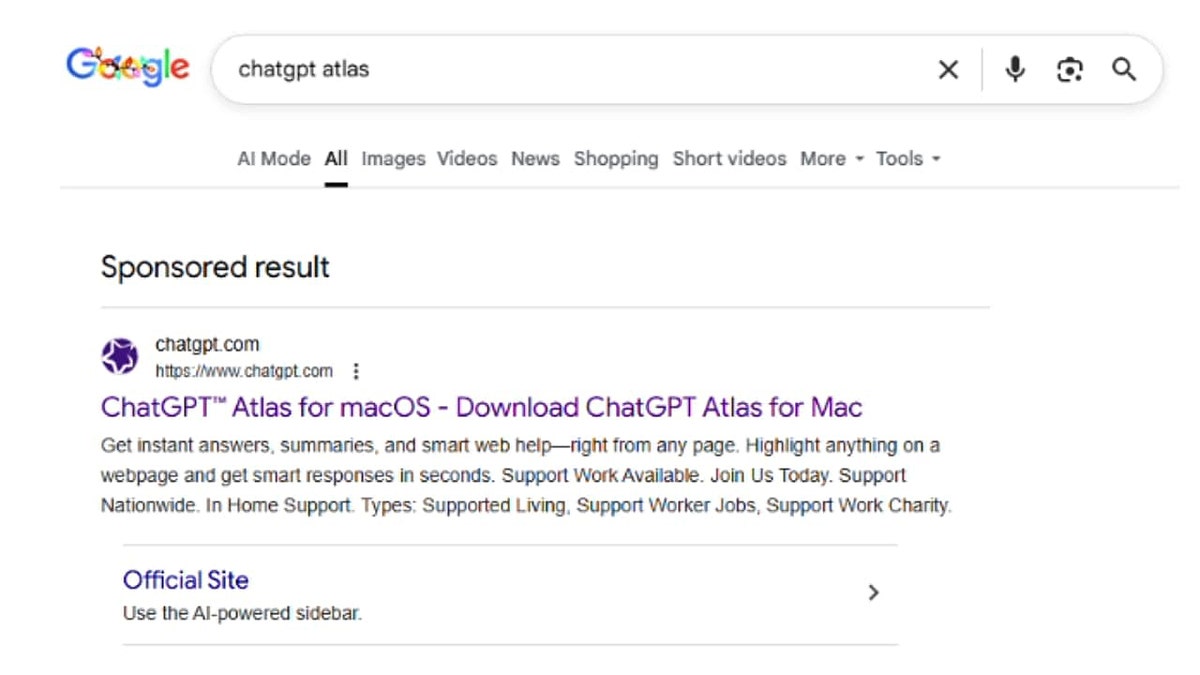
Fake AI chat results can appear polished and trustworthy, even when they are designed to trick you into executing harmful commands. (Kurt “CyberGuy” Knutsson)
Why is this attack so effective?
This campaign combines two powerful ideas. Trust AI answers and trust search results. Most major chat tools, including Grok on X, allow users to delete parts of conversations or share only selected fragments. That means an attacker can carefully select a short, polished exchange that looks genuinely useful while hiding the manipulative cues that produced it.
Using quick engineering, attackers get ChatGPT to generate a step-by-step installation or cleanup guide that actually installs malware. ChatGPT’s sharing feature creates a public link that resides within the attacker’s account. From there, criminals pay for sponsored search placement or use SEO tactics to push that shared conversation to the top of the results.
Some ads are designed to look almost identical to legitimate links. Unless you check who the advertiser really is, it’s easy to assume it’s safe. One example documented by researchers showed a sponsored result advertising a fake “Atlas” browser for macOS, complete with professional branding.
Once those links are up, attackers don’t need to do much else. They wait for users to search, click, trust the AI results, and follow the instructions exactly as written.
REAL APPLE SUPPORT EMAILS USED IN NEW PHISHING SCAM

Attackers rely on trust in search results and AI responses, knowing that most people will not question the step-by-step instructions. (Kurt “CyberGuy” Knutsson)
Eight steps you can take to stay safe from fake AI chat malware
AI tools are useful, but attackers are now shaping responses that lead you straight into trouble. These steps will help you stay protected without completely abandoning search or AI.
1) Never paste terminal commands from search results or AI chats
This is the most important rule. If an AI response or a web page tells you to open Terminal and paste a command, stop. Legitimate macOS fixes almost never require you to blindly run scripts copied from the Internet. Once you press Enter, you lose visibility of what happens next. Malware like AMOS relies on this moment of trust to bypass normal security controls.
2) Treat AI instructions as suggestions
AI chats are not authoritative sources. They can be manipulated by rapid engineering to produce dangerous step-by-step guides that look clean and safe. Before acting on any AI-generated solution, verify it with Apple’s official documentation or a trusted developer site. If you can’t verify it easily, don’t run it.
3) Use a password manager to limit the damage
A password manager creates strong, unique passwords for each account you use. If malware steals a password, it can’t unlock everything else. Many password managers also refuse to autofill credentials on fake or unknown sites, which can alert you that something is wrong before you type anything manually. This single tool dramatically reduces the impact of credential-stealing malware.
Next, check to see if your email has been exposed in previous breaches. Our #1 password manager pick (see Cyberguy.com/Passwords) includes a built-in breach scanner that checks to see if your email address or passwords have appeared in known breaches. If you discover a match, immediately change any reused passwords and protect those accounts with new, unique credentials.
Check out the best expert-reviewed password managers of 2025 at Cyberguy.com
4) Keep macOS and browsers fully up to date
AMOS and similar malware often rely on weaknesses known after the initial infection. The updates fix these holes. Delaying updates gives attackers more room to escalate privileges or maintain persistence. Turn on automatic updates to stay protected even if you forget.
5) Use powerful antivirus software on macOS
Modern macOS malware is often executed via scripts and memory-only techniques. Powerful antivirus software doesn’t just scan files. It monitors behavior, detects suspicious scripts, and can stop malicious activity even when nothing obvious is downloaded. This is especially important when malware is delivered via Terminal commands.
The best way to protect yourself from malicious links that install malware and potentially access your private information is to have powerful antivirus software installed on all your devices. This protection can also alert you to phishing emails and ransomware scams, keeping your personal information and digital assets safe.
Get my picks for the best antivirus protection winners of 2025 for your Windows, Mac, Android, and iOS devices at Cyberguy.com.
6) Be skeptical of sponsored search results
Paid search ads can look almost identical to legitimate results. Always check who the advertiser is before clicking. If a sponsored result leads to an AI conversation, a download, or instructions to execute commands, close it immediately.
7) Avoid “cleaner” and “installer” guides from unknown sources
Search results that promise quick fixes, disk cleanup, or performance improvements are common entry points for malware. If Apple or a well-known developer doesn’t host a guide, assume it could be risky, especially if they push command-line solutions.
8) Slow down when the instructions seem unusually polished
Attackers spend time making fake AI conversations seem helpful and professional. Clear formatting and secure language are not signs of security. They are often part of the deception. Slowing down and questioning the source is usually enough to break the attack chain.
Kurt’s Key Takeaway
This campaign shows how attackers are moving from breaking systems to manipulating trust. Fake AI conversations work because they sound calm, helpful, and authoritative. When those conversations are boosted through search results, they inherit a credibility they don’t deserve. The technical tricks behind AMOS are complex, but the entry point is simple. Someone follows instructions without questioning where they come from.
Have you ever followed an AI-generated solution without checking it first? Let us know by writing to us at Cyberguy.com.
CLICK HERE TO DOWNLOAD THE News APP
Sign up to receive my FREE CyberGuy report
Get my best tech tips, urgent security alerts, and exclusive offers delivered straight to your inbox. Plus, you’ll get instant access to my Ultimate Guide to Surviving Scams, free when you join me CYBERGUY.COM information sheet.
Copyright 2025 CyberGuy.com. All rights reserved.
Kurt “CyberGuy” Knutsson is an award-winning technology journalist with a deep love for technology, gear and gadgets that improve lives with his contributions to News and News Business since mornings on “News & Friends.” Do you have any technical questions? Get Kurt’s free CyberGuy newsletter, share your voice, a story idea or comment on CyberGuy.com.