



How much red meat is too much? Experts weigh in on food pyramid updates
NEWNow you can listen to News articles!
The release of an updated food pyramid this week has sparked mixed reactions from doctors and dieticians.
One of the most notable changes in the 2025-2030 Dietary Guidelines for Americans, which were announced by HHS officials during a Jan. 7 press conference at the White House, is a greater emphasis on “high-quality proteins,” including red meat and eggs, as well as full-fat dairy.
The new guidelines focus on “real, whole, nutrient-dense foods” and a drastic reduction in highly processed foods, added sugars, refined carbohydrates and unhealthy fats.
HEALTH EXPERTS REACT AS ANDREW HUBERMAN ENDORSES TRUMP ADMIN’S NEW FOOD PYRAMID
“Protein and healthy fats are essential and were wrongly discouraged in previous dietary guidelines,” Health Secretary Robert F. Kennedy Jr. said during the press conference. “We are ending the war on saturated fat.”
Nick Norwitz, a Harvard- and Oxford-trained researcher known for his work in metabolic health, shared his reaction to the new guidelines.
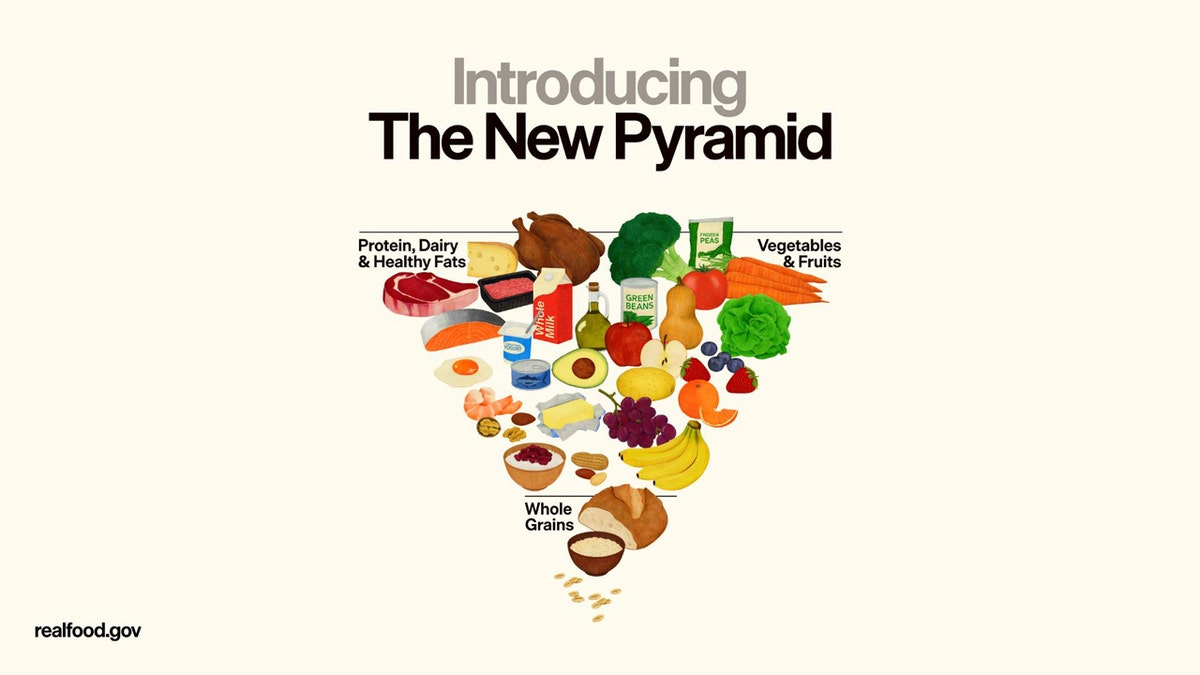
The release of an updated food pyramid this week has sparked mixed reactions from doctors and dieticians. (realfood.gov)
Despite how the new pyramid is presented, he noted, the actual guidelines for saturated fat consumption have not changed, as they still state that “in general, saturated fat consumption should not exceed 10% of total daily calories.”
According to Norwitz, eating unprocessed whole foods high in saturated fats, especially dairy fats, tends to be associated with better health outcomes.
RED MEAT MAY HELP YOUR MOOD IF IT’S PART OF A HEALTHY, BALANCED DIET, STUDY SUGGESTS
“Full-fat dairy, especially cheese, for example, tends to be associated with lower BMI, reduced rates of diabetes, and even reduced risk of dementia,” he told News Digital. “Of course, there are nuances, but ‘ending the war’ on saturated fat seems reasonable.”
Risks vary, experts say
Experts warned of the potential health risks of exceeding the recommended intake of saturated fats, including higher rates of “bad” LDL cholesterol, which is known to increase the risk of cardiovascular disease.
“The recommendation to limit saturated fat to 10% of total calories is based on research showing that higher rates increase LDL cholesterol and associated risks of cardiovascular disease,” Sherry Coleman-Collins, a dietitian and food allergy expert in the Atlanta metro area, told News Digital.

One of the most notable changes in the 2025-2030 Dietary Guidelines for Americans is a greater emphasis on “high-quality proteins,” including red meat and eggs, as well as full-fat dairy. (iStock)
Nutrition should be personalized and depends on multiple factors, he said, including age, sex, activity level and genetic risk factors.
“The total saturated fat an individual could safely consume is influenced by their size and total caloric needs, as well as potentially genetic differences,” Coleman-Collins said.
Norwitz agreed, adding that “the specific food source and interaction with the single host and its broader dietary context should be the focus.”
Dr. Pooja Gidwani, a doctor double board certified in internal medicine and obesity medicine in Los Angeles, noted that not everyone has the same “tolerance” to saturated fats.
“If increasing saturated fat leads to a significant increase in LDL cholesterol or ApoB (apolipoprotein B, a protein found on the surface of certain cholesterol-carrying particles in the blood), that level of intake is excessive for that individual, regardless of improvements in weight or glucose metrics,” he said.
THE TRUMP ADMIN’S NEW NUTRITIONAL GUIDELINES TARGET ULTRAPROCESSED FOODS, FACILITATING THE CONSUMPTION OF RED MEATS AND SATURATED FATS
“This personalized approach becomes increasingly important in midlife and beyond, when cardiovascular disease becomes the dominant driver of morbidity and mortality and when tolerance to cumulative atherogenic exposure (clogging of the arteries) is lower.”
For those who need to lower LDL cholesterol or are at higher cardiovascular risk, the American Heart Association recommends even less saturated fat: less than 6% of total daily calories.
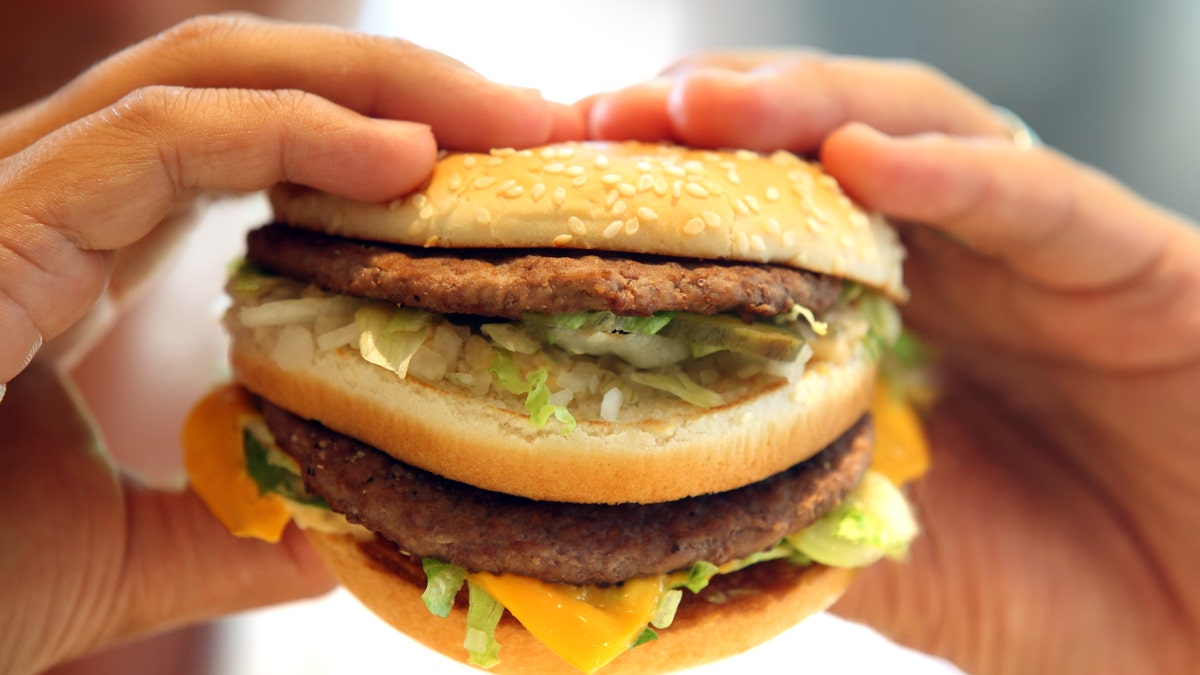
Experts warned of the potential health risks of exceeding the recommended intake of saturated fats, including higher rates of “bad” LDL cholesterol. (iStock)
Gidwani also warned that diets that emphasize saturated fats could crowd out fiber and unsaturated fats, “which play independent roles in cholesterol clearance, insulin sensitivity, gut health and inflammation.”
“Patterns high in saturated fat are also high in calories, which can silently undermine long-term weight control if intake is not carefully regulated,” he added.
Not all saturated fats are created equal, experts say
According to experts, the effects of saturated fats depend on the specific foods consumed.
“I would recommend choosing minimally processed or unprocessed foods,” said Tanya Freirich, a registered dietitian nutritionist in Charlotte, North Carolina. “For example, instead of a hot dog (which has additives, nitrites, sodium and fillers), consuming a chicken thigh would be a much better option.”
CLICK HERE TO DOWNLOAD THE News APP
Gidwani reiterated that the amount of processing plays an important role.
“Processed meats are consistently associated with worse cardiometabolic outcomes and represent the clearest category to limit,” he said. “The risk here is not just the saturated fat, but also the sodium load, the preservatives, and the broader dietary pattern they typically accompany.”

“Full-fat dairy, especially cheese, for example, tends to be associated with lower BMI, reduced rates of diabetes, and even reduced risk of dementia,” one expert told News Digital. (iStock)
Unprocessed red meat, the doctor said, can be integrated into an overall healthy diet in smaller quantities, particularly when consumed along with fiber-rich plants and minimally processed foods.
“However, from a longevity perspective, it should be seen as optional rather than essential, especially for people at high cardiovascular risk,” he added.
CLICK HERE TO SUBSCRIBE TO OUR HEALTH NEWSLETTER
When it comes to dairy, Gidwani noted that fermented options are “metabolically more favorable” than butter or cream.
“However, it is still not necessary to prioritize saturated fats from dairy for metabolic health or longevity,” he said. “Overreliance on dairy fat may displace healthier fat sources without offering a clear long-term benefit.”
CLICK HERE FOR MORE HEALTH STORIES
In general, your doctor recommends sources of unsaturated fats, including extra virgin olive oil, nuts, seeds, avocado, and omega-3-rich fish, as primary dietary fats.
“These consistently support lipid profiles, insulin sensitivity and vascular health,” Gidwani said. “Saturated fats can exist within a balanced diet, but they should remain secondary rather than emphasized.”
Why the big picture is important
Saturated fats are just one piece of a much larger nutritional puzzle, experts agreed.
“Our heart health is not determined by one type of fat or one type of cholesterol, but by the sum of many parts: our entire diet, our exercise habits, our stress and much more,” Freirich said.

Unprocessed red meat can be integrated into an overall healthy diet in smaller quantities, particularly when consumed alongside high-fiber plants and minimally processed foods, one expert said. (iStock)
She recommends consulting a registered dietitian for guidance on unique dietary needs based on age, gender, activity level, and medical history.
TRY OUR LATEST LIFESTYLE QUIZ
New Jersey-based dietitian Erin Palinski-Wade, author of “2-Day Diabetes Diet,” added that the message should be to focus more on overall patterns: “lots of high-fiber plants, lean proteins at every meal (including those that also contain fiber, like nuts and seeds), and a reduction in overall added sugar intake.”
“That change will drive real improvements in health,” he said.
Melissa Rudy is a senior health editor and member of the lifestyle team at News Digital. Story tips can be sent to melissa.rudy@News.com.