



NASA returns humans to deep space after more than 50 years with February’s Luna Artemis II mission
NEWNow you can listen to News articles!
NASA plans to return humans to deep space next month, with the goal of launching Artemis II on February 6, a 10-day crewed mission that will take astronauts around the Moon for the first time in more than 50 years.
“We’re leaving…again,” NASA said Tuesday in a post on X, saying the mission won’t depart before Feb. 6.
The first available launch period will run from January 31 to February 14, with launch opportunities on February 6, 7, 8, 10, and 11.
If the launch is cancelled, additional launch periods will open from February 28 to March 13 and March 27 to April 10. For the former, launch opportunities will be available on March 6, 7, 8, 9, and 11, and for the latter on April 1, 3, 4, 5, and 6.
NASA SAYS US WILL WIN ‘THE SECOND SPACE RACE’ AGAINST CHINA
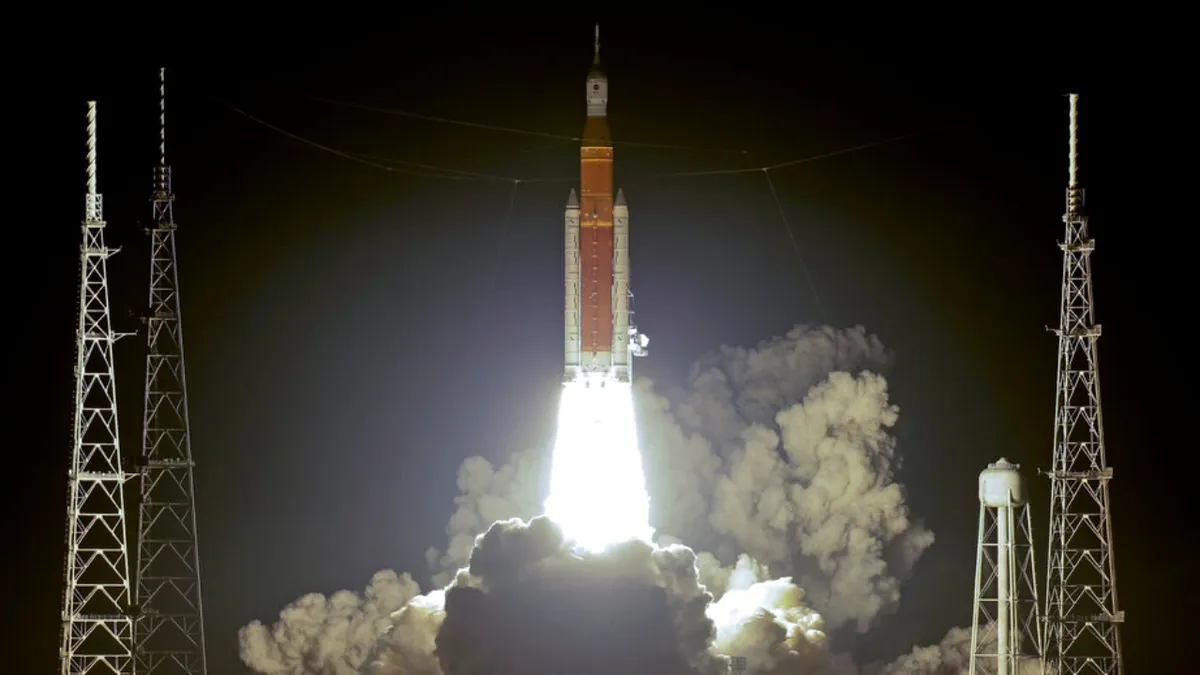
NASA’s New Moon rocket lifts off from Launch Pad 39B at the Kennedy Space Center in Cape Canaveral, Florida, on Wednesday, November 16, 2022. This launch is the first flight test of the Artemis program. (John Raoux/AP Photo)
The mission is scheduled to lift off from Launch Complex 39B at NASA’s Kennedy Space Center in Florida aboard the Space Launch System, the most powerful rocket the agency has ever built.
Preparations are underway to begin moving the rocket to the launch pad no earlier than January 17. The transfer involves a four-mile trip from the Vehicle Assembly Building to Launch Pad 39B aboard Tracked Transporter 2, a process that is expected to take up to 12 hours.
“We are getting closer to Artemis II, with launch just around the corner,” said Lori Glaze, acting associate administrator of NASA’s Exploration Systems Development Mission Directorate. “We have important steps left on our path to launch and crew safety will remain our top priority at all times as we move closer to humanity’s return to the Moon.”
TRANSPORTATION SECRETARY DUFFY TO ANNOUNCE NUCLEAR REACTOR DEVELOPMENT PLAN FOR THE MOON
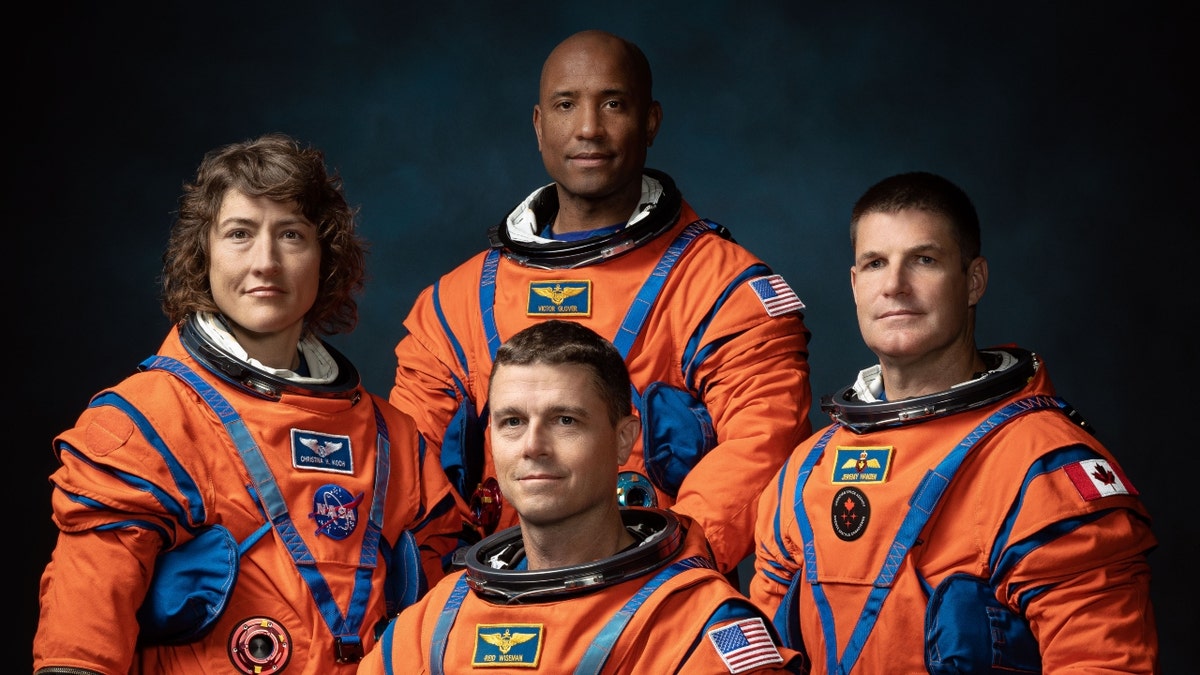
The crew of NASA’s Artemis II mission (left to right): NASA astronauts Christina Hammock Koch, Reid Wiseman (seated), Victor Glover, and Canadian Space Agency astronaut Jeremy Hansen. (POT)
The 322-foot rocket will send four astronauts beyond Earth’s orbit to test the Orion spacecraft in deep space for the first time with a crew on board, marking a major milestone after the Apollo era, which last sent humans to the Moon in 1972.
The crew includes NASA astronauts Reid Wiseman, Victor Glover and Christina Koch, along with Canadian Space Agency astronaut Jeremy Hansen, making Artemis II the first lunar mission to include a Canadian astronaut and the first to carry a woman beyond low-Earth orbit.
After launch, astronauts are expected to spend about two days near Earth checking Orion’s systems before firing the spacecraft’s European-built service module to begin the journey to the Moon.
BLUE ORIGIN LAUNCHES NEW GLENN ROCKET TO MARS AFTER DELAYS
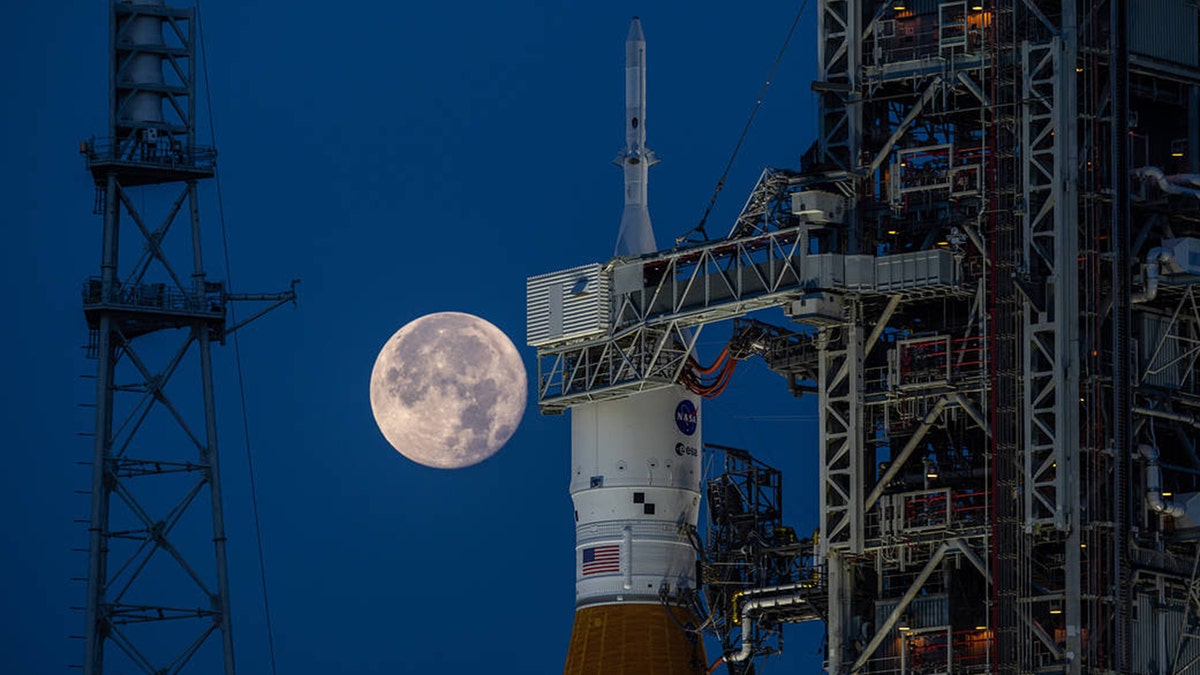
A full moon was seen behind the Artemis I SLS (Space Launch System) rocket and Orion spacecraft at Launch Complex 39B at NASA’s Kennedy Space Center in Florida on June 14, 2022. Artemis I, the first in a series of increasingly complex missions, tested SLS and Orion as an integrated system ahead of crewed flights to the Moon. (NASA/Ben Smegelsky)
That maneuver will send the spacecraft on a four-day journey around the far side of the Moon, tracing a figure-eight trajectory that will take the crew more than 230,000 miles from Earth and thousands of miles beyond the lunar surface at its farthest point.
Instead of firing the engines to return home, Orion will follow a free, fuel-efficient return path that uses the gravity of the Earth and Moon to guide the spacecraft back to Earth during the approximately four-day return trip.
The mission will end with a high-speed re-entry and splashdown in the Pacific Ocean off the coast of San Diego, where NASA and War Department teams will recover the crew.
CLICK HERE TO DOWNLOAD THE News APP
Artemis II follows the unmanned Artemis I mission and will serve as a critical test of NASA’s deep space systems before astronauts attempt a lunar landing on a future flight.
NASA says the mission is a key step toward long-term lunar exploration and eventual crewed missions to Mars.
Greg Wehner is a breaking news reporter for News Digital.
Story tips and ideas can be sent to Greg.Wehner@News.com and on Twitter @GregWehner.