



Valentino Garavani, iconic fashion designer, dies at 93
/News/AP
Add News themezone on Google
Valentino Garavani, the jet-setting Italian designer whose high-glamorous dresses, often in his signature “Valentino red” hue, were fashion show staples for nearly half a century, has died at his home in Rome, his foundation announced Monday on social media. He was 93 years old.
“Valentino Garavani was not only a constant guide and inspiration to us all, but a true source of light, creativity and vision,” the foundation said in the statement.
His body will lie in repose at the foundation’s headquarters in Rome on Wednesday and Thursday. The funeral will take place on Friday at the Basilica Santa Maria degli Angeli e dei Martiri in Rome’s Piazza della Repubblica.
Universally known by his first name, Valentino was adored by generations of royals, first ladies and movie stars, from Jackie Kennedy Onassis to Julia Roberts and Queen Rania of Jordan, who swore that the designer always made them look and feel their best.
When the empress of IranFarah Pahlavi, escaped the country during the 1979 revolution, wearing a coat made by Valentino.
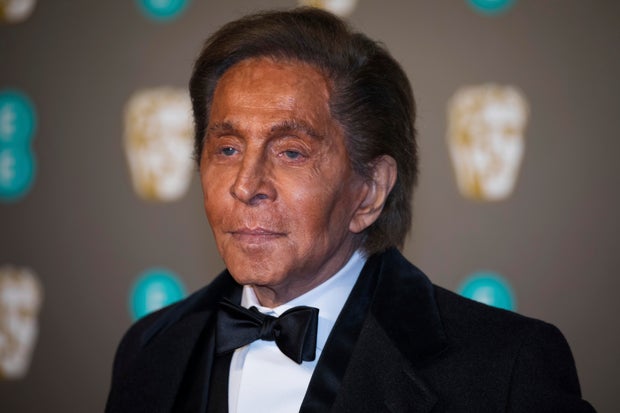
“I know what women want,” he once commented. “They want to be beautiful.”
Never a bold or showy man, Valentino made very few fashion missteps throughout his nearly half-century career, which stretched from his early days in Rome in the 1960s to his retirement in 2008.
His fail-safe designs made Valentino the king of the red carpet, the go-to man for the award ceremony needs of the biggest celebrities. Her sumptuous gowns have graced countless Academy Awards, most notably in 2001, when Roberts wore a vintage black-and-white column to accept her best actress statue.

Cate Blanchett also wore Valentino, a one-shoulder dress in butter yellow silk, when she won the Oscar for best supporting actress in 2005.
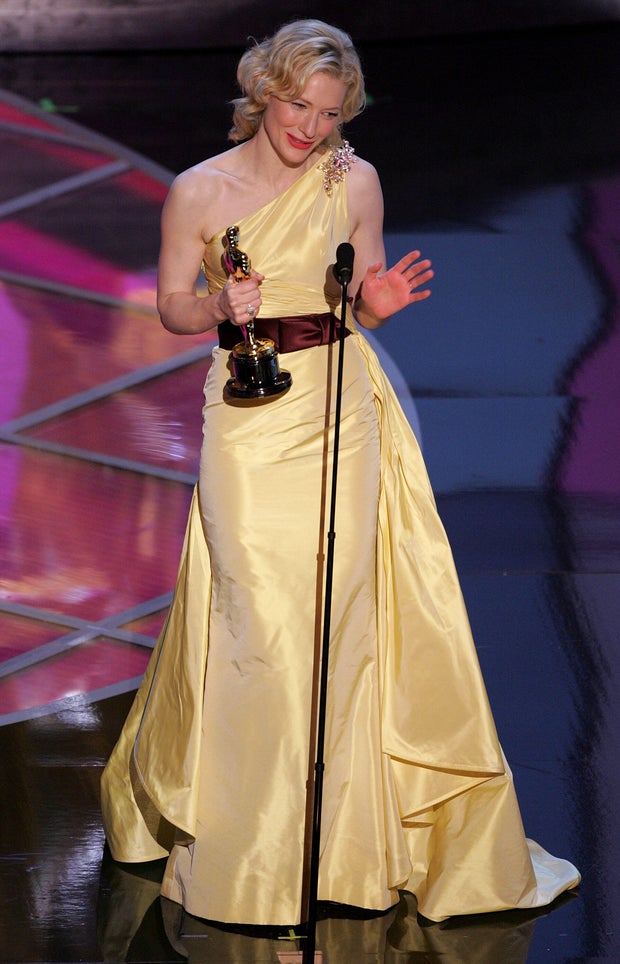
Valentino was also behind the long-sleeved lace dress that Jacqueline Kennedy wore to her wedding to Greek shipping magnate Aristotle Onassis in 1968. It caused a sensation in the United States, and in 1970, Valentino was the first Italian designer to open a store in New York.
Kennedy and Valentino were close friends for decades, and for a time the one-time first lady of the United States wore Valentino almost exclusively. He was also close to Diana, Princess of Wales, who often wore his sumptuous dresses.
Over the years, Valentino would elevate the “Made in Italy” label to global prominence.
Beyond its signature orange-tinged red hue, other Valentino trademarks included bows, ruffles, lace and embroidery; In short, feminine and flirtatious decorations that enhanced the beauty of the dresses and, therefore, that of those who wore them.
Always tanned and always impeccably dressed: “I only like beautiful things,” he told the Italian edition of Elle magazine in 2007, Valentino shared the lifestyle of his jet-setting clients. In addition to his 152-foot yacht and an art collection that includes works by Picasso and Miró, the couturier owned a 17th-century castle near Paris with a garden said to have more than a million roses.
Valentino and his longtime partner Giancarlo Giammetti flitted between their homes, which also included locations in New York, London, Rome, Capri and Gstaad, Switzerland, traveling with their pack of pugs. The couple regularly hosted friends and A-list sponsors, including Madonna and Gwyneth Paltrow.
“When I see someone and unfortunately they are relaxed and running around in sweatpants and without makeup… I am very sorry,” the designer told RTL television in an interview in 2007. “For me, a woman is like a beautiful, beautiful bouquet of flowers. She has to always be sensational, always please, always be perfect, always please the husband, the lover, everyone. Because we were born to always show the best of ourselves.”
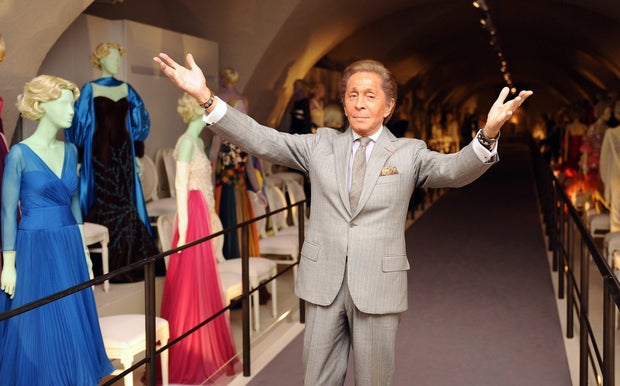
Valentino was born into a wealthy family in the northern Italian town of Voghera on May 11, 1932. He said it was his childhood love of cinema that led him to the path of fashion.
“I was crazy about the big screen, I was crazy about beauty, about seeing all those movie stars being sensations, well dressed, always being perfect,” he explained in the 2007 television interview.
After studying fashion in Milan and Paris, he spent much of the 1950s working for Paris-based designer Jean Desses, and later Guy Laroche, before striking out on his own. He founded the Valentino house on Via Condotti in Rome in 1959.
From the beginning, Giammetti was at his side, handling the business side while Valentino used his natural charm to build a customer base among the world’s rich and fabulous.
After some initial financial setbacks (Valentino’s tastes were always luxurious and the company spent with abandon), the brand took off.
Early fans included Italian screen sirens Gina Lollobrigida and Sophia Loren, as well as Hollywood stars Elizabeth Taylor and Audrey Hepburn. American Vogue’s legendary editor-in-chief Diana Vreeland also took the young designer under her wing.
Over the years, Valentino’s empire expanded as the designer added ready-to-wear, menswear and accessories lines to his stable. Valentino and Giammetti sold the brand to an Italian holding company for an estimated $300 million in 1998. Valentino would remain in the design role for another decade.
In 2007, the couturier celebrated its 45th anniversary trendy with a three-day party in Rome, culminating with a grand ball at the Villa Borghese gallery.
Valentino retired in 2008 and was briefly replaced by fellow Italian Alessandra Facchinetti, who had stepped into Tom Ford’s shoes at Gucci before being fired after two seasons.
Facchinetti’s tenure at Valentino proved equally short. Already at her first show for the brand, rumors circulated that she was about to leave, and just a year after being hired, Facchinetti was replaced by two of the brand’s longtime accessories designers, Maria Grazia Chiuri and Pier Paolo Piccioli.
Chiuri left to run Dior in 2016, and Piccioli continued to lead the house during a golden period that saw the launch of Chiuri’s Rockstud pumps and her signature color, a fuchsia shade called Pink PP. He left the house in 2024, then joined Balenciaga and was replaced by Alessandro Michele, who revived Gucci stars with romantic, genderless styles.
Valentino is owned by Qatari Mayhoola, which controls a 70% stake, and French luxury conglomerate Kering, which owns 30% with the option to take full control in 2028 or 2029. Richard Bellini was named CEO last September.
Valentino has been the subject of several retrospectives, including one at the Museum of Decorative Arts, which is located in a wing of the Louvre Museum in Paris. He was also the subject of a hit 2008 documentary, “Valentino: The Last Emperor,” which chronicled the end of his fashion career.
In 2011, Valentino and Giammetti launched what they called a “virtual museum,” a free desktop application that allows viewers to delight in some 300 of the designer’s iconic pieces.
News contributed to this report.
In:
- Death
- Obituary