



A humanoid robot makes architectural history by designing a building
NEWNow you can listen to News articles!
What will happen when artificial intelligence (AI) goes from painting portraits to designing houses? That question is no longer theoretical.
At the Utzon Center in Denmark, Ai-Da Robot, the world’s first ultra-realistic robot artist, has made history as the first humanoid robot to design a building.
The project, called Ai-Da: Space Pod, is a modular housing concept created for future bases on the Moon and Mars. CyberGuy has covered Ai-Da before, when her work focused on drawing, painting, and performance art. That previous coverage showed how a robot could create original works of art in real time and why it sparked a global debate.
Now the change is clear. Ai-Da is moving beyond art and into physical spaces designed for humans and robots to live.
Sign up to receive my FREE CyberGuy report
Get my best tech tips, urgent security alerts, and exclusive offers delivered right to your inbox. Plus, you’ll get instant access to my Ultimate Guide to Surviving Scams, free when you join me CYBERGUY.com information sheet.
3D PRINTED HOUSING PROJECT FOR STUDENT APARTMENTS TAKES SHAPE
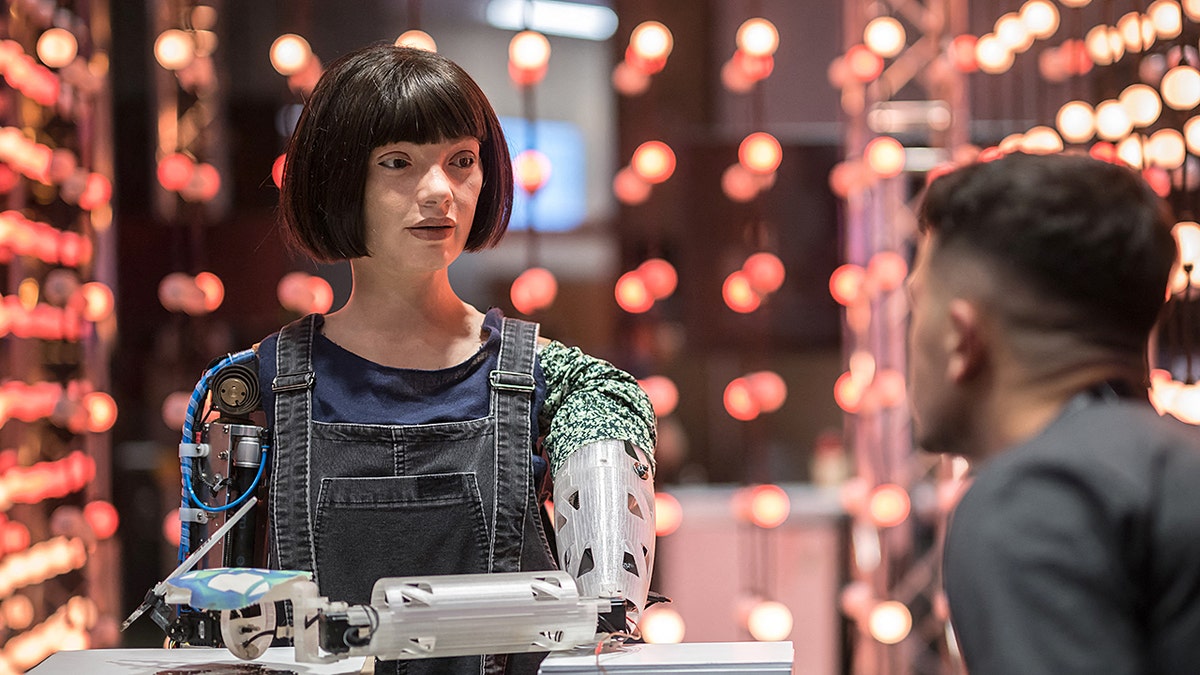
Ai-Da Robot is the humanoid artist who made architectural history by becoming the first robot to design a building. (FABRICE COFFRINI/News via Getty Images)
Inside the exhibition ‘I am not a robot’
The exhibition “I am not a robot” has just opened at the Utzon Center and will remain open until October. Explore the creative capacity of machines at a time when robots are increasingly capable of thinking and creating for themselves. Visitors can experience Ai-Da’s drawings, paintings and architectural concepts. Throughout the exhibition period, visitors can also follow Ai-Da’s creative process through sketches, paintings and a video interview.
ELON MUSK TELLS ABOUT A FUTURE RUN BY ROBOTS
How Ai-Da creates art and architecture
Ai-Da is neither an avatar nor a digital animation. It has camera eyes, specially developed artificial intelligence algorithms and a robotic arm that allows it to draw and paint in real time. Developed in Oxford and built in Cornwall in 2019, Ai-Da works across all disciplines. She is a painter, sculptor, poet, performer and now an architectural designer whose work aims to provoke reflection.
“Ai-Da presents a concept for a shared residential area called Ai-Da: Space Pod, a harbinger of a future where AI becomes an integrated part of architecture,” explains Aidan Meller, creator of Ai-Da and director of Ai-Da Robot. “With smart systems, a building will be able to detect and respond to its occupants, adjusting light, temperature and digital interfaces based on needs and mood.”
A building designed for humans and robots
The Space Pod is intentionally modular. Each unit can connect to others through hallways, creating a shared residential environment.
Through a series of paintings, he imagines a home and studio for both humans and robots. According to the Ai-Da Robot team, these designs could evolve into fully realized architectural models through 3D renderings and construction. They could also be adapted to planned base camps on the Moon or Mars.
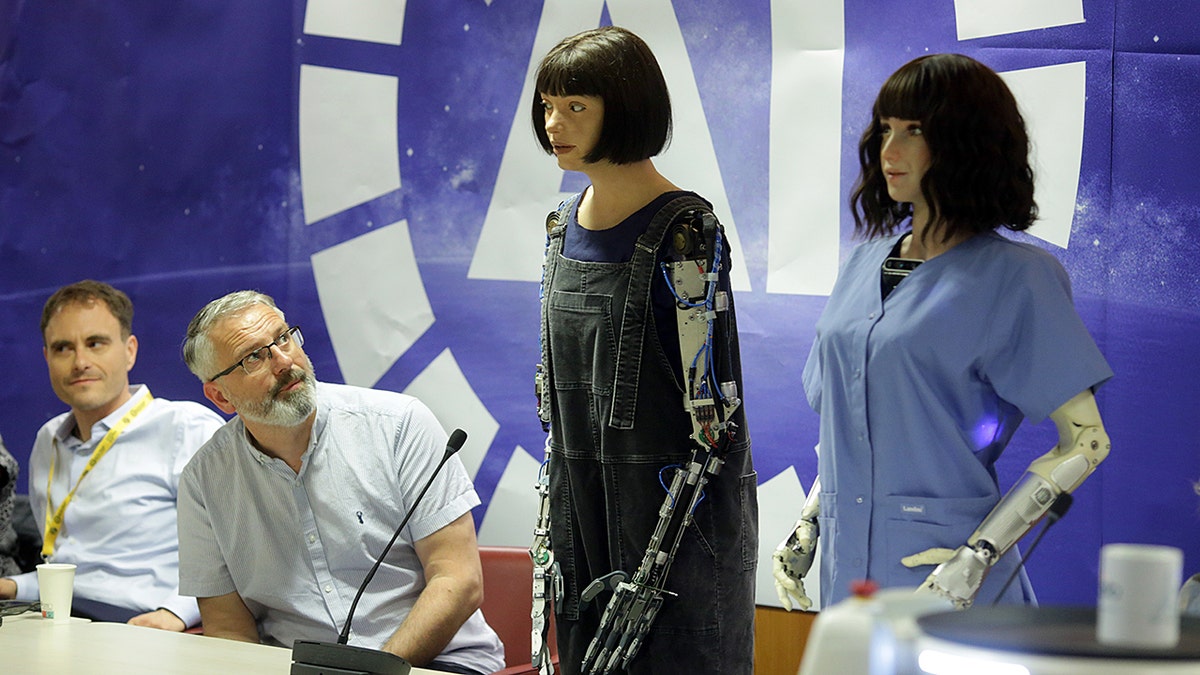
Aidan Meller presents the Ai-Da robot, the first AI-powered artist robot during the UN Global Summit on AI for Good, where they will give the keynote address, on July 7, 2023, in Geneva, Switzerland. (Johannes Simon/Getty Images for Aidan Meller)
While the concept points to future bases on the Moon and Mars, the design can also be built as a prototype on Earth. That detail is important as space agencies prepare for longer missions beyond our planet.
“With our first crewed moon landing in 50 years in 2027, Ai-Da: Space Pod is a simple unit connected to other capsules via corridors,” Meller said. “Ai-Da is a humanoid that designs houses. This raises questions about where architecture can go when powerful AI systems gain greater agency.” The timing also aligns with renewed lunar exploration linked to NASA missions.
AUSTRALIAN CONSTRUCTION ROBOT CHARLOTTE CAN 3D PRINT A 2,150 SQUARE FOOT HOUSE IN ONE DAY USING SUSTAINABLE MATERIALS
Why this exhibition aims to challenge you
According to Meller, the exhibition must be uncomfortable at times. “Technology is developing at an extraordinary pace in recent years,“ he said, pointing to emotional recognition through biometrics, CRISPR gene editing and brain-computer interfaces. Each carries ethical promises and risks. It references Brave New World and Yuval Harari’s warnings about how powerful technologies can be used.
In this context, Ai-Da becomes a mirror of our time. “Ai-Da is conflictive. The very fact that it exists is conflictive,” said Line Nørskov Davenport, director of exhibitions at the Utzon Center. “She is an AI shaker, a conversation starter.”
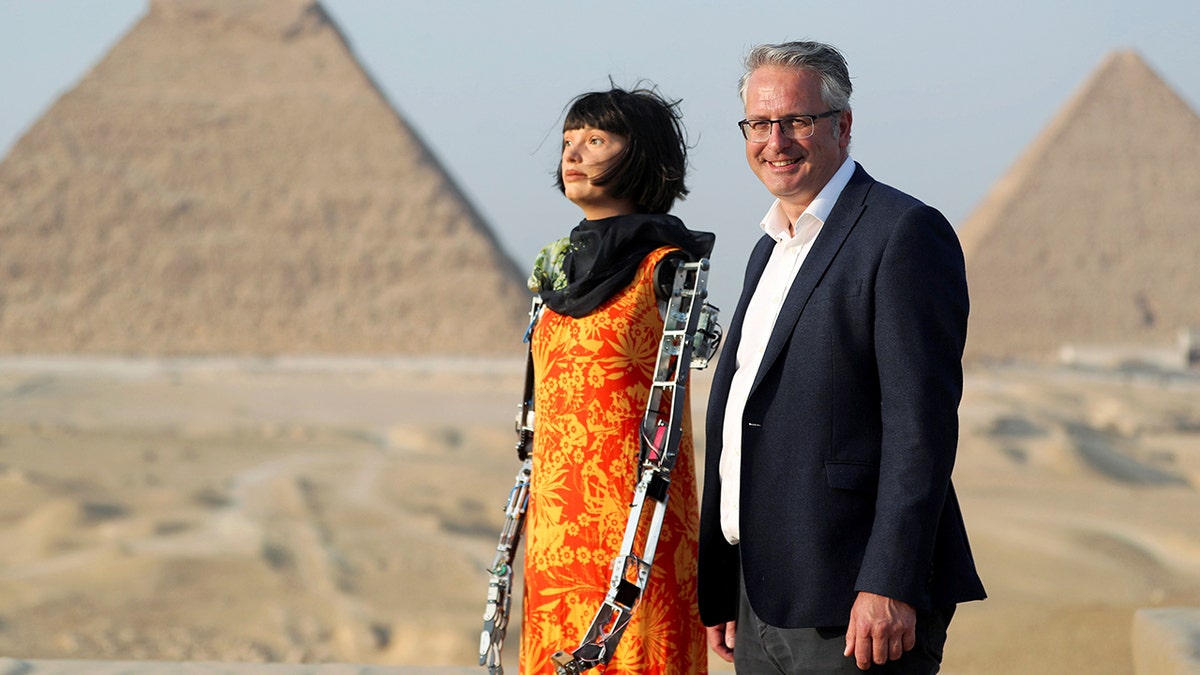
British gallery owner and modern and contemporary art specialist Aidan Meller stands next to artificial intelligence robot artist “Ai-Da” at the Great Pyramids of Giza, where he is displaying his sculpture during an international art exhibition, outside Cairo, Egypt, on October 23, 2021. (REUTERS/Mohamed Abd El Ghany)
What does this mean to you?
This story goes beyond robots and space travel. Ai-Da’s Space Pod shows how quickly AI is moving from being a creative tool to making decisions. Architecture, housing and shared spaces shape everyday life. When AI enters those fields, questions about control, ethics and responsibility become inevitable. If a robot can design houses for the Moon, it could soon influence how buildings function here on Earth.
Take my quiz: How safe is your online security?
Do you think your devices and data are really protected? Take this quick quiz to see where you stand digitally. From passwords to Wi-Fi settings, you’ll get a personalized breakdown of what you’re doing well and what you need to improve. Take my quiz here: Cyberguy.com.
Kurt’s Key Takeaways
For a humanoid robot to design a building once seemed impossible. Today, Ai-Da’s work is housed within an important cultural institution and generates real debate. It doesn’t offer easy answers. Instead, it pushes us to think more critically about creativity, technology, and responsibility. As the line between humans and machines continues to blur, those questions matter more than ever.
If AI can design the homes of our future, how much creative control should humans be willing to give up? Let us know by writing to us at Cyberguy.com.
CLICK HERE TO DOWNLOAD THE News APP
Sign up to receive my FREE CyberGuy report
Get my best tech tips, urgent security alerts, and exclusive offers delivered right to your inbox. Plus, you’ll get instant access to my Ultimate Guide to Surviving Scams, free when you join me CYBERGUY.COM information sheet.
Copyright 2026 CyberGuy.com. All rights reserved.
Kurt “CyberGuy” Knutsson is an award-winning technology journalist with a deep love for technology, gear and devices that improve lives with his contributions to News and News Business since mornings on “News & Friends.” Do you have any technical questions? Get Kurt’s free CyberGuy newsletter, share your voice, a story idea or comment on CyberGuy.com.