



EvidenceContradictsTrump immigration officials
WASHINGTON, Jan 27 (Reuters) – U.S. President Donald Trump’s top immigration officials have made repeated statements after violent encounters involving federal agents – including two fatal shootings of U.S. citizens in Minneapolis this month – that were later contradicted by evidence, a Reuters review found.
Trump officials quickly described the two recently killed, Renee Good and Alex Pretti, as attackers and said the shootings were justified. But videos and other evidence soon emerged that stood in stark contrast to these accounts, fueling questions about the credibility of federal officials and doubts about their willingness to fully investigate these and other incidents.
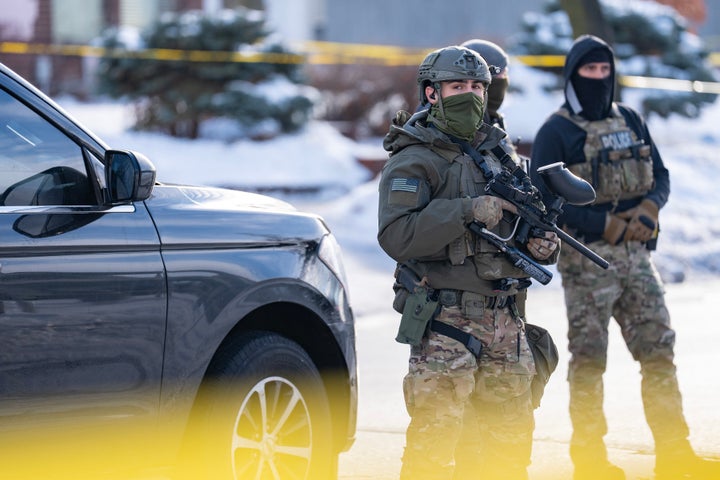
The Reuters review included these two incidents and four others in recent months that together show a pattern in which officials rushed to the defense of immigration agents without waiting for key facts to emerge, in what former immigration officials called a clear break with past practices by federal agencies in such situations.
These initial statements have been challenged through video footage or other evidence, sometimes in court. In a non-fatal shooting in Minnesota, court documents emerged showing the incident began with a case of mistaken identity. A detention center death that the U.S. Department of Homeland Security described as a suicide attempt was later ruled a homicide by a county medical examiner.
Star Tribune via Getty Images via Getty Images
“They are trying to control a narrative from the beginning, and they don’t seem to care when they are proven wrong,” said David Lapan, who was DHS press secretary in 2017, during the first Trump administration.
In response to a Reuters request for comment, DHS pointed to previous statements about incidents involving its officers, emphasizing the need for officer safety as they carry out the crackdown on Trump.
“We have seen a highly coordinated campaign of violence against our law enforcement,” said DHS spokeswoman Tricia McLaughlin, adding that the department aims to “provide quick and accurate information to the American people.”
Here’s a look at six incidents in Minneapolis, Chicago and Texas:
DHS said Pretti was brandishing a gun, but the video showed a cell phone
After Pretti, 37, was shot and killed during an encounter with U.S. Border Patrol agents in Minneapolis on Saturday, the Department of Homeland Security issued a statement noting that Pretti was carrying a firearm but did not say it remained holstered. The statement said the encounter “appears like a situation where an individual wanted to cause maximum damage and massacre law enforcement.”
DHS said Pretti “approached U.S. Border Patrol officers with a 9mm semi-automatic handgun” in a post on social media site X, sharing a photo of the alleged weapon.
“Officers attempted to disarm the suspect, but the armed suspect violently resisted,” DHS said.
Stephen Miller, a White House adviser and architect of Trump’s immigration agenda, said in X that Pretti was a “domestic terrorist” and a “would-be assassin.”
ROBERTO SCHMIDT via Getty Images
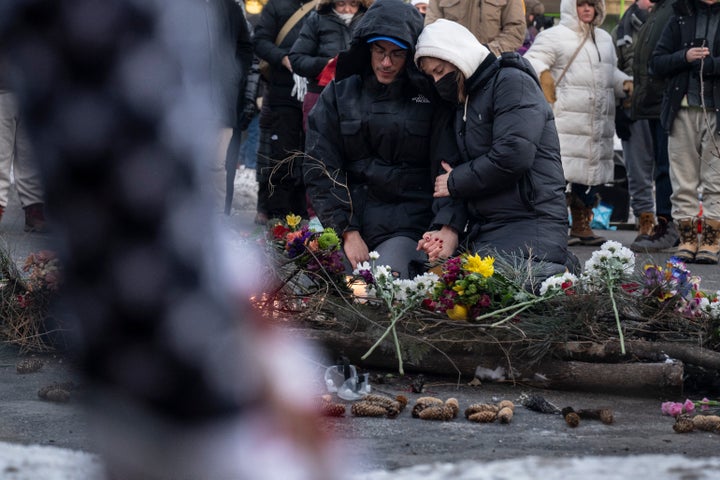
Video of the encounter verified by Reuters showed Pretti holding a cellphone and not a gun as officers wrestled him to the ground. Video evidence also showed that an officer removed Pretti’s gun from his body shortly before the first shots were fired. He had a legal permit to carry the weapon.
Responding to a Reuters request for comment on Monday, DHS said in a statement that Pretti “committed a federal crime while armed by obstructing an active law enforcement operation” and that the situation was “evolving.”
White House press secretary Karoline Leavitt said during a briefing Monday that Trump “wants to let the investigation continue and let the facts lead.”
DHS claims Good ‘turned his vehicle into a weapon’
Homeland Security described Good, the 37-year-old woman shot by an ICE officer in Minneapolis on Jan. 7, as a “violent rioter” who had “weaponized her vehicle, attempting to run over our law enforcement officers in an attempt to kill them – an act of domestic terrorism.” She said the officer who killed her “saved his own life and the lives of his fellow officers.”
Trump said Good “ran over the ICE officer,” who he said shot him in self-defense.
Videos of the shooting taken from several vantage points, including a cellphone video recorded by the officer who shot Good, contradict those claims.
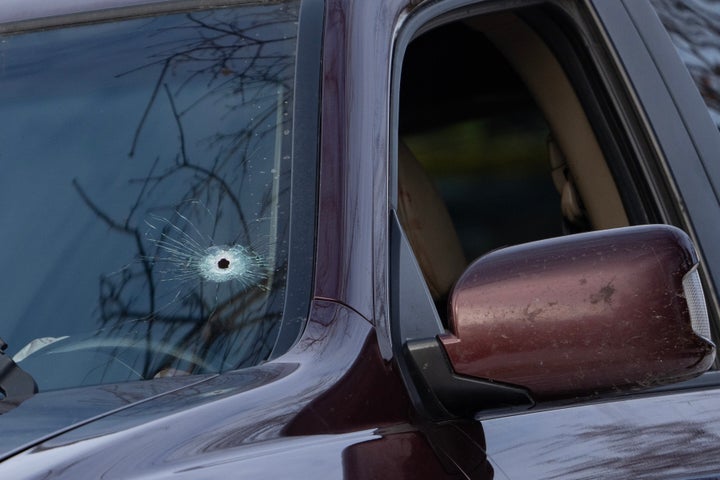
Videos show Good in her car as officers rushed toward her while her vehicle partially blocked the street. One of the officers, Jonathan Ross, positioned himself near the front of his car; another was standing by the driver’s side window. The videos show the car moving forward, with its wheels facing away from Ross, who pulled out his gun and fired three shots at Good as her car passed, killing her.
Video reviewed by Reuters appeared to show Ross and the vehicle making contact, but Reuters could not determine whether Ross touched the vehicle or hit it.
Star Tribune via Getty Images via Getty Images
ICE chased a car thinking the driver was someone else
On Jan. 15, DHS said officers “were conducting a targeted traffic stop” in Minneapolis for Venezuelan immigrant Julio Sosa-Celis when he sped away, crashed his car and fled on foot into an apartment building.
DHS said at the time that Sosa-Celis and two other men hit an ICE officer who chased him with a snow shovel and a broom handle, leading to the shooting.
Court documents revealed last week tell a different story.
An FBI affidavit said ICE agents had scanned a license plate registered to another person suspected of an immigration violation, leading them to pursue the wrong person before the alleged assault and shooting.
The affidavit said another man was driving the car and was the sole occupant, not Sosa-Celis. The real driver of the vehicle, another Venezuelan immigrant, crashed and fled into an apartment building where Sosa-Celis was, he said.
At the apartment building, an ICE officer trying to detain the driver of the car was hit by him and Sosa-Celis with a broom – and a third man with a shovel – before the officer fired his gun, according to the FBI affidavit.
While DHS initially said the officer “fired a defensive shot to defend his life” during the ambush, the FBI affidavit said the alleged attackers dropped the broom and shovel when they saw the officer draw his gun and fled toward the apartment as he fired.
Robin Wolpert, an attorney representing Sosa-Celis, said he would plead not guilty if charged.
Wolpert said the affidavit established that the ICE officer shot Sosa-Celis from 10 feet away as he fled, which showed the officer “was not in immediate danger.”
DHS did not address the FBI affidavit with the different account of the incident when asked for comment.
Kevin Carter via Getty Images
Changing statements after arrest death
When U.S. Immigration and Customs Enforcement announced the death of Cuban immigrant Geraldo Lunas Campos in a Texas detention center on Jan. 3, it said he experienced “medical distress” and that the incident was being investigated.
A Jan. 15 report in the Washington Post said the El Paso County medical examiner’s office would likely rule it a homicide, and that the preliminary cause of death was “asphyxiation due to neck and chest compression.” The Post cited a witness who said the guards were choking Lunas, who said he couldn’t breathe, details that were not included in the ICE statement.
DHS issued a new statement after the article was published that said Luna attempted suicide and then resisted security officers and died.
The medical examiner released a report last week that found the death was a homicide due to asphyxia due to compression of the neck and torso, according to the Post.
The death was one of six deaths in ICE detention in January, an unusually high number.
Judge denounces the government’s “widespread misrepresentations”
A federal judge wrote in a November opinion restricting the use of force by immigration agents in Chicago that the government’s “widespread misrepresentations call into question everything the defendants say they are doing in their characterization” of the crackdown.
In one case, Homeland Security posted on Five days later, Bovino told the court that the rock had not hit him when he first fired tear gas.
“It almost hit me,” he said.
U.S. District Court Judge Sara Ellis said Bovino “lied several times” about why he needed to throw a tear gas canister at protesters.
Neither DHS nor Bovino responded to requests for comment about the incident and Ellis’ comments.
In the same case, Ellis also disputed authorities’ claims that they needed to use tear gas in order to leave the scene of another operation in October, saying that the officers themselves had prolonged the encounter with their actions.
“Every small inconsistency adds up, and at some point it becomes difficult, if not impossible, to believe almost anything,” the government said, Ellis wrote.
Homeland Security said in a statement after the ruling that officers were facing “rioters, gang members and terrorists” and had shown “incredible restraint in exhausting all options before force escalated.”
Stephen Maturen via Getty Images
Government drops case against US citizen shot by border agent
On Oct. 4, Homeland Security said several drivers “slammed” law enforcement officers in Broadview, a Chicago suburb where an immigration detention center has been the scene of clashes between protesters and immigration agents.
DHS said one of the drivers, a woman, was “armed with a semi-automatic weapon” and that law enforcement was “forced to deploy their weapons and fired defensive shots at an armed U.S. citizen.”
The woman, US citizen Marimar Martínez, was shot five times by an officer. She survived and was charged with impeding a federal officer with a deadly weapon.
The officer later bragged about his marksmanship in text messages shared in court.
Martinez’s attorney, Christopher Parente, told the court that body camera footage from one of the officers contradicted the DHS account. Martínez, 30, said one of the officers crashed his vehicle into his.
Parente told Reuters that Martinez left her gun in her purse on the passenger seat and never brandished it. DHS was wrong about the location of the incident: It occurred in Chicago’s Brighton Park neighborhood, not Broadview.
On Nov. 20, government prosecutors asked the court to dismiss the case against Martínez, saying they were “reviewing new facts and information” from the months-long operation.
DHS referred any questions about the federal charges to the Justice Department, which did not immediately respond to a request for comment.
(Reporting by Renee Hickman in Chicago; Ted Hesson and Brad Heath in Washington; and Kristina Cooke in San Francisco; Editing by Craig Timberg and Deepa Babington)