



Trump’s claims about national security threats have gone in a strange direction
Facing a looming district court decision that could halt construction of President Donald Trump’s $400 million White House ballroom project, Justice Department lawyers now indicate they will appeal any adverse ruling, arguing that the proposed ballroom has “national security implications.”
“If the Court ultimately enjoins the East Wing and State Ballroom Modernization Project,” the Trump administration “will immediately appeal that order,” Justice Department lawyers said in a court filing Monday. “Given the demands involved in suspending a major ongoing construction project with national security implications, defendants are filing this motion in advance of any ruling, to avoid an emergency situation or at least to facilitate expedited procedures on appeal.” The administration claimed that building a permanent space for large events would increase security.
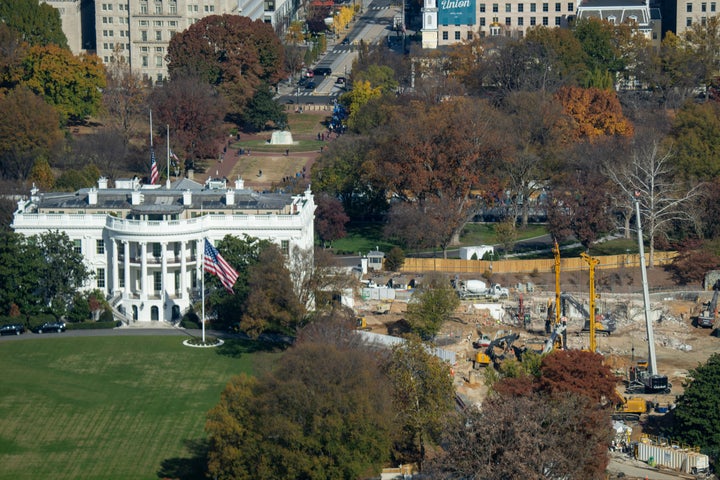
The case reached the D.C. District Court after the National Trust for Historic Preservation sued to stop construction of the ballroom following the surprise demolition of the East Wing of the White House. The trust argued that the project was illegal as the administration failed to adequately notify and involve Congress, the National Capital Planning Commission, and the Fine Arts Commission and did not conduct adequate environmental assessments.
This is not the first invocation of national security in the ongoing lawsuit over Trump’s ballroom. But it is the most direct explanation of how the administration plans to get an appeals court or the U.S. Supreme Court to overturn a decision halting construction of the president’s major powder room project.
Andrew Leyden via Getty Images
During Trump’s second term, the Justice Department has repeatedly invoked national security as a kind of get-out-of-court card in cases that appear to have little connection to national security. Administration lawyers argue that judges must defer to the president’s determination that something involves national security and, in some cases, they can’t even hear cases involving the president’s national security determinations. Labeling Trump’s ballroom vanity project as related to national security is perhaps the most egregious example yet.
Previous court filings have detailed how the project may implicate national security. The contractor’s demolition of the east wing and the beginning of underground construction of the ballroom required “site improvements … before Secret Service security requirements could be met,” according to a Dec. 15 statement from Secret Service Deputy Director Matthew Quinn.
The ballroom would also increase security by eliminating the need for temporary screening sites for large events, Quinn said. he wrote in a Jan. 15 statement..
“Having permanent, updated, secure structures for screening guests and hosting events will obviate the need to use outdoor tents and the temporary screening building for future events and will also increase the security of all attendees at those events, including the president and foreign leaders and dignitaries,” Quinn wrote.
The administration’s filing Monday indicates that Justice Department lawyers have filed two classified statements with the court to further explain the alleged national security implications.
Judge Richard Leon He was previously denied a temporary restraining order to block construction in December following the unannounced destruction of the east wing. Instead, León stated that he would reserve his opinion while considering a preliminary injunction after hearing the arguments in the case. After arguments in January, León said he would issue a ruling in February.