



Researchers make surprising medical discovery in mass grave
NEWNow you can listen to News articles!
Archaeologists have unearthed evidence of what could be the world’s first surgery: a Viking Age human skull with a portion removed.
The remains, belonging to a man between 17 and 24 years old, have an oval hole approximately 3 centimeters in diameter. Experts believe the man lived during the 9th century, SWNS reports.
The man likely underwent trepanation, an ancient surgical procedure in which a hole is drilled in the skull of a living person to treat conditions such as migraines or seizures.
DAREDEVIL CLIMBER’S BRAIN SHOWS NO FEAR DURING EXTREME STUNTS: EXPERTS REVEAL WHY
Cambridge University students discovered the remains last year during a training excavation at the Iron Age fort of Wandlebury.
The discovery is notable not only for the surgery, but also for the man’s physical stature. At 6 feet 5 inches tall, he towered over the average man of the time, who typically stood 5 feet 6 inches, according to SWNS.
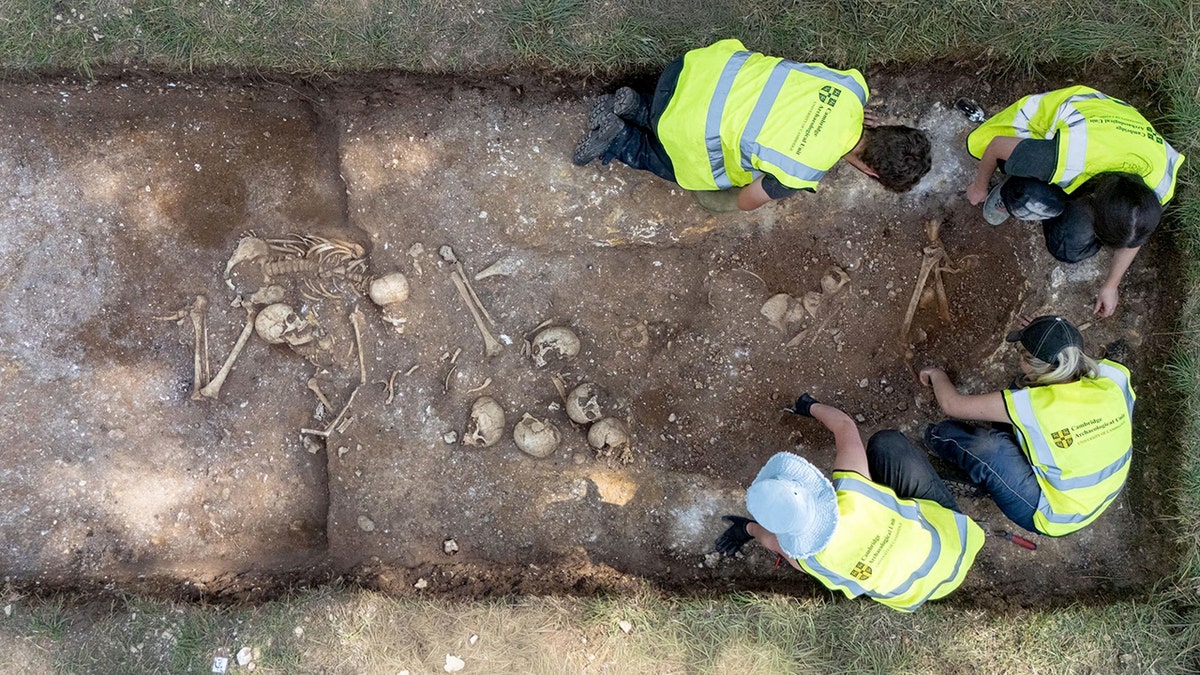
The mass grave was discovered at the Iron Age hillfort at Wandlebury. (Cambridge Archaeological Unit/Da/SWNS)
“The individual may have had a tumor that affected his pituitary gland and caused excess growth hormones,” Dr. Trish Biers, curator at the University of Cambridge’s Duckworth Laboratory, said in the report.
“We can see this in the unique features of the long shafts of their limb bones and in other parts of the skeleton.”
TRY OUR LATEST LIFESTYLE QUIZ
Biers noted that such a condition would have increased intracranial pressure and caused severe headaches. Trepanation was probably an attempt to relieve that pain, a goal that “is not uncommon in current head trauma.”
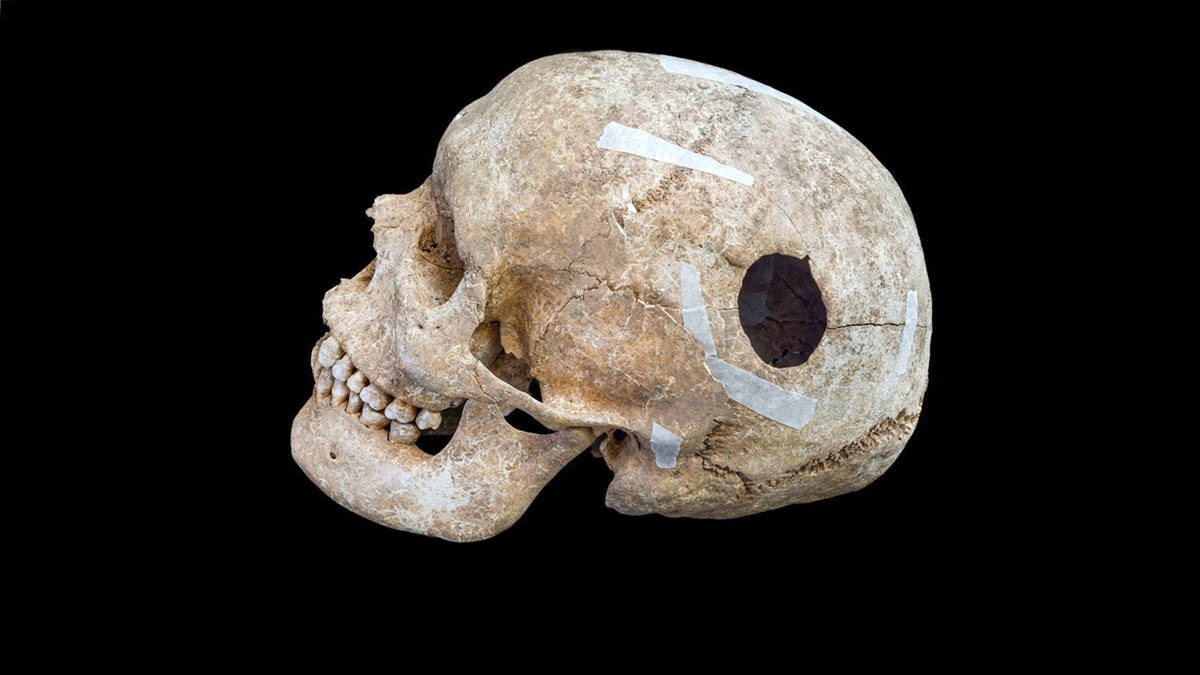
A skull with a hole was discovered in the Iron Age hillfort at Wandlebury. (Cambridge Archaeological Unit/Da/SWNS)
A puzzling burial site
The burial site itself presented a sinister mystery. The mass grave contained a mix of complete and dismembered bodies, including a group of skulls and what researchers described as a “pile of legs.”
CLICK HERE FOR MORE HEALTH STORIES
Four complete skeletons were unearthed, some in positions that suggested they had been tied.
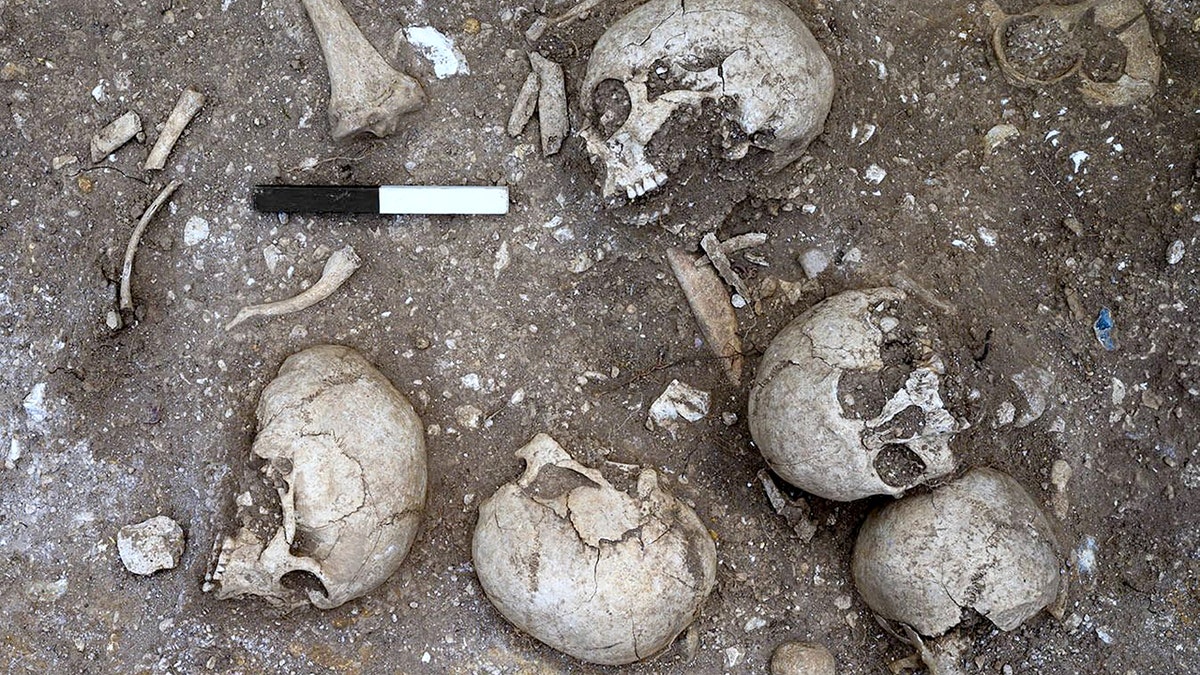
Four complete skeletons were unearthed, some in positions that suggested they had been tied. (Cambridge Archaeological Unit/Da/SWNS)
Most appeared to be young men carelessly thrown into the pit, leading archaeologists to suspect that the site marks the aftermath of a skirmish, battle or mass execution.
CLICK HERE TO DOWNLOAD THE News APP
“Those buried could have received corporal punishment, and that may be related to Wandlebury as a sacred or known meeting place,” Oscar Aldred of the Cambridge Archaeological Unit told SWNS.
CLICK HERE TO SUBSCRIBE TO OUR HEALTH NEWSLETTER
“It may be that some of the disarticulated body parts had previously been displayed as trophies and were then gathered and buried with the executed or butchered individuals.”
Khloe Quill is a lifestyle production assistant at News Digital. She and the lifestyle team cover a range of topics including food and drink, travel and health.