



Russia blocks WhatsApp while promoting a state-backed alternative to citizens
/News themezone
Add News themezone on Google
Russian authorities have taken new steps to ensure they can monitor all communications of people within the country, officially blocking access to the popular messaging app WhatsApp, owned by Meta.
WhatsApp said in a statement shared Thursday on social media that Russia had “attempted to completely block WhatsApp in an effort to drive people to a state-owned surveillance app,” calling it an attempt to cut off “more than 100 million users from private and secure communications.”
WhatsApp called it a “step backwards” that would lead to “less security for people in Russia.”
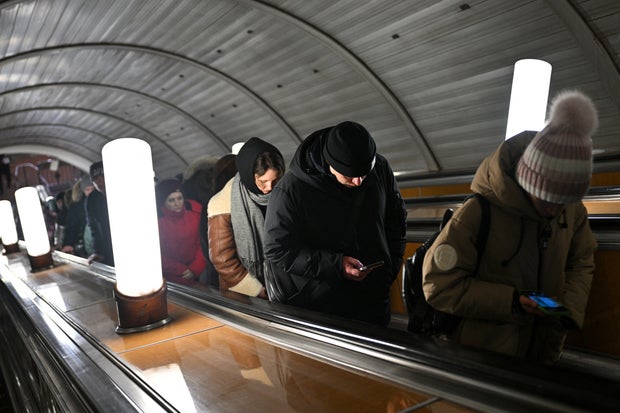
Speaking to reporters Thursday in Moscow, Kremlin spokesman Dmitry Peskov confirmed that “a decision was indeed made and implemented” in response to a question about banning WhatsApp.
He said the decision was made due to WhatsApp’s unwillingness “to comply with the rules and the letter of Russian law.”
The ban appears to arise from Russian legislation that requires all companies registered on a registry of online information disclosers to store both the user’s personal details and data from all electronic messages exchanged within Russia, and make that information available to government agencies.
Roskomnadzor, the Russian federal agency responsible for monitoring (and censoring) the media in the country, added WhatsApp to that record at the end of 2024.
WhatsApp said in its statement that it would “do everything possible to keep users connected.”
News themezone discovered on Thursday that while WhatsApp was blocked for users inside Russia, it was still possible to use the app over a virtual private network (VPN), which is not illegal in the country, despite the Kremlin’s ban.
Earlier this week, another popular messaging app, Telegram, also faced new restrictions in Russia, in a move highly criticized by many citizens. According to Roskomnadzor, which, like all Russian government agencies, uses the platform itself to distribute official advertisements, Telegram failed to protect users’ personal data.
The founder of Telegram, Pavel Durov, a Russian citizen who lives in exile in Dubai and who faces charges pending in France over alleged criminal activity on his platform, he criticized the move, saying the real reason was political censorship.
“Russia is restricting access to Telegram in an attempt to force its citizens to use a state-controlled application created for surveillance and political censorship,” he said, adding that “restricting citizens’ freedom is never the right answer.”
Russia formerly forbidden several social media platforms, including Instagram, Facebook and
Russian state-backed app “Max”
The “surveillance app” application Durov’s WhatsApp and Telegram statements refer to is a platform called MAX. Launched in 2025 with full government support, it is a multi-function application that includes messaging and e-commerce functions, but also access to a wide range of government services, such as medical and municipal appointments.
Like the WeChat app in China, Russian officials promote MAX as a social network and a key portal for government services.
Authorities ordered the state-backed app to come pre-installed on all new digital devices sold in Russia since last year.
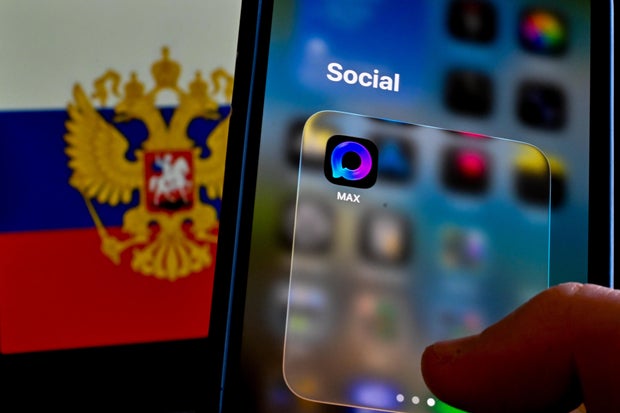
The company notes in its legal terms that it can share user data with Russian authorities upon request, but says it does so only after a “mandatory legal assessment is carried out to determine the legality, validity and adequacy of the volume of data requested for the stated purposes,” and that it provides “only the minimum amount of data expressly required by applicable law.”
The Indian government last year. revoked a previous order that all new devices sold in the country come preloaded with a state-owned and developed communications app, amid an outcry from opposition politicians and privacy organizations who warned it would be intrusive.
In:
- Social networks
- Telegram
- Russia
- Vladimir Putin