



Rubio adopts a warmer tone like Trump
BERLIN/MUNICH, Feb 13 (Reuters) – U.S. Secretary of State Marco Rubio warned that transatlantic relations faced a “defining moment” in a rapidly changing world, but struck a warmer tone ahead of the Munich Security Conference on Friday, after a year of unprecedented turmoil.
At the same meeting of top security officials last year, Vice President JD Vance had attacked European allies, setting off a series of confrontations, with the United States apparently determined to dismantle much of the international order it helped build.
In response, Washington’s partners have been pushing to chart a more independent course while preserving the alliance’s foundation, while facing myriad threats, from Russia’s war in Ukraine to massive unrest in global trade.
“I think we are at a decisive moment… the world is changing very quickly right in front of us,” Rubio said before leaving for Munich.
“Frankly, the Old World is gone, the world I grew up in, and we live in a new era in geopolitics, and it’s going to require all of us to reexamine what that looks like and what our role is going to be.”
“(The United States is) deeply tied to Europe, and our futures have always been linked and will continue to be linked,” said Rubio, who is a potential rival to Vance in the 2028 US presidential race. “So we just have to talk about what that future is going to look like.”
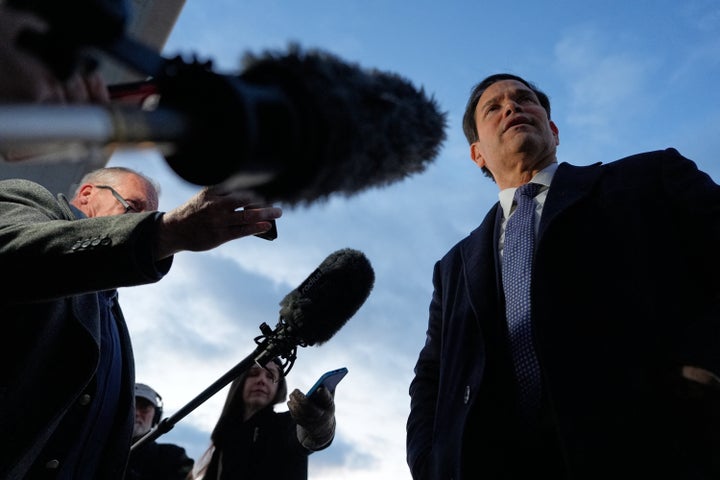
Alex Brandon/Pool/News via Getty Images
‘Wrecking ball politics’ threatens alliance
This year’s meeting comes against a backdrop of multiple conflicts, including war in Ukraine, Gaza and Sudan.
“I can’t remember a time when we’ve had more wars, crises and simultaneous conflicts of that dimension,” Wolfgang Ischinger, the former German diplomat who heads the forum, said at a meeting earlier this week.
Transatlantic ties have long been central to the Munich Security Conference, which began as a Cold War forum for debate over Western defense. But the unquestionable assumption of cooperation that underpinned it has been disrupted by what Ischinger called “wrecking ball politics” in which “radical destruction – instead of careful reforms and political corrections – is the order of the day.”
US President Donald Trump overthrew Venezuela’s leader, threatened other Latin American countries with similar military actions, imposed tariffs on both friends and enemies and spoke openly about annexing Greenland, a move that could effectively end the NATO alliance.
Vance’s speech last year at the conference, accusing European leaders of censoring free speech and failing to control immigration, was a milestone in deteriorating relations.
The Trump administration’s tough new tone, including a dire warning that Europe faces a “civilization erasure,” has rattled its allies, who have vowed to increase spending on their own militaries after decades of neglect.
However, it will take years to undo Europe’s dependence on American military support, leaving it vulnerable as long as the standoff with Russia over the Ukraine war persists.
Germany’s foreign minister said Friday that recent comments by American officials have caused irritation within NATO.
“This alliance is also under pressure. There is alienation, there is irritation about some of the things we hear from Washington. We need to talk about this together here,” Johann Wadephul told German broadcaster ARD.
A record count of leaders
German Chancellor Friedrich Merz will open the conference with a speech on Friday afternoon, while around 70 heads of state and government and more than 140 ministers are expected in Munich under strict security measures.
Notable attendees included Chinese Foreign Minister Wang Yi, Ukrainian President Volodymyr Zelenskyy, French President Emmanuel Macron, British Prime Minister Keir Starmer and Indian Foreign Minister Subrahmanyam Jaishankar.
Christine Lagarde will be the first president of the European Central Bank to speak at the event, underlining how efforts to make the European economy more resilient are seen as part of broader political interests.
Russia will not send a delegation and the forum withdrew invitations to Iranian officials after the Tehran government’s nationwide crackdown on protests last month, in which thousands of people were reported dead. Instead, the son of the last Shah of Iran is expected to give a speech, while a large Iranian opposition rally is seen in the city.
(Reporting by Humeyra Pamuk, Sarah Marsh, Andrew Gray, Mark John, Ludwig Burger; writing by Sarah Marsh and Matthias Williams; editing by James Mackenzie and Toby Chopra)