



‘
In “Dying for You,” Charli XCX sings, “because you’re the poison I drink, I drink you twice to be sure.” The song is on her new album, “Wuthering Heights,” and was written for Emerald Fennell’s film adaptation of Emily Bronté’s 1847 novel about the toxic love between Catherine (Margot Robbie) and her father’s ward, Heathcliff (Jacob Elordi).
Fennell’s adaptation, called “Wuthering Heights” in quotes to connote that it is not a strict interpretation of the Gothic text, was inspired by the “deep connection“the director felt the book when she was a teenager. With the film, she “I wanted to make something that was the book I experienced when I was 14.”
Mission accomplished.
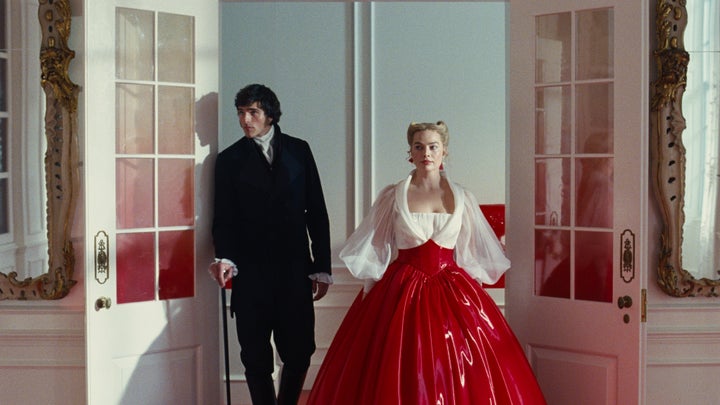
Fennell’s version of the classic story feels exactly like the kind of ruined love someone would reflect on in their childhood bedroom while listening to angsty music and imagining that romantic love is supposed to hurt to be real. Put another way, Fennell purposely leaves out some of the story’s broader themes, such as gender, class, and race, to boil them down to one of childhood infatuation that evolves into adult devastation.
Warner Bros. Photos
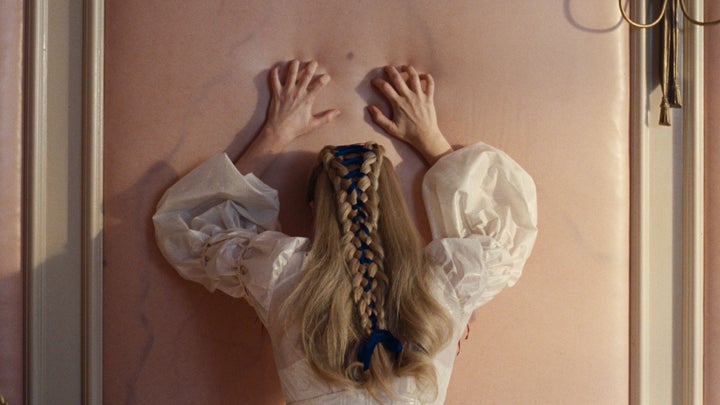
The result is that viewers looking for a straightforward adaptation of the book are sure to be disappointed, especially since it ignores more than half of the source material. However, if you’re like me and open to a cinematic experience that feels like a 14-year-old’s fever dream about a disastrous love story filled with irreverent longing symbolized through slimy objects like egg yolks and gelatinous fish mouths, then this is the movie for you. Because, like a dream like that, it’s visceral and hard to look away from and makes you feel everything.
Fennel also doesn’t try to hide that this is exactly what she’s doing. Hence the quotes in the title, which are felt even before the first image appears on the screen. The film begins with moans and grunts. At first it sounds like sex, but when the scene appears, it’s a man being hanged in front of a crowd. As soon as his neck snaps, the crowd below is excited by his visible erection. This scene, which subverts the audience’s expectations by juxtaposing the horrible and the horny, immediately sets the tone of the film.
Although this moment does not appear anywhere in the book, it reminds me of the first page of the novel in which Heathcliff’s estate on the cold, windy Yorkshire moors is paradoxically referred to as “misanthrope’s heaven”. It’s an apt description for both the opening scene and the poisonous love story that’s about to unfold.
Cathy and Heathcliff meet as children when his father, Mr. Earnshaw (Martin Clunes), takes him in as a random act of charity. Together, they suffer abuse from the drunken, erratic man, mistaking the way they cling to each other for survival as a connection. The attraction between Cathy and Heathcliff becomes even more complicated once they grow older, and he is able to use one hand to lift her by the corset to his lips. Suddenly, a sexual undercurrent becomes explicit.
However, the chemistry between Cathy and Heathcliff cannot compete with the reality of poverty. After Mr. Earnshaw depletes the household coffers, Cathy is forced to accept the marriage proposal of her wealthy neighbor, Edgar (Shazad Latif). Although she knows she loves Heathcliff, she cannot “degrade” herself by marrying him. In response to her decision, Heathcliff runs away from Wuthering Heights on horseback and disappears for five years.
Warner Bros. Photos
While he is away, Cathy moves into the luxurious, anachronistic property next door, where she spends time with Edgar’s sister, Isabella (Alison Oliver), and her companion since childhood, Nelly (Hong Chau). Finally, Heathcliff returns as a rich man with a gold tooth and earring to prove it, and Cathy is able to satisfy her longing.
She begins a torrid affair, proving to both Heathcliff and herself that, as Charli
From here, it’s Heathcliff’s mutually manipulative marriage to Isabella and Nelly’s traitorous act to ensure the ending is never in doubt. Cathy is going to die and leave Heathcliff untied.
That death will be a direct result of the horrible ways the people in this story treat each other, but there was never any pretense that this eventual cruelty would happen. Cathy “can’t escape the storm” from Heathcliff, and he will always be left begging on his knees for her to “please rub salt into my wounds.”
When the gothic melodrama ends, the film is everything Fennell promised it would be. From the hauntingly grotesque chemistry between Robbie and Elordi to Charli
In short, it is disconcerting. It’s too dramatic. He’s incredibly horny. And it’s a reminder that a toxic love like Cathy and Heathcliff’s was never intended to be romantic; It was meant to be captivating. Fennell’s adaptation and Robbie and Elordi’s performances ensure this is true.
“Wuthering Heights” is showing in theaters.