



With ruling on tariffs, the Supreme Court reaffirms its power to control Trump
WASHINGTON, Feb 21 (Reuters) – After siding with President Donald Trump in two dozen cases last year in ways that increased his power and allowed him to rapidly transform U.S. policies on immigration, military service, federal employment and more, the U.S. Supreme Court has finally reached its limit. The court on Friday struck down one of Trump’s top priorities in his second term as president, deciding in a blockbuster ruling that his imposition of sweeping global tariffs on nearly all of the United States’ trading partners exceeded his powers under federal law.
The ruling, written by conservative Chief Justice John Roberts, did not waver in its scope or effect, nor did it leave questions about the legality of the tariffs for another day. He shot them down soundly, without mentioning the consequences for refunds, trade deals or the Republican president himself.
‘Legal Coverage’
In doing so, the court also reaffirmed its role in checking the other branches of government, including the president, after a year in which numerous critics and jurists had expressed increasing doubts.
“The court has shown that it will not necessarily provide legal cover for every element of Trump’s platform,” said Peter Shane, a constitutional law expert and president of New York University School of Law.
The justices in the 6-3 decision upheld a lower court’s ruling that Trump’s use of a 1977 law called the International Emergency Economic Powers Act – or IEEPA – did not give him the power he claimed to impose tariffs, something no president had previously attempted to do under the statute.
In no uncertain terms, Roberts wrote in the ruling that Trump’s argument that a particular phrase in the text of the law gave him the power to impose tariffs was incorrect.
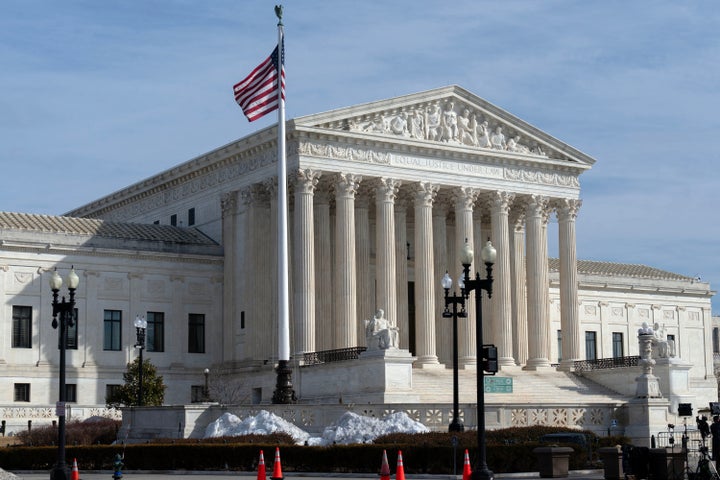
via News
“Our task today is to decide only whether the power to ‘regulate…import,’ as given to the President in the IEEPA, includes the power to impose tariffs. It does not,” Roberts wrote.
“The decision shows that the Supreme Court is serious about checking the scope of power delegated to the president by Congress,” said Jonathan Adler, a professor at William & Mary Law School in Virginia.
“The president can’t just pour new wine from old bottles,” Adler added. “If there are problems that the current statutes do not address, the president should ask Congress for a newer version.”
The court has a 6-3 conservative majority, but the ruling was not divided along ideological lines. Roberts and fellow conservative justices Neil Gorsuch and Amy Coney Barrett, both appointed by Trump in his first term, joined the court’s three liberal members in eliminating his tariffs. Three other conservative justices dissented.
Trump pulled no punches in his retort, casting the decision in extraordinarily personal terms and reserving special ire for the Republican appointees, including his own, who ruled against him, calling them “fools” and “lapdogs” of the Democrats.
“They are very unpatriotic and disloyal to our Constitution,” Trump told reporters, adding, “In my opinion, the court has been swayed by foreign interests.”
Emergency requests
For most of 2025, the Supreme Court, in case after case, sided with Trump’s emergency requests to lift orders from lower court judges blocking some of his boldest policies, while litigation challenging them unfolded. Those actions in the court’s so-called emergency — or “shadow” — docket are typically handled without extensive briefings or oral arguments, in contrast to the court’s regular work where cases are evaluated for months before a final ruling is issued. The tariff case was argued in November. Acting in 28 cases on an emergency basis, the court has used multiple legal avenues to rule in Trump’s favor in 24 of them during his second term, while another was declared moot. The decisions allowed him to fire federal employees, take control of independent agencies, ban transgender people from the military and deport immigrants to countries where they have no ties, among other actions.
Those Trump victories followed a landmark 2024 ruling, also authored by Roberts, that granted him broad immunity from criminal prosecution for his 2020 election subversion charges. That decision — and Trump’s repeated victories since then — raised questions among many critics and court observers about the independence of America’s highest judicial body and its willingness to confront a president who aggressively pushes the limits of his power and is capable of verbally attacking judges who stand in his way. way.
Trump, for example, last year called for the removal of a judge who ruled against him in a major deportation matter, calling him, among other things, a “radical left lunatic,” an outburst that drew a rebuke from Roberts.
At the same time, since early in his second term, questions have arisen about whether the Trump administration has defied unfavorable orders from the federal judiciary, potentially sparking a constitutional crisis.
The rulings in Trump’s favor frustrated the court’s liberals. Justice Ketanji Brown Jackson even observed in an opinion that “this administration always wins.”
Still, some experts had urged patience, noting that the court’s recent permissiveness toward Trump could change once it resolves the legality of a major policy after extensive deliberation. That happened on Friday.
The shadow docket decisions “were never evidence that the court was particularly sympathetic or solicitous of the Trump administration,” Adler said. “This case, on the other hand, is the first time the court has considered one of the Trump administration’s policy initiatives on the merits.” The court is due to hear arguments April 1 on the legality of another controversial Trump policy, his directive to restrict birthright citizenship in the United States, in another case that could draw pushback from the justices.
Previous losses
During Trump’s first term as president, the court handed him some significant losses in crucial cases, including blocking his plans to add a citizenship question to the national census questionnaire and ending a deportation protection for immigrants – known as “Dreamers” – who entered the United States illegally as children.
John Yoo, a law professor at the University of California at Berkeley, highlighted the fact that the ruling on the tariffs was joined by judges appointed by Republican and Democratic presidents.
“The decision debunks attacks from the left that the Supreme Court, particularly its conservative majority, simply approves of the Trump administration’s policies,” said Yoo, a former clerk for conservative Justice Clarence Thomas.
Shane noted that the tariff case did not require the court to delve into the wisdom of Trump’s policy or the soundness of its discretion, and may not undermine Trump’s power in the future.
“The ruling suggests that, on purely questions of law that do not put the court in the position of criticizing Trump’s motives or questioning his judgment, there is a majority that will not approve of his action,” Shane said.
(Reporting by Andrew Chung; editing by Amy Stevens and Will Dunham)