



There are signs that the United States is preparing for a serious conflict in Iran
WASHINGTON, Feb 20 (Reuters) – U.S. military planning on Iran has reached an advanced stage with options that include targeting people as part of an attack and even seeking regime change in Tehran if ordered by President Donald Trump, two U.S. officials told Reuters.
The military options are the latest signs that the United States is preparing for a serious conflict with Iran should diplomatic efforts fail. Reuters first reported last week that the US military is preparing for a weeks-long sustained operation against Iran that could include attacks on Iranian security facilities as well as nuclear infrastructure.
The latest revelations suggest more granular and ambitious planning ahead of a decision by Trump, who in recent days has publicly floated the idea of regime change in the Islamic Republic.
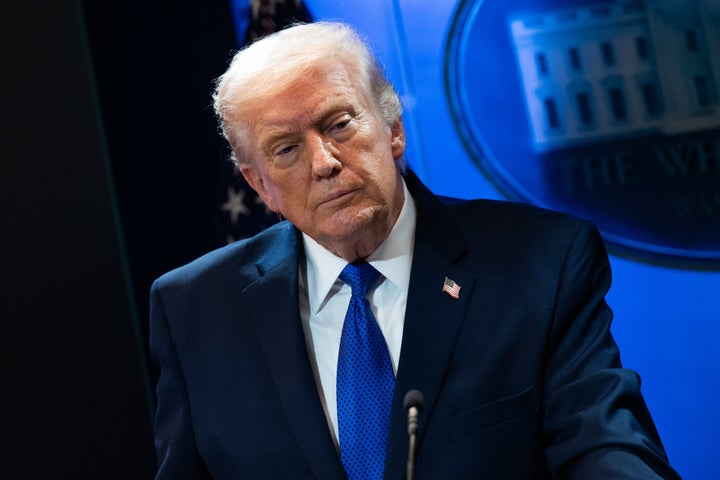
Bloomberg via Getty Images
The U.S. officials, who spoke on condition of anonymity because of the sensitive nature of the planning, did not offer further details about which people might be targeted or how the U.S. military might attempt to carry out regime change without a large ground force.
Seeking regime change would mark another departure from Trump’s promises during the presidential campaign to abandon what he has called the failed policies of past administrations, which included military efforts to overthrow governments in Afghanistan and Iraq.
Trump has mustered an enormous amount of firepower in the Middle East, but most of the combat capabilities are aboard warships and fighter jets. Any major bombing campaign could also be supported by US-based bombers.
In his first term, Trump showed his willingness to carry out targeted assassinations by approving a 2020 attack on Iran’s top general, Qassem Soleimani, who led the paramilitary and foreign espionage arm of Iran’s Islamic Revolutionary Guard Corps, known as the Quds Force.
The Trump administration formally designated the IRGC as a foreign terrorist organization in 2019, the first time Washington applied the designation to another nation’s military.
One of the US officials highlighted Israel’s success in attacking Iranian leaders during its 12-day war with Iran last year. At the time, regional sources told Reuters that at least 20 senior commanders were killed, including the armed forces chief of staff, Maj. Gen. Mohammad Bagheri.
“The 12-day war and the Israeli strikes against individual targets really showed the usefulness of that approach,” the US official said, adding that the focus was on those involved in command and control of IRGC forces.
Still, the official warned that attacking people requires additional intelligence resources. Killing a particular military commander would mean knowing his exact location and understanding who else could be harmed in the operation.
Officials who spoke to Reuters were unclear what intelligence the United States has on Iranian leaders who could potentially be targeted by the United States.
The White House and Pentagon did not immediately respond to requests for comment.
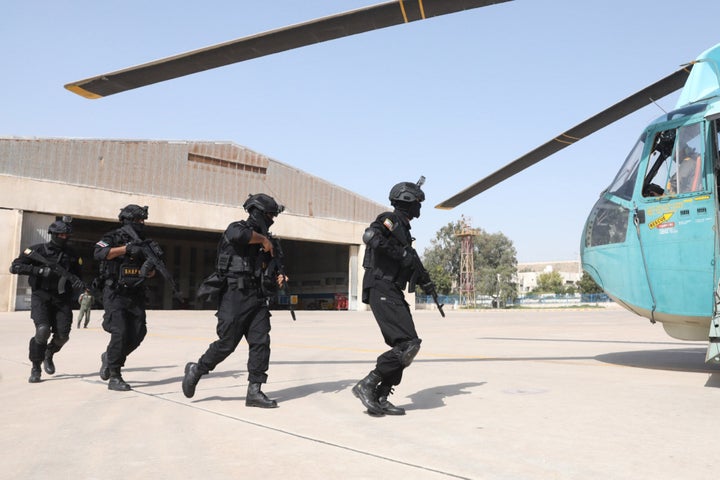
Anadolu via Getty Images
REGIME CHANGE AS A POSSIBLE OBJECTIVE
Trump has openly raised the possibility of changing the government in Iran, saying last week that “it seems like that would be the best thing that could happen.” He declined to say who he wanted to take charge of Iran, but said, “there are people.”
While regime change operations have traditionally involved large movements of US ground forces, Trump turned to special operations forces to overthrow Venezuelan President Nicolás Maduro, sending them to capture him from his compound in Caracas last month in a daring raid.
At the same time, the US president has also remained hopeful about diplomacy, saying Thursday that “really bad things” would happen if a deal was not reached. He appeared to set a deadline of no more than 10 to 15 days before the United States could take action.
Iran’s Revolutionary Guard has warned that it could retaliate against US military bases in the region if the US attacks Iranian territory.
The United States has bases throughout the Middle East, including in Jordan, Kuwait, Saudi Arabia, Qatar, Bahrain, the United Arab Emirates and Türkiye.
In a letter sent Thursday to U.N. Secretary-General Antonio Guterres, Tehran said it would not start any war, but that “if subjected to military aggression, Iran will respond in a decisive and proportionate manner” in its exercise of the right of self-defense.
U.S. officials have told Reuters they expect Iran to counterattack in the event of an attack, raising the risk of U.S. casualties and regional conflict, given the number of countries that could be hit by Iran’s missile arsenal.
Trump’s threats to bomb Iran have sent oil prices soaring, and on Thursday a Russian warship joined planned Iranian naval exercises in the Gulf of Oman, a vital sea route for global energy shipments.
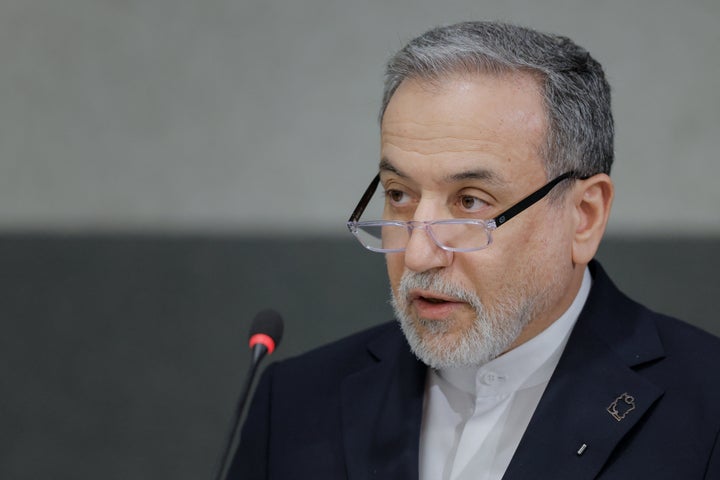
VALENTIN FLAURAUD via Getty Images
THREATS TO CLOSE THE STRAIT OF HORMUZ
In the past, Tehran has threatened to close the Strait of Hormuz if attacked, a move that would choke off a fifth of global oil flows.
Iranian and American negotiators met on Tuesday and Iranian Foreign Minister Abbas Araqchi said they had agreed on “guiding principles.” White House press secretary Karoline Leavitt said Wednesday, however, that the two sides remained distant on some issues.
Iran has resisted making major concessions on its nuclear program, although it insists it is for peaceful purposes. The United States and Israel have in the past accused Tehran of trying to develop a nuclear bomb.
A senior US official said Iran would make a written proposal on how to address US concerns.
Trump on Wednesday called on Tehran to join the United States on the “path to peace.”
“They can’t have a nuclear weapon, it’s very simple,” he said. “You can’t have peace in the Middle East if you have a nuclear weapon.”
(Reporting by Phil Stewart and Idrees Ali; Editing by Don Durfee and Daniel Wallis)
Related