



Travelers stranded in the Middle East amid war with Iran share first-hand accounts
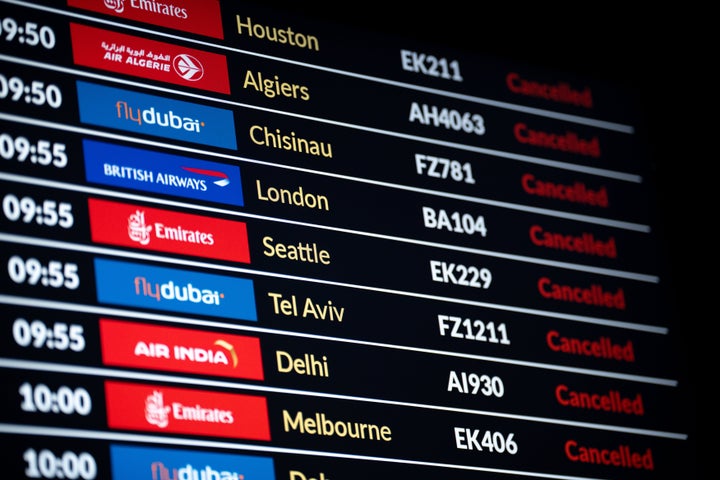
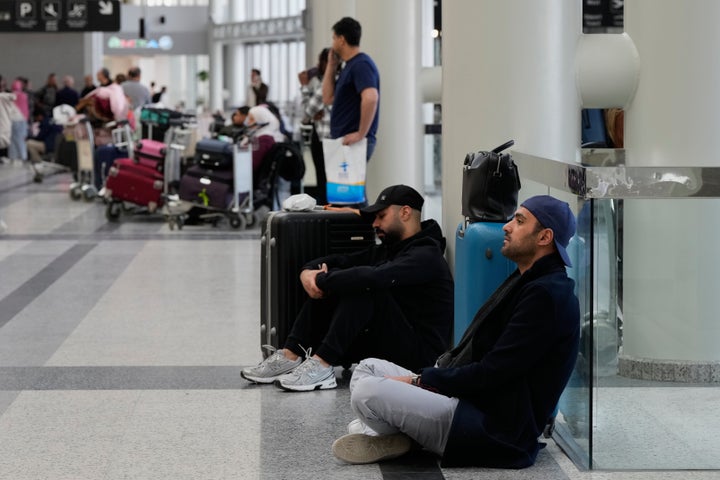
Hundreds of thousands of people have been stranded across the Middle East amid the joint US-Israeli war against Iran. And amid a series of flight cancellations and airspace closures, many are still struggling to take the next steps.
In a matter of days, the conflict has continued to escalate, particularly with attacks in the Gulf states where, beyond the Middle East, airports serve as critical hubs connecting travelers heading to Europe, Africa and Asia. Despite ongoing evacuation efforts, flights remain deeply disrupted. Many tourists, business travelers, migrant workers and others are going through all of this.
Some travelers shared their stories with The News. Here’s a glimpse of what they’ve experienced.
Marcin Golba/Nur Photo via Getty Images
European couple stranded with their children
Viktoriia Lokhmatova, who lives in Serbia, and Michael Crepin, who lives in Belgium, traveled to Dubai with their children to celebrate a special milestone.
Although the couple has been together for more than a year, the trip was the first time their children (8-year-old daughter, Anny, and 13-year-old son, Gabriel) met in person. And all four of them were celebrating their birthdays in February.
But their plans changed when their return flight was canceled amid disruptions to regional airspace with the outbreak of war. A rebooking was also cancelled, leaving the group scrambling to find their way home while facing the cost of extending their stay.
“We stayed talking to the airline for almost two days trying to find another flight,” Lokhmatova said.
While searching for options, she discovered an initiative by local vacation home operators offering temporary accommodation to stranded travelers. The couple and their children were offered a free one-night stay in an apartment run by AraBnB Homes, a Dubai-based luxury rental company that had opened vacant units to travelers who couldn’t leave the city.
The temporary stay gave them time to regroup and make arrangements for the remainder of their extended trip. During the first few days, they occasionally heard explosions from air defense systems intercepting missiles or drones, but “we tried to stay calm because the children were there,” Crepin said.
But, he said, they felt safe and grateful to be together throughout the experience. They now hope to leave Dubai on Saturday, if their last flight goes ahead. They will then travel together to Istanbul before parting ways: Lokhmatova and Anny will return to Serbia and Crepin and Gabriel to Belgium.
AP Photo/Hassan Ammar
Change in mid-flight impacts the technology entrepreneur
Two hours into his flight over the weekend from Doha, Qatar’s capital, to Barcelona, Varun Krishnan says it became clear that the plane was no longer heading towards Spain.
Krishnan, who runs the Indian technology company Fone Arena, was on the last leg of his flight from India to a telecoms conference, the Mobile World Congress, in Barcelona.
“It seemed like something was wrong,” Krishnan said, noting that he had been following the flight and noticed that it didn’t seem to be following its course.
Breakfast had just been served when the captain announced that Baghdad airspace was closed for security reasons. Instead of continuing through Iraq toward Europe, the plane began circling the United Arab Emirates.
Krishnan said the captain provided updates on what was happening, “but still people panicked.”
As the plane prepared to land back in Doha, emergency notifications rang throughout the cabin. Once on the ground, long lines formed like departure boards full of cancellations.
Krishnan said he has been staying in a hotel since then. And on Wednesday he was still waiting for airlines to confirm when flights could resume.
American tourists trapped in Dubai
Louise Herrle, a retiree from Pittsburgh, and her husband were stranded in Dubai, where the couple was vacationing when the war broke out.
She told the AP they canceled several flights and are now scheduled to depart early Thursday morning, but she doesn’t know if that flight will also be canceled.
They have heard fighter jets flying overhead “from time to time,” as well as some explosions, he said. But despite the “extremely stressful” situation, he found support from other travelers.
“It’s not a great experience, but it’s a shared experience and it brings people together,” he said.
Hong Kong expats recount their search for safety
Agnes Chen Pun, a Hong Kong expat who moved to Dubai with her husband and 1½-year-old son last year, said she has tried to keep her family safe amid rising tensions in the United Arab Emirates. They moved twice, first to a resort an hour and a half away in Fujairah, then to one near the port city of Sharjah, after worrying about possible attacks.
“We were very nervous, very anxious,” said Chen, a partner at Asia Bankers Club, an investment firm based in Hong Kong and Dubai.
He finally obtained commercial tickets for $2,200 per person to Singapore, although his departure is still uncertain. Despite the disruption, Chen said he plans to return to the UAE once the situation stabilizes, considering the country an attractive place to live and work.
“I think the scare, the fears, will be short-term. Definitely now security is the most important thing,” he said. “I’ll go to Hong Kong… I’ll wait (until) the war is over, and then I’ll probably, definitely come back.”