



US stocks remain calm even as oil prices continue to fluctuate
NEW YORK (AP) — The U.S. stock market remains relatively calm Wednesday, even as the price of oil continues to fluctuate.
The S&P 500 was down 0.1% and could be headed for another day of relatively modest moves after a wild stretch caused by the war with Iran and the effects of oil prices. The Dow Jones Industrial Average was down 339 points, or 0.7%, as of 10:30 a.m. ET, and the Nasdaq composite was up 0.2%.
Since the start of the war, sharp movements in oil prices have cascaded through financial markets around the world, causing large swings up and down, sometimes for hours. Oil prices briefly spiked to their highest levels since 2022 this week on the possibility that production in the Middle East could be locked down for a long time, which in turn raised concerns about a debilitating rise in inflation for the global economy.
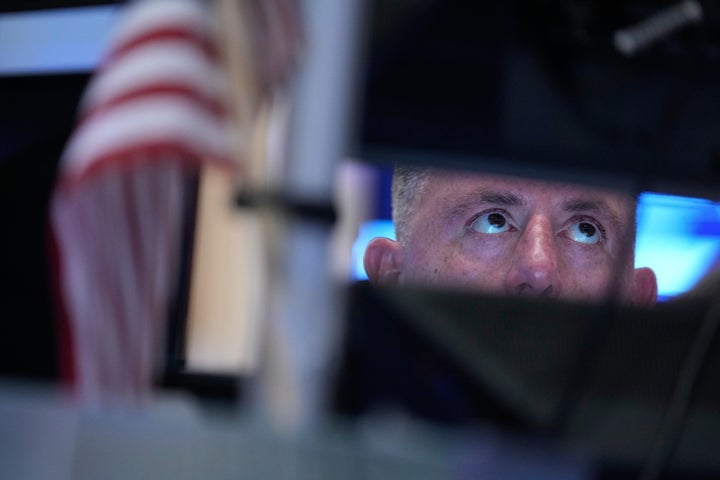
AP Photo/Seth Wenig
The International Energy Agency said Wednesday that its members will release 400 million barrels of oil from reserves they have set aside for emergencies. These measures put downward pressure on oil prices in the short term, but it is likely that only a full resumption of the flow of oil and natural gas from the Persian Gulf area would completely alleviate the market. This has investors around the world anxiously awaiting the end of the war.
The price of a barrel of Brent crude oil, the international standard, rose 3% to $90.38. The benchmark U.S. crude oil barrel gained 3.7% to $86.53 after briefly falling to $82.
Concerns center on the Strait of Hormuz, a narrow waterway off the coast of Iran through which a fifth of the world’s oil passes on a normal day. The war has stopped most of that traffic, meaning crude storage tanks in the region are filling up because the oil has nowhere to go. This, in turn, is pushing oil producers to say they are cutting production.
The United States said it shot down more than a dozen Iranian mine-laying ships on Tuesday, and the Islamic Republic vowed to block oil exports from the region, saying it would not allow “even a single liter” to be sent to its enemies.
All of this is happening at a time when inflation in the United States was already higher than anyone would like. A report released Wednesday showed that American consumers paid prices for food, gasoline and other living costs that were 2.4% higher in February than a year earlier.
To be sure, that inflation figure was the same as the previous month and better than the 2.5% that economists were expecting, but it is still above the 2% target that the Federal Reserve has set for the economy. It also does not include the increase in gasoline prices that occurred this month due to the war.
“Looking ahead, we expect inflation to rise in the spring due to rising energy prices linked to the Iran war, the duration of which will dictate where headline inflation lands by the end of the year,” according to Gary Schlossberg, global strategist at Wells Fargo Investment Institute.
High inflation combined with a stagnant economy would create a worst-case scenario called “stagflation” that the Federal Reserve does not have good tools to solve. Fears of stagflation are rising not only because of higher oil prices but also because of weakness in hiring by American employers.
On Wall Street, Oracle jumped 12.4%, one of the biggest gains in the market. The tech giant reported higher earnings and revenue during the latest quarter than analysts expected. It also raised its revenue growth forecast next fiscal year, in part due to demand for cloud computing for artificial intelligence training and inference.
Campbell’s sank 8.2% after the soup company reported lower-than-expected fourth-quarter profits. It was hurt by difficulties in its snack business and cut its revenue and profit forecasts for this fiscal year.
In foreign stock markets, indices fell in Europe after better results in Asia. Germany’s DAX lost 1.1%, while Japan’s Nikkei 225 rose 1.4%.
In the bond market, Treasury yields rose due to upward pressure from rising oil prices. The 10-year Treasury yield rose to 4.19% from 4.15% late Tuesday.
___
AP Business writers Matt Ott and Elaine Kurtenbach contributed.