



Notorious police commander nicknamed
/News/AP
Add News themezone on Google
One of apartheid South Africa’s most notorious police commanders testified Monday at an inquiry into the murder of four activists in 1985 as part of the country’s renewed focus on atrocities committed by security forces during decades of forced racial segregation that went unpunished.
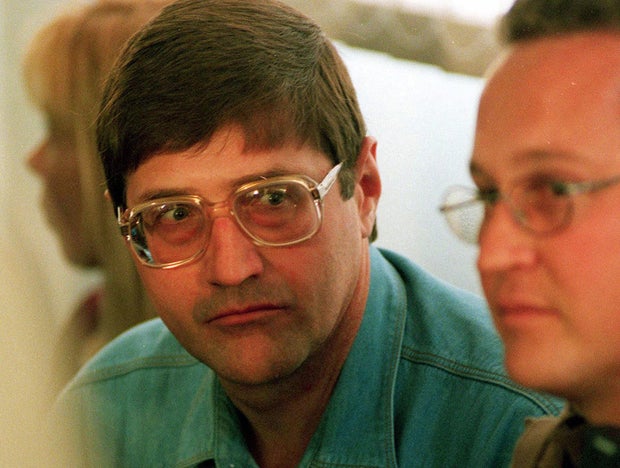
Eugene de Kock, nicknamed “Prime Evil” for his role in the murder of anti-apartheid activists, denied involvement in the high-profile Cradock Four case, but said police at the time had photographs of around 6,000 anti-apartheid activists described as “known terrorists” who should be tracked down and killed if they could not be arrested.
The Cradock Four were not among them, he said. Matthew Goniwe, Fort Calata, Sicelo Mhlauli and Sparrow Mkonto, three of them teachers, were abducted by police at a roadblock and killed. Their bodies were found burned, in one of the most shocking cases of the apartheid era.
De Kock testified that one of the police officers involved in the murders had asked him to help cover up the affair.
“I wanted to know if I could get another firearm,” de Kock said, adding that he was asked “if we could interfere with the ballistics.”
De Kock, commander of a special counterinsurgency police unit during apartheid, was sentenced in 1996 to two life sentences and another 212 years in prison after being found guilty of murder, kidnapping and other charges for his role in the kidnapping, torture and killing of activists. He was released on parole in 2015.
According to BBC News, his father, Lawrence de Kock, was a magistrate and close personal friend of former apartheid prime minister John Vorster. His brother, Vossie de Kock, described him as a “quiet boy” who “wasn’t violent at all,” the BBC reported.
De Kock apologized to some of his victims, according to the BBC. In a letter he wrote to the family of Bheki Mlangeni, a lawyer he killed with a letter bomb, he wrote: “There is no greater punishment than having to live with the consequences of the most terrible act without anyone forgiving you. For me, not even my own death can compare.”
De Kock, now 77, was taken under police guard to a court in the southern town of Gqeberha, where the Cradock Four were murdered. His image appeared blurred in the official video released after the judge ruled that it not be shown, according to the Human Rights Foundation, which represents some of the victims’ families.
Two investigations into the case conducted during apartheid were widely suspected of being cover-ups. One that began in 1987 found that the men were murdered by unknown assailants. The other, which began in 1993, found that they were murdered by anonymous police officers.
The latest investigation began last year after pressure from families. The six former police officers implicated in the murders were never prosecuted despite being identified and denied amnesty during South Africa’s post-apartheid Truth and Reconciliation process in the late 1990s. All six have died.
South African authorities have reopened other investigations into apartheid atrocities in recent years. They include the 1967 death of Nobel Peace Prize laureate Albert Luthuli, the 1981 murder of lawyer Griffiths Mxenge and the 1977 death in police custody of iconic anti-apartheid figure Steve Biko.
South African President Cyril Ramaphosa last year ordered a separate investigation into whether post-apartheid governments led by his party intentionally blocked investigations and prosecutions of apartheid-era crimes.
In:
- South Africa
- racial segregation