



Behind the scenes of Shen Yun
By Lisa Ling
/News themezone
Add News themezone on Google
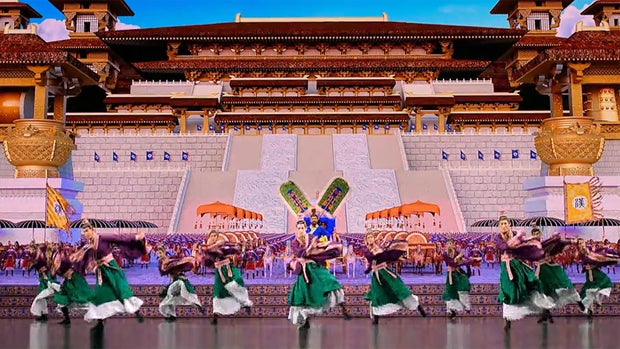
Deep in the woods of upstate New York, behind guarded gates, lies a vision of ancient China reborn: a 400-acre private sanctuary called Dragon Springs where faith and art share the same stage. It is the creative center of Shen Yun, the epic theatrical production of Chinese history, legends and politics.
“We are staging the tyranny of the CCP,” said Ying Chen, vice president and conductor of Shen Yun.
The Chinese Communist Party, or CCP, calls the group behind Shen Yun an evil sect. Known as Falun Gong, it is a spiritual movement rooted in Buddhism. In 1992, founder Li Hongzhi began teaching Falun Gong meditation exercises, which quickly spread throughout China.
And Beijing responded. In 1999, China banned the religious group, referring to it as “public enemy number one” for challenging the communist regime.
Ying Chen says practitioners were imprisoned and tortured, including his own family. “My mother and brother were sent to a labor camp,” he said, “and he endured 18 months of agony, and his survival was a fragile miracle. He was literally tortured every day.”
Founder Li Hongzhi settled in the United States and in 2006 launched Shen Yun. It would be a big ask for his followers, including Jeff Sun and Ashley Cheng, who grew up in Falun Gong families. “Li Hongzhi made it quite clear that Shen Yun was the highest form of how practitioners can support the movement,” Cheng said.
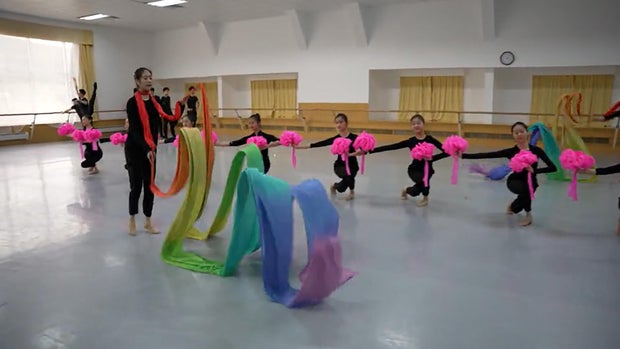
Their parents had sent them in the late 2000s to a boarding school in Dragon Springs where young artists train for Shen Yun. We spoke to Sun and Cheng, now married, from their home in New Zealand.
“The whole community I grew up in was so proud of me,” Cheng said. “They thought it was a great honor to live with Li Hongzhi in that compound.
Sun said that attending Shen Yun was “like coming to Harvard.”
He was 15 years old, she was 13… almost 14,000 kilometers from home. According to Cheng, “Everything was very isolated and our main job is dancing.”
Regarding contact with the world outside Dragon Springs, Cheng said that if his parents asked any questions, “we had to tell them that we were happy, that Master (who is Li Hongzhi) was taking good care of us.”
The reality, Sun and Cheng say, was that they were part of a group of child workers who lived in constant fear.
“I was in survival mode,” Cheng said. “It’s about not going over 100 pounds each day. It’s about following in the footsteps of the person in front of me so they don’t yell at me out of line.”

Sun said: “There is no one we can talk to. The adults who are their educators, [are] also your pursuers. “You want to tell them what you feel, but the next day they tell you that you think differently than everyone else, that you are the problem.”
That was the weight of the mind. The body, they say, would bear its own. “Two kids split my legs open on the lateral split, and it was the most pain I had ever experienced,” Sun said. “I had internal bleeding. The whole inside of my leg, both legs, was purple. But every day I still had to do the same thing.”
Cheng said, “My shoulder was stretched out for [an] abnormal amount of time once, and I lost all feeling in it. “So I had problems, from showering to going to the bathroom.”
She said, when she told her instructors about her injuries: “I faced rolling my eyes. I have not taken or seen a single pill of medication during my entire duration.”
Sun and Cheng are part of a growing group of former dancers who maintain that medical care is discouraged, a belief they say is rooted in the teachings of Falun Gong. “Any injury you have, if you mention that you want to go to the hospital or if you want help, they will deny you,” Cheng said. “And quickly, very quickly, it will be associated with: ‘You got hurt because you disobeyed Li Hongzhi… It’s your fault.'”
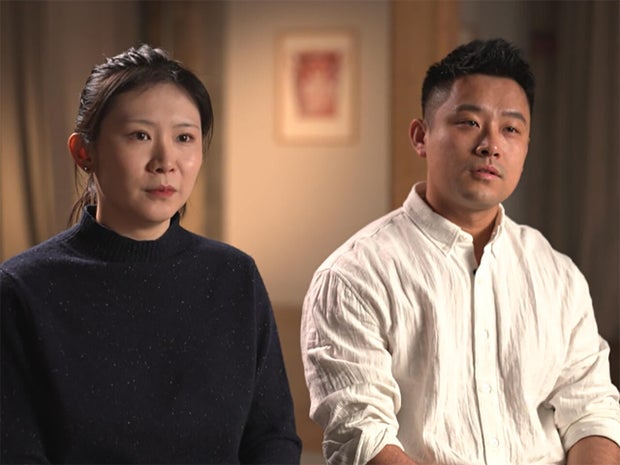
In 2015 they were expelled from Shen Yun. Last spring they filed a lawsuit, one of two federal lawsuits against the performance group alleging forced labor.
Describing his time with Shen Yun, Sun said, “Every time I think about what happened to me, it breaks me down a little bit, you know? And no one deserves this. I mean, we’re all kids, you know? We wanted to impress our parents. We wanted to do what we thought was right.”
“Sunday Morning” asked Shen Yun about these accusations and we were invited to Dragon Springs, where spokesperson Ying Chen showed us around.
We watched young men and women in total silence. “It’s a little like praying,” Chen said. “We calm our minds and try to eliminate distracting thoughts and stay really focused.”
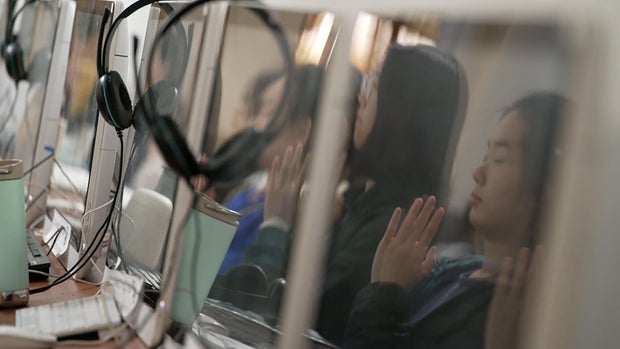
As for why men and women were sitting on opposite sides of the room, Chen said, “We have very conservative values at school. So we generally keep them separate.”
When asked why Shen Yun invited the media to Dragon Springs, something they have not done so far, Chen said, “I think part of it is because they talk about a resort. Does it look like a resort? I think it’s true that we work hard. This is a place that provides high-level dance training and is also a faith-based community.”
When asked to respond to the plaintiffs’ allegation that they were denied medical care they might have needed, Chen responded: “I can’t speak to what they went through. But I find it very shocking and very different from the practice here and our policies here.”
Regarding the suggestion that the Chinese government is behind the lawsuits, Chen said: “These lawsuits come at a time when Beijing has intensified its global campaign against Shen Yun. It is really difficult to see it as a mere coincidence.”
And just this month, the Chinese embassy called Shen Yun “the propaganda of a cult,” using “culture as a front” to “impart indoctrination.”
Shen Yun troupe members Regina Dong, Shindy Cai and Piotr Huang were also sent as teenagers to Dragon Springs.
Dong said: “The CCP has been trying to sabotage us since day one. We received death threats, bomb threats. And this tactic they are using now is very similar to the one they were using to persecute Falun Gong.”
Huang said his parents didn’t pressure him to come to Dragon Springs: “Not at all. Now, if they came and tried to drag me away, I wouldn’t go.”
He says he has access to medical care. “A few years ago, when I was having pain in my Achilles tendon, the director of my company put me in contact with our doctor. They gave me an MRI.” Huang said he received instructions from the doctor on what to do in the future.
Cai, however, said she never gets sick and believes her faith has protected her: “Actually, I think so, because sometimes I almost find it strange. Usually I’m supposed to get the flu, but never. And I think a lot of it has to do with energy.”
Jeff Sun and Ashley Cheng returned to New Zealand and no longer practice Falun Gong.
When asked to respond to Shen Yun describing them as “discontented artists,” Cheng responded, “Yes, we are discontented. What happened to us was not our fault. We were children. And we have been living with shame. And I don’t want to live with that for the rest of my life.”
The New York Department of Labor is investigating Shen Yun’s working conditions and child labor practices just as the show’s 20th season goes on tour.
Every year there is a new show, but the final scene is always the same: a Chinese city on the brink of destruction until the deus ex machina – a mystical being similar to Falun Gong founder Li Hongzhi – descends from the heavens to save the world.
But for now, Shen Yun’s story doesn’t seem so simple, nor perhaps so sacred.
For more information:
- shen yun
- dragon springs
Story produced by Dustin Stephens. Editor: Ed Givnish.
In:
- Porcelain