



Common food allergy plummets nationwide after experts recommend bold new approach
NEWNow you can listen to News articles!
Introducing peanuts early could help curb allergies in children, new research suggests.
Exposing children to peanuts when they are 4 to 11 months old (rather than waiting until 3, as the American Academy of Pediatrics previously recommended) appears to be making a dent in the number of peanut allergy diagnoses, the study published in Pediatrics suggests.
“New onset peanut allergy was reduced by 43% in children younger than 3 years old,” Dr. David Hill, M.D., Ph.D., of the Division of Allergy and Immunology at Children’s Hospital of Philadelphia, told News Digital.
FOR THE FIRST TIME THERE ARE MORE CHILDREN IN THE WORLD who are obese than are underweight
Hill, one of the study’s authors, noted that new-onset food allergies overall were reduced by 36 percent in that age group.
Peanuts are a leading cause of severe allergic reactions in children. These reactions occur when the body’s immune system overreacts to peanuts by producing a substance called immunoglobulin E (IgE), which can cause anaphylaxis, a severe, sometimes life-threatening allergic response, the researchers noted in a news release.
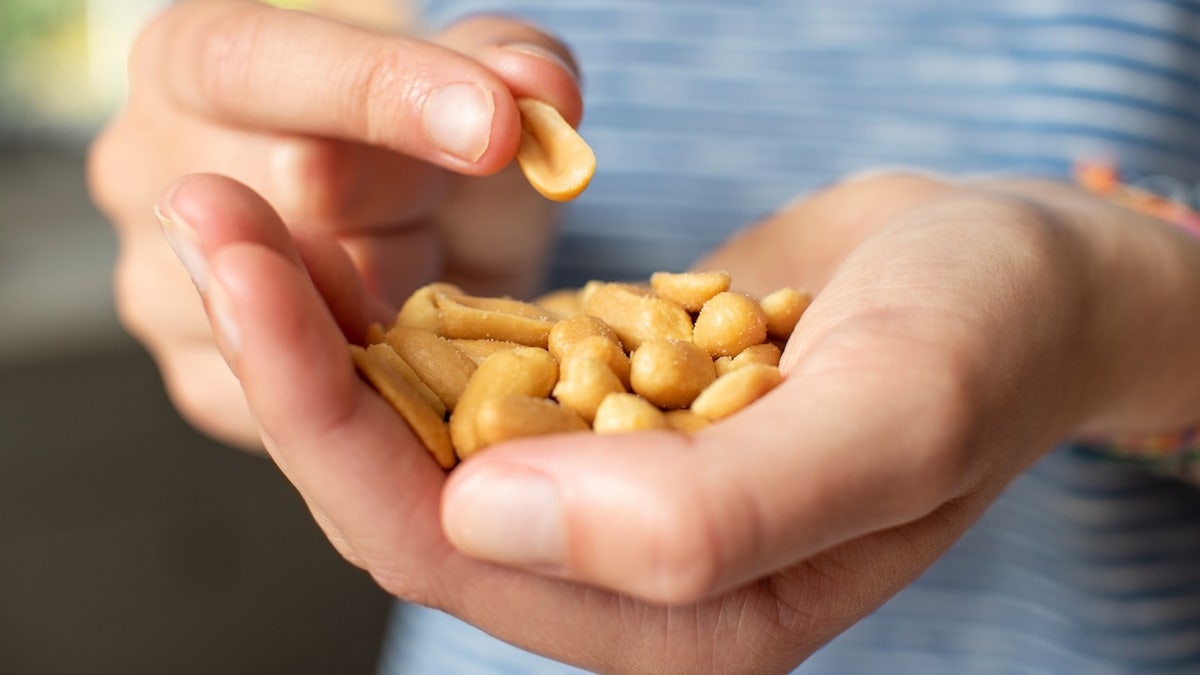
Introducing peanuts early could help curb allergies in children, suggests new research published in Pediatrics. (iStock)
About 4% of children are affected by these types of food allergies, which can cause hives, difficulty breathing, swelling and vomiting. These symptoms can be immediate and life-threatening, experts told News Digital.
In addition to peanuts, other common food allergens include milk, eggs and wheat, according to the report.
Evolving Tips
Before 2015, it was standard practice to warn parents about peanut exposure in children under 3 years of age. Then, in 2015, a landmark study, the Learning Early About Peanut Allergy (LEAP) trial, sparked a change in clinical practice.
The study found that for babies who had severe eczema or egg allergy, exposing them to peanuts when they were 4 to 11 months old could reduce the risk of peanut allergy by 81%.

Exposing children to peanuts when they are 4 to 11 months old (rather than waiting until 3, as the American Academy of Pediatrics previously recommended) appears to be reducing the number of peanut allergy diagnoses. (iStock)
Based on the LEAP trial, leading pediatric allergy and immunology organizations revised their clinical practice guidelines in 2015 and 2017, allowing early exposure to peanuts for high-risk children.
“There appears to be a window of tolerance during early childhood.”
The guidelines were updated again in 2021, encouraging the introduction of peanuts, eggs and other major food allergens starting at 4 to 6 months for all children, including those with no history of prior reactions, according to health experts.
“There appears to be a window of tolerance during early childhood, so if we introduce foods during that window, it will prevent food allergy,” Dr. Susan Schuval, chief of the Division of Pediatric Allergy and Immunology at Stony Brook Children’s Hospital in New York, told News Digital.
EATING BLUEBERRIES EARLIER IN LIFE COULD RELIEVE ALLERGIES AND STRENGTHEN IMMUNITY, NEW STUDY FINDS
“If you wait until after that window, the child will be more predisposed to having a food allergy,” added Schuval, who was not involved in the study.
Positive results
Hill and his team of researchers focused on the effects of the revised 2015 and 2017 practice guidelines, but did not include the 2021 revisions. They analyzed electronic medical records from multiple clinics in several states to determine whether the policy changes were having an effect.
CLICK HERE TO GET THE News APP
For at least two years after the 2015 guidance, the study found there was a 27% decrease in peanut allergies and a 38% decrease in food allergies.
Egg allergies were also more prevalent than peanut allergies in this analysis.

Food allergies can cause hives, difficulty breathing, swelling, and vomiting, which can be immediate and life-threatening. (iStock)
After the 2017 guideline change, peanut allergies decreased by 43% and overall food allergies decreased by 36% (compared to pre-2015 guidance) among children observed for at least a year, the researchers found.
CLICK HERE TO SUBSCRIBE TO OUR HEALTH NEWSLETTER
“Everyone has been wondering whether these landmark public health interventions have had an impact on reducing rates of IgE-mediated food allergies in the United States,” said first author Stanislaw Gabryszewski, M.D., Ph.D., attending physician in the Division of Allergy and Immunology at Children’s Hospital of Philadelphia.
“We now have data that suggests the effect of this important public health intervention is occurring,” he added.
After the 2017 guideline change, peanut allergies decreased by 43% and overall food allergies decreased by 36% (compared to pre-2015 guidance) among children observed for at least one year. (iStock)
Hill told News Digital that he is “hopeful that our findings will help raise awareness that early introduction of allergens is safe and effective.”
While early exposure may not completely eliminate allergies to peanuts and other foods, the drop in food allergy diagnosis rates is promising, the researchers said. They also emphasized the importance of early and consistent introduction into clinical practice settings.
TRY OUR LATEST LIFESTYLE QUIZ
“Our findings are relevant [for] those of us who treat patients [and] caregivers, and increased awareness, education and advocacy could further increase the positive outcomes we saw in this study,” Hill said.
Not all parents may be comfortable with these revised guidelines, health experts told News Digital.

Parents are encouraged to discuss any concerns with their pediatrician before introducing potential food allergens. (iStock)
“Not everyone has followed those guidelines, but this is further proof that this early introduction is effective in preventing food allergies,” Schuval said.
CLICK HERE FOR MORE HEALTH STORIES
Parents are encouraged to discuss any concerns with their pediatrician before introducing potential food allergens.
Future studies are needed to investigate how the timing, dose and frequency of exposure could further protect against food allergies, Hill added.
Amy McGorry is a contributing health writer for News Digital. Follow her on Twitter @amymcgorry.