



Experts mock the Pentagon
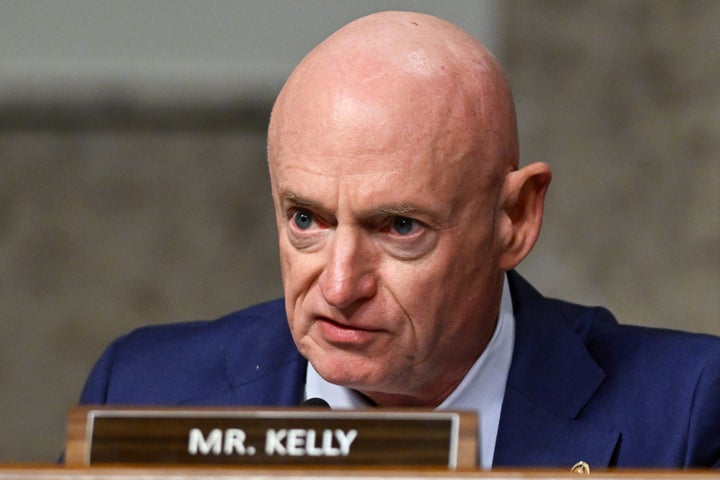
WASHINGTON (AP) — The Pentagon’s investigation of Sen. Mark Kelly over a video urging U.S. troops to defy “unlawful orders” has raised a host of questions and some criticism from legal experts.
Some say the Pentagon is misinterpreting military law to pursue Kelly as a retired Navy fighter pilot. Others say the Arizona Democrat cannot be prosecuted as a member of Congress. A group of former military prosecutors insists he did nothing wrong.
The Pentagon announced the investigation last week after President Donald Trump’s social media post accusing Kelly (and the five other Democratic lawmakers in the video) of sedition “punishable by DEATH.”
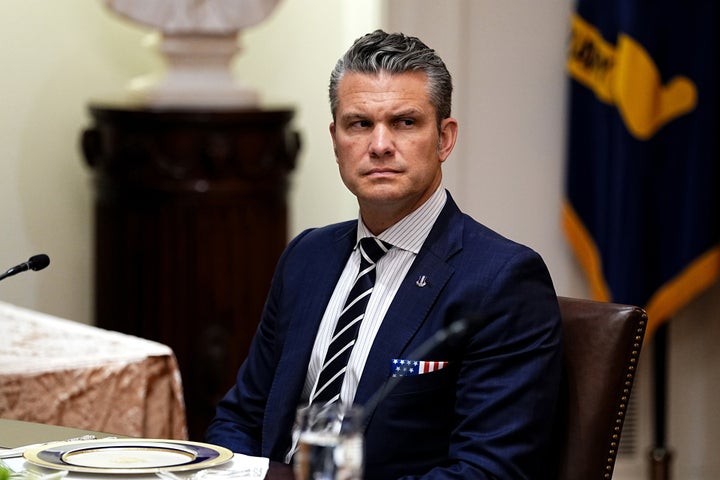
Defense Secretary Pete Hegseth said Kelly faced an investigation because he is the only one of that group who formally retired from the military and is still under the jurisdiction of the Pentagon.
Kelly dismissed the investigation as the work of “thugs” and said he would not deter him and other members of Congress “from doing our job and holding this administration accountable.”
AP Photo/John McDonnell, File
“It’s not totally unheard of”
Stephen Vladeck, a law professor at Georgetown University, said there has been a “significant increase” in court-martials of retired military personnel in the last decade. While courts have debated the constitutionality, the practice is currently permitted. He said there have been about a dozen such prosecutions across all branches of the service.
There are approximately 2 million people who have formally retired from the military and are receiving retirement pay, according to a Congressional Research Service report. Service members are generally eligible to receive retirement pay after completing 20 years of active duty.
Todd Huntley, a retired Navy captain and judge advocate general (JAG), said it’s rare to prosecute retirees for something that happened after they retired.
“It’s not totally unheard of,” said Huntley, who now directs Georgetown’s national security law program. “I actually prosecuted a soldier who had been retired for 16 years. He was basically assaulting his adopted daughter. Basically, no one else had jurisdiction, so we prosecuted him.”
A ‘ridiculous conclusion’
Colby Vokey, a prominent civilian military attorney and former military prosecutor, said Hegseth appears to be misinterpreting the Uniform Code of Military Justice to justify the Kelly investigation.
Vokey said Hegseth has personal jurisdiction over Kelly because Kelly is entitled to a retirement payment. But Vokey said Hegseth lacks jurisdiction over the matter because Kelly made his statements as a senator.
Vokey said case law has evolved to the point that the military can prosecute an active duty member for a crime committed off base, such as robbing a convenience store. But applying military law to a retired service member and “assuming that means every crime ever is a ridiculous conclusion.”
“Let’s say you have a 100-year-old World War II veteran who’s retired with pay and he steals a candy bar,” Vokey said. “Hegseth could bring him back and court-martial him. And that is, in effect, what is happening with Kelly.”
Patrick McLain, a retired Marine Corps judge and former federal prosecutor, said the cases he has seen of retirees called back “are more of the extreme examples of fraud or some of these child pornography cases.”
“I haven’t seen anything close to the kind of crazy thing they’re trying to do to Senator Kelly for essentially exercising his First Amendment right to free speech, which they don’t like,” McLain said.
‘He did it as a civilian’
Charles Dunlap, a Duke University law professor and retired Air Force attorney, said in an email that military law can restrict service members’ speech that is protected for civilians under the First Amendment.
But even if the video were found to violate military law, a key question could be whether the law can apply to someone who is retired, Dunlap said.
A group of former military lawyers, the Former JAGs Working Group, said in a statement that Kelly did not violate the Uniform Code of Military Justice.
“The video simply describes the law as it relates to legal orders versus illegal orders,” the group said. “He did not bribe a mutiny or otherwise encourage military members to ignore or disobey lawful orders issued to them.”

via News
Troops, especially uniformed commanders, have specific obligations to refuse orders that are illegal. Ample legal precedent also holds that simply following orders (known colloquially as the “Nuremberg defense,” as it was used unsuccessfully by senior Nazi officials to justify their actions under Adolf Hitler) does not absolve troops.
Kelly and the other lawmakers did not mention specific circumstances in the video. Some Democratic lawmakers have questioned the legality of the Trump administration’s attempts to send National Guard troops to American cities. Kelly has pointedly questioned the use of the military to attack suspected drug trafficking ships off the coast of South America, saying he was concerned about the military officers involved in the mission and whether they were following orders that may have been illegal.
Michael O’Hanlon, research director of the foreign policy program at the Brookings Institution, said any case brought against Kelly would likely be dismissed or end in an acquittal.
O’Hanlon said it might not have been politically wise to “wave a red flag in front of the bull,” but he sees no legal basis for a court-martial.
“Saying you shouldn’t break the law cannot be a crime,” O’Hanlon said. “But also, he didn’t do it as a soldier. He did it as a civilian.”
Bloomberg via Getty Images
Separation of powers
Kelly’s status as a senator could block the Pentagon investigation due to constitutional protections for the separation of powers in the US government.
The Constitution explicitly protects members of Congress from White House overreach, said Anthony Michael Kreis, a constitutional law professor at Georgia State University.
“Having a U.S. senator subject to discipline at the behest of the secretary of defense and the president violates a fundamental principle of legislative independence,” Kreis said in a telephone interview.
Kreis said such protections were a reaction to the British monarchy, which arbitrarily punished members of Parliament.
“Any way you look at it, the Constitution is fundamentally structurally designed to prevent this type of abuse,” Kreis said.