



Federal judge blocks Trump administration from ending Haitians’ temporary legal status in the US
SPRINGFIELD, Ohio (AP) — A federal judge on Monday blocked the Trump administration from ending temporary protections that have allowed about 350,000 Haitians to live and work in the United States.
U.S. District Judge Ana Reyes in Washington granted a stay on the termination of temporary protected status for Haitians while a lawsuit challenging it moves forward. The TPS designation for people from the Caribbean island country was scheduled to end on February 3.
The Secretary of Homeland Security may grant Temporary Protected Status if conditions in the countries of origin are deemed unsafe for return due to a natural disaster, political instability, or other dangers. While it gives TPS holders the right to live and work in the US, it does not provide a legal path to citizenship.
The Trump administration has aggressively tried to eliminate protections, making more people eligible for deportation. The measures are part of the administration’s broader, more massive deportation effort.
In addition to migrants from Haiti, Homeland Security Secretary Kristi Noem has canceled protections for about 600,000 Venezuelans, 60,000 people from Honduras, Nicaragua and Nepal, more than 160,000 Ukrainians and thousands of people from Afghanistan and Cameroon. Some have lawsuits pending in federal courts.
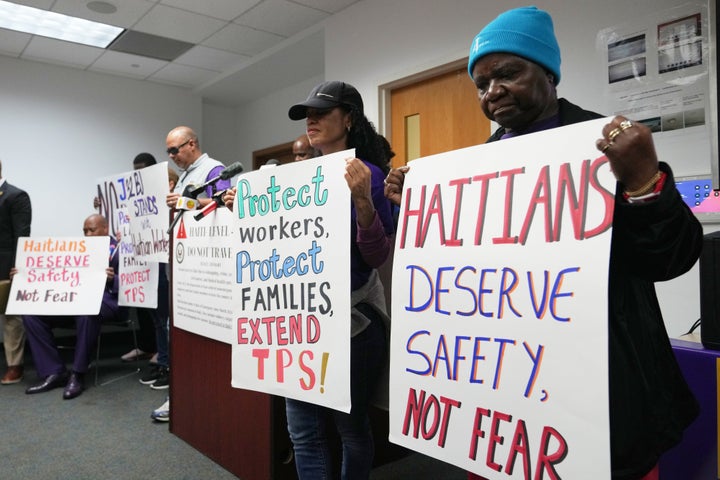
AP Photo/Lynne Sladky
Haiti’s TPS status was initially activated in 2010 after a catastrophic earthquake and has been extended several times. The country is ravaged by gang violence that has displaced hundreds of thousands of people.
“If the termination stands, people will almost certainly die,” lawyers for Haitian TPS beneficiaries wrote in a court filing in December. “Some will probably die, some will probably die from disease, and some will probably die from starvation.”
They say the decision to end Haiti’s status was motivated by racial animosity, and Noem did not consider whether there was an ongoing armed conflict that would pose a “serious threat” to personal safety, as the law requires.
The Department of Homeland Security said conditions in Haiti had improved. In a December court filing, administration attorneys said the plaintiffs’ claims of racial animus were based on statements “taken out of context, often from other speakers and from years ago, and without direct ties to the Secretary’s determinations.”
“Rather, Secretary Noem provided reasoned and apparently sufficient explanations for her determinations.” they said.
A government notice in November announcing the termination said there had been some positive developments for Haiti, including the authorization of a new multinational force to combat gangs. Noem determined that allowing Haitians to remain in the United States was against the national interest, the notice said.