



Grand Jury rejects new indictment against Letitia James
NORFOLK, Va. (AP) — The Justice Department on Thursday failed to obtain a new indictment against New York Attorney General Letitia James after a judge dismissed her previous prosecution for mortgage fraud encouraged by President Donald Trump, according to people familiar with the matter.
Prosecutors returned to a grand jury in Virginia after a judge’s ruling that halted the prosecution of James and another former Trump foe, former FBI Director James Comey, arguing that the U.S. attorney who brought the cases was illegally appointed. But the grand jury rejected prosecutors’ request to file charges.
It is the latest setback for the Justice Department in its attempt to prosecute the Republican president’s frequent political target.
Prosecutors are expected to try again to bring an indictment, according to a person familiar with the matter who spoke on condition of anonymity because they were not authorized to publicly discuss the case.
James was initially charged with bank fraud and making false statements to a financial institution in connection with the purchase of a home in Norfolk, Virginia, in 2020. Lindsey Halligan, a former White House aide and Trump attorney, personally presented the case to the grand jury in October after being installed as U.S. attorney for the Eastern District of Virginia amid Trump’s push to indict Comey and James.
James has denied any wrongdoing and accused the administration of using the justice system to seek revenge against Trump’s political opponents. In a statement Thursday, James said, “It is time for this uncontrolled weaponization of our justice system to stop.”
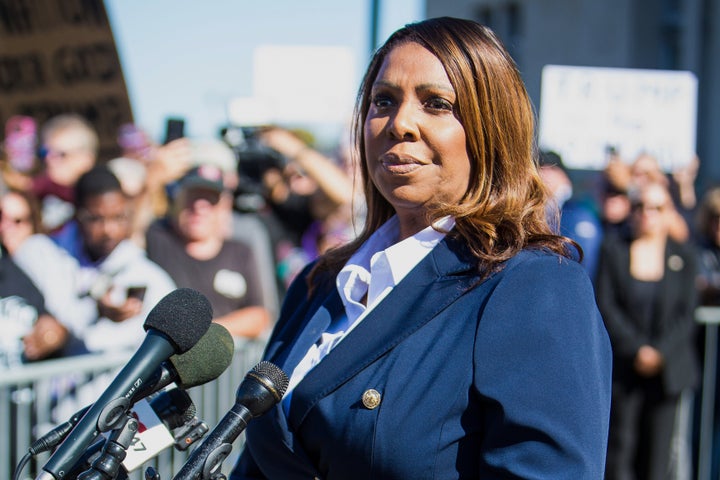
AP Photo/John Clark
“This should be the end of this case,” his attorney, Abbe Lowell, said in a statement. “If they continue, undeterred by a court ruling and a grand jury’s dismissal of the charges, it will be a shocking assault on the rule of law and a devastating blow to the integrity of our justice system.”
The allegations related to James’ purchase of a modest home in Norfolk, where he has family. During the sale, you signed a standard document called a “second home attachment” in which you agreed to hold the property primarily for your “personal use and enjoyment for at least one year,” unless the lender agreed otherwise.
Instead of using the house as a second residence, James rented it to a family of three, allowing him to obtain favorable loan terms not available for investment properties, prosecutors alleged.
It is the latest example of grand jury backlash since the start of the second Trump administration. It is so unusual for grand juries to refuse to indict that it was once said that prosecutors could persuade a grand jury to “indict a ham sandwich.” But the Justice Department has faced setbacks in front of grand juries in several recent cases.
Even if the charges against James were resurrected, the Justice Department could face obstacles in achieving a conviction against James.
James’ lawyers separately argued that the case was a vindictive prosecution brought to punish the Trump critic who spent years investigating and suing the Republican president and won a surprise ruling in a lawsuit alleging he defrauded banks by overstating the value of his real estate holdings on financial statements. The fine was later thrown out by a higher court, but both sides are appealing.
The defense had also alleged “outrageous government conduct” prior to his indictment, which the defense said justified dismissal of the case. The judge had not ruled on defense arguments on those issues before dismissing the case last month over the appointment of Lindsey Halligan as federal prosecutor.
U.S. District Judge Cameron McGowan Currie took issue with the Trump administration’s mechanism for appointing Halligan to lead one of the Justice Department’s most elite and important offices.
Halligan was named to replace Erik Siebert, a veteran prosecutor in the office and acting U.S. attorney who resigned in September amid pressure from the Trump administration to bring charges against Comey and James.
The following night, Trump said he would nominate Halligan for acting U.S. attorney and publicly implored Attorney General Pam Bondi to take action against his political opponents, saying in a Truth Social post that “we can’t delay any longer, it’s destroying our reputation and credibility” and “JUSTICE MUST BE DONE, NOW!!!”
Comey was indicted three days after Bondi swore Halligan in, and James was indicted two weeks later.
The Justice Department had defended Halligan’s appointment, but also revealed that Bondi had given Halligan a separate “Special Prosecutor” position, presumably as a way to protect the allegations from the possibility of collapsing. But Currie said such a retroactive designation could not save the cases.
___
Richer reported from Washington.