



Grateful Dead co-founder Bob Weir dies at 78
Jan 10 (Reuters) – Veteran rock musician Bob Weir, the Grateful Dead rhythm guitarist who helped guide the legendary band through decades of change and success, has died at age 78, according to a statement posted on his verified Instagram account on Saturday.
He was diagnosed with cancer in July and “succumbed to underlying lung issues” surrounded by his loved ones, according to the statement. He did not mention when or where he died.
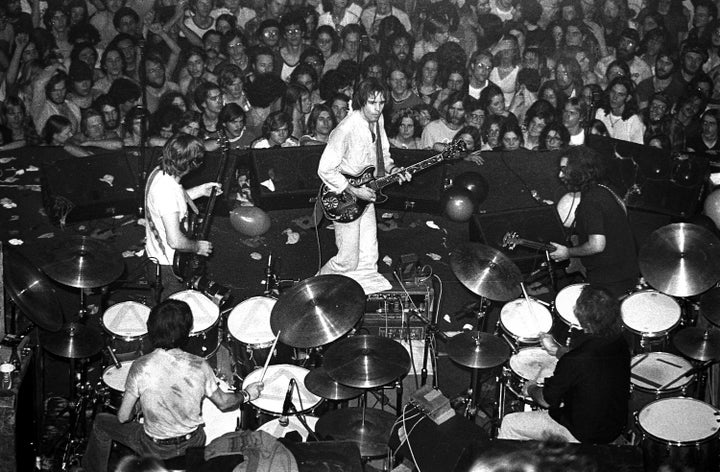
Along with his late fellow Grateful Dead co-founder and lead guitarist Jerry Garcia, who was at the center of the Deadhead universe, Weir was one of the group’s two frontmen and primary vocalists for most of the band’s history.
It was Weir who sang the verses of the band’s signature boogie anthem, “Truckin’,” and who wrote key songs such as “Sugar Magnolia,” “Playing in the Band” and “Jack Straw.”
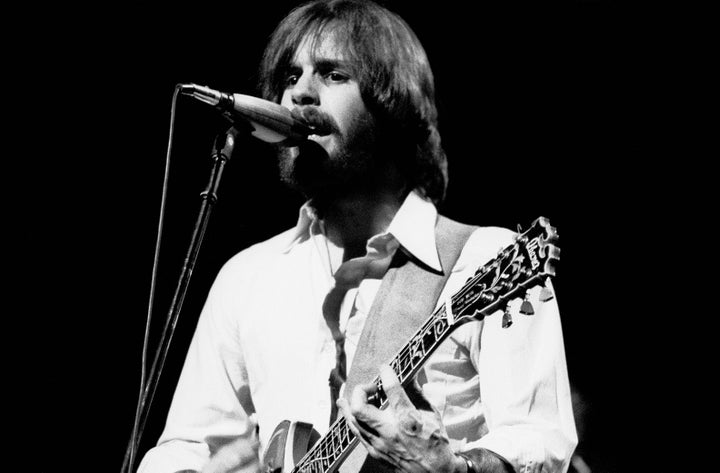
The young, pony-tailed “Bobby” became an eclectic songwriter whose handsome appearance and diverse musical influences helped broaden the band’s appeal. British newspaper The Independent called Weir “arguably rock’s greatest, if most eccentric, rhythm guitarist.”
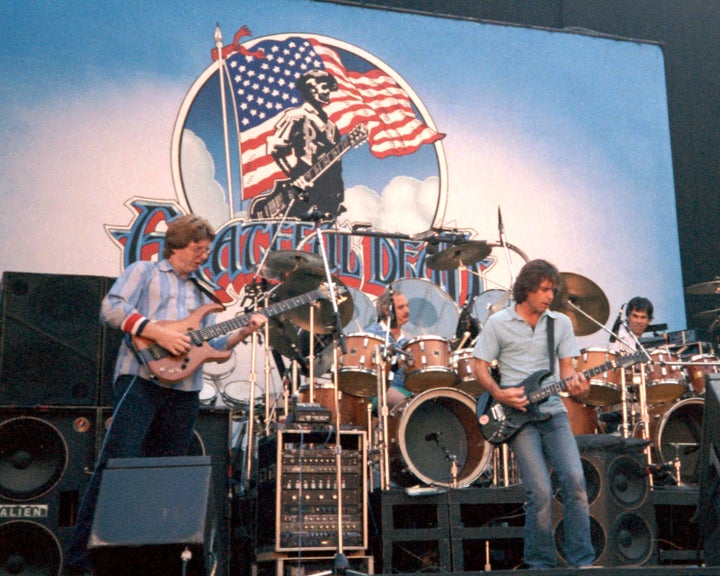
After Garcia’s death at age 53 in 1995, Weir carved out an interesting, if somewhat neglected, solo career, much of it with his band, RatDog, and participating in reunions of surviving Dead members in various configurations.
Paul Natkin via Getty Images
Ed Perlstein via Getty Images
long and strange trip
“As the Dead’s only pretty boy, the baby-faced Weir was always what passed for the band’s sex symbol,” wrote Joel Selvin of the San Francisco Chronicle in 2004. “He didn’t mind that either. In fact, he always seemed to secretly enjoy subverting that image.”
Weir was the subject of the 2014 documentary “The Other One: The Long, Strange Trip of Bob Weir,” which championed the Dead’s “other” guitarist as a musical force. Although some diehard Dead fans, or “Deadheads,” adopted the symbols of tinged psychedelia, the group itself was deeply attached to American roots music and was credited with bringing experimental improvisation to rock music.
Weir’s musical tastes ranged from Chuck Berry to cowboy songs, R&B and reggae.
Thanks to relentless touring, constant musical evolution, and a passionate fan base, the Grateful Dead, which existed from 1965 to 1995, didn’t have to rely on producing hit records.
“Bob was the wild one,” journalist Blair Jackson wrote in 2012. “He was rock ‘n’ roll, but also the confident, soft-spoken narrator in all those dramatic country-rock numbers about the desperate and fugitives; he fit those tunes perfectly. He was the guy who screamed and screamed himself hoarse at the end of the show, inducing us to dance frantically.”
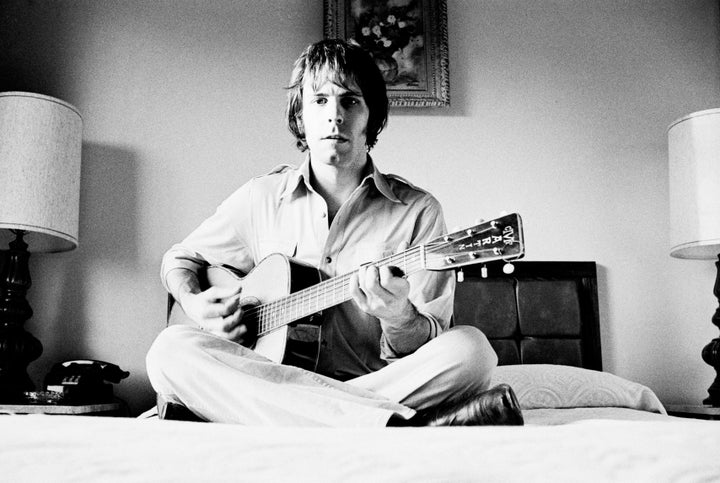
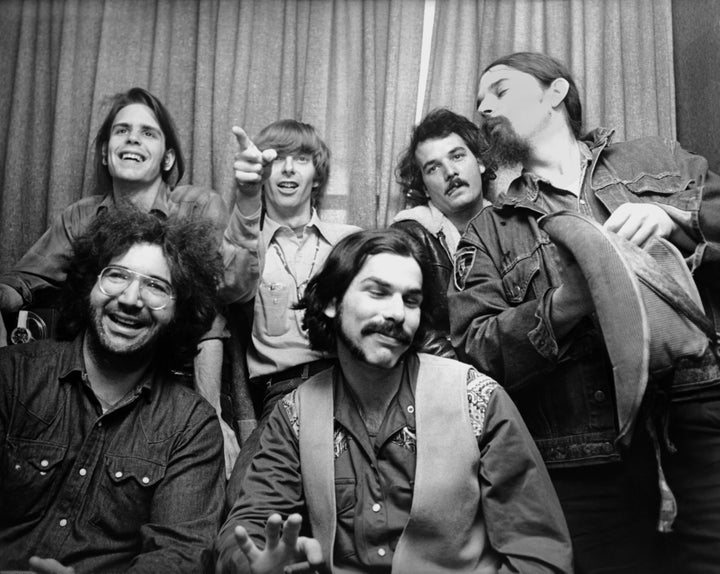
Weir, born Robert Hall Parber, was born on October 16, 1947, and was raised by adoptive parents in Atherton, California. He did not excel in school, due in part to his undiagnosed dyslexia. In 1964, at age 16, he met Bay Area folk musician Garcia, with whom he formed the Warlocks, which soon became the Grateful Dead.
Mark Sullivan via Getty Images
Clayton Call via Getty Images
the boy
The athletic Weir, who enjoyed football, was the youngest member of the original band and was sometimes called “the boy”.
He was still in high school when he joined Garcia, bassist Phil Lesh, organist/vocalist/harmonica player Ron “Pigpen” McKernan and drummer Bill Kreutzmann.
Lesh recalled in his 2005 autobiography that he and Garcia had to make a promise to young Bob’s mother. “Simply put, if Jerry and I promised to make sure Bob went to school every day and got home safely from concerts, she would allow him to stay in the band,” wrote Lesh, who died in October 2024 at age 84. “Somehow we convinced her that we would indeed arrange for him to get to school every day. In San Francisco. At 8:00 am.”
Eventually, Weir moved to the Dead community house at 710 Ashbury Street in San Francisco. The group’s first album, “The Grateful Dead,” was released in March 1967.
According to some accounts, Weir was briefly fired from the band in 1968 because he was deemed to lack guitar skills. But either he redoubled his efforts or the others thought better of it, because he soon returned. By the time of the band’s two famous 1970 albums, “Workingman’s Dead” and “American Beauty,” Weir was a key collaborator.
Chris Walter via Getty Images
Tim Mosenfelder via Getty Images
His 1972 solo album, “Ace,” was a de facto Grateful Dead album that featured Garcia and the others and included highly regarded Weir songs such as “Cassidy,” “Black-Throated Wind,” “Mexicali Blues” and “Looks Like Rain.” Many of his best-known songs were co-written with his old school friend, John Perry Barlow, who died in 2018.
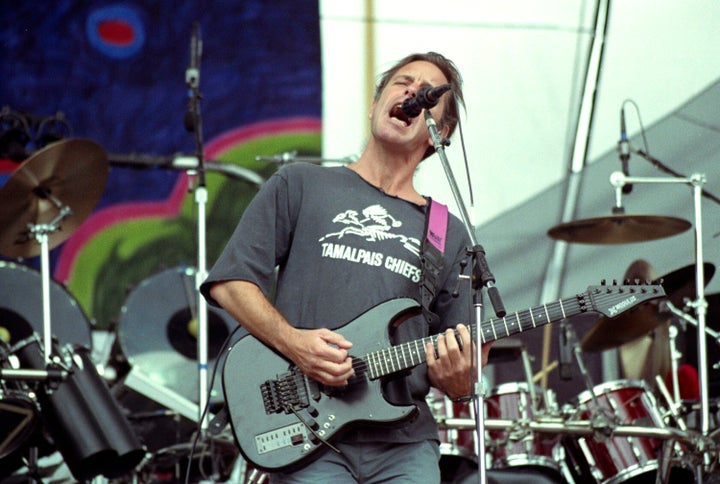
As the band’s rhythm guitarist, Weir often played small fills, riffs and figures rather than direct chords. “A lot of what I do with the guitar I discovered by listening to pianists,” he told GQ magazine in 2019, citing McCoy Tyner’s work with saxophonist John Coltrane. “He was constantly pushing and getting Coltrane to do incredible things.”
Even decades after Garcia’s death, Weir never forgot his old friend’s influence. He told GQ that Garcia was still around when Weir played guitar. “I can hear it: ‘Don’t go there. Don’t go there,’ or ‘Go here. Go here,'” Weir said. “And I either listen or I don’t, depending on how I feel. But it’s always ‘How does old Jerry feel about this riff?’ Sometimes I know I would hate it. But he would adapt.”
In 2017, Weir was appointed a goodwill ambassador for the United Nations Development Program to support the agency’s work to end poverty and combat climate change.
Weir married Natascha Muenter in 1999 and they had two daughters.
“Looking back,” Weir once said, “I think I have lived an unusual life.”
(Writing and reporting by Matthew Lewis in Chicago; Additional reporting by Steve Gorman in Los Angeles; Editing by Diane Craft)