



Here
WASHINGTON (AP) — The U.S. military opened fire on two people clinging to the wreckage of a ship believed to be transporting drugs, congressional lawmakers learned this week as they seek more answers about the attack and the legal underpinnings of President Donald Trump’s military campaign in international waters near Venezuela.
The Sept. 2 attacks on a suspected drug trafficking ship were the U.S. military’s first foray to blow up vessels supposedly transporting drugs. But this particular attack and the broader military campaign, which has so far destroyed more than 20 vessels and killed more than 80 people, is now under intense scrutiny. Lawmakers who oversee the national security committees heard last week from the Navy admiral who ordered the initial strikes, including the follow-up that killed the two survivors.
While Adm. Frank “Mitch” Bradley clearly stated that Defense Secretary Pete Hegseth did not issue a “kill them all” order against the survivors, Democratic lawmakers say the scope of the mission was clear: destroy the drugs and kill the 11 people on board. It’s a deadly new tactic that the Trump administration says is aimed at deterring the flow of drugs into the United States. Lawmakers and military experts say the sequence of events is alarming and potentially violates the laws of armed conflict that safeguard human rights and protect U.S. troops.
Late Friday, the AP confirmed that lawmakers were told the ship was headed to join another ship bound for Suriname, according to a person familiar with the situation who agreed to discuss the matter on condition of anonymity. The information was first reported by CNN. Another person said he was heading south when he was hit.
What lawmakers learn in the coming weeks and the extent to which they are willing to press the administration for answers presents a defining moment for the U.S. military under Trump’s second term. It is testing the reach of laws that have long governed soldiers on the battlefield and that will almost certainly influence the course of the tense standoff between the Trump White House and the Venezuelan government.
Here’s what is known about the boat strikes and what other information lawmakers are still seeking.

via News
What legislators have learned
Bradley told lawmakers that he ordered a second attack on the wreckage of a ship carrying cocaine because bales of drugs were believed to still be on the ship’s hull, according to a person with knowledge of the briefing who spoke on condition of anonymity because they were not authorized to discuss the matter.
For several minutes, two people, shirtless and at one point waving, had climbed onto the piece of the boat that was still floating.
They were “adrift in the water, until the missiles came and killed them,” said Rep. Adam Smith, the ranking Democrat on the House Armed Services Committee, adding that their killing was “deeply troubling.”
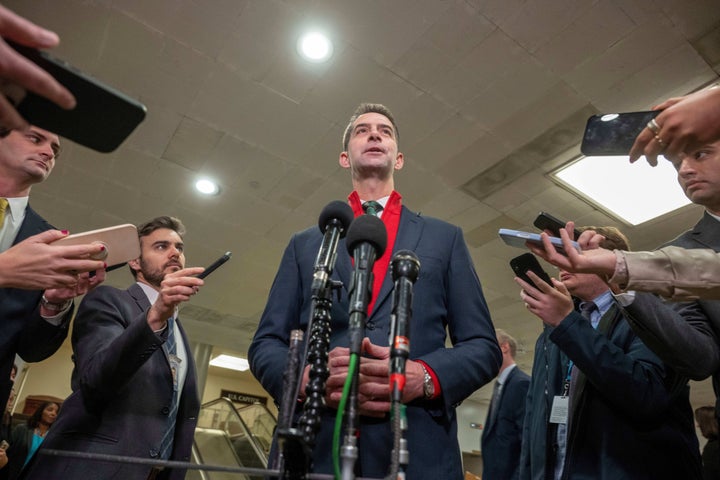
However, Sen. Tom Cotton, Republican chairman of the Senate Intelligence Committee, said he believed the video shows the two people trying to flip the ship’s piece. To him, that was enough of an indication that the survivors were trying to “stay in the fight” and therefore remained justifiable targets.
Bradley told lawmakers that the reason for the second attack was to ensure that cartel members could not later pick up the cocaine on the boat. Lawmakers had previously been told that the second strike was ordered to sink the ship.
That reasoning arises from the legal opinion that the Department of Defense is using as the entire basis for its military operation against drug cartels, especially since Congress has not explicitly authorized the Trump administration to carry out the campaign.
Under the Trump administration’s legal opinion, drugs and drug traffickers headed to the United States are essentially viewed as terrorist threats and can be attacked under the same rules that apply to the global war on terrorism.
This is a dramatic shift from traditional practice that views drug trafficking as a serious criminal activity, but one that typically must be handled by law enforcement, typically the Department of Homeland Security’s Coast Guard, rather than the military.
“The people on the ship, under the law of armed conflict, are not combatants,” said Michael Schmitt, a former Air Force attorney and professor emeritus at the U.S. Naval War College. “The only thing they do is transport drugs.”
Democrats say the conclusions of the Trump administration’s legal argument are problematic. “I think that incredibly broad definition is what sets in motion all these issues about the use of deadly force and the use of the military,” Smith said.
That led lawmakers to call for public disclosure of the legal argument underpinning the military campaign, a roughly 40-page opinion from the Justice Department’s Office of Legal Counsel.
“This briefing confirmed my worst fears about the nature of the Trump administration’s military activities,” Sen. Jack Reed, the top Democrat on the Armed Services committee, said in a statement. “This should be and will be only the beginning of our investigation into this incident.”
What lawmakers are trying to figure out
The Office of Legal Counsel’s opinion, which has been classified by the Trump administration and was not available to lawmakers until November, was signed on Sept. 5, according to lawmakers who reviewed it. The attack in question, however, took place three days earlier, on September 2.
Legislators want to know under what orders and instructions the operation was carried out.
Bradley told lawmakers this week that he personally had not read the entire legal opinion, according to the person with knowledge of the report. And while Hegseth has said that military lawyers, known as judge advocate generals, or JAGs, were kept abreast of the operation, lawmakers discovered Thursday that JAGs for Special Operations Command and Southern Command, the operation’s two command posts, were not given access to the legal opinion until mid-November.
Bradley also told lawmakers that the orders did not contain a directive to kill all of the ship’s occupants, and Cotton noted that the military was still operating under the same orders when they picked up survivors of a later separate attack.
via News
Lawmakers on the Armed Services Committees are seeking the written execution order for the operation, which would include the rules of engagement the soldiers would be expected to follow. Democratic lawmakers also want to understand what Hegseth communicated verbally to military officials, either by reviewing a transcript of his comments or by interviewing those involved.
The armed services committees also want to hear from Navy Adm. Alvin Holsey, who is retiring as commander of U.S. forces in Central and South America. He had been in charge throughout the campaign, but Hegseth announced last month that Holsey would be retiring early.
Lawmakers also want to know why Hegseth was not in the operating room when the second attack took place. He said he went into other businesses after the first strike.
So far, Hegseth has been defiant in the face of criticism from Capitol Hill. Just after briefings concluded Thursday, the military announced it had attacked another ship it believed was carrying drugs, killing four people. That last strike, the 22nd of the campaign, raised the death toll to at least 87 people.
___
News writers Mary Clare Jalonick and Ben Finley in Washington contributed.